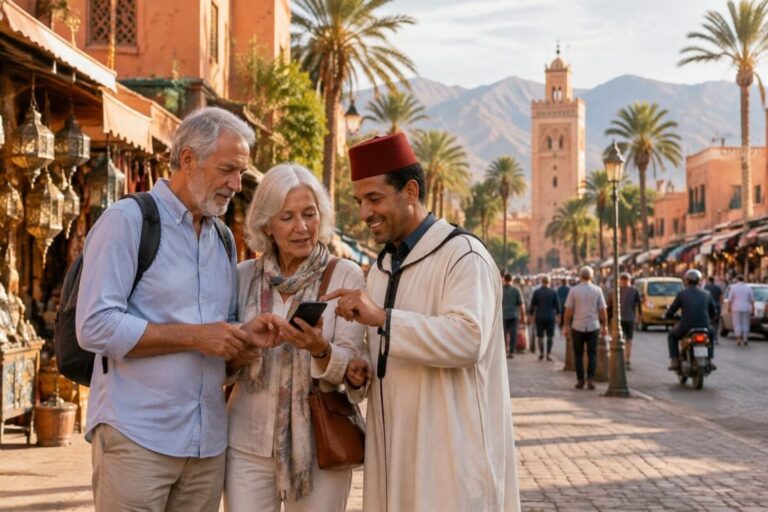
Travel destinations for seniors: a familiar destination or a riskier country?
Hi, it’s Lucien. To travel with greater peace of mind, choose a familiar destination if health, getting around or paperwork are concerns; consider a more distant country only after checking healthcare, insurance and the tax rules that apply to you. A successful trip for seniors isn’t about rankings, but about matching your wishes with your actual needs. The climate matters, of course, but it can’t replace clear access to healthcare or suitable accommodation. Sometimes it’s better to give up on a spectacular destination than to arrive without a plan in case something unexpected happens.
Destinations for seniors: checks to make now
- Ask your doctor for advice about vaccines, medications and useful precautions for your trip.
- Check your travel insurance terms: medical care, repatriation, exclusions and pre-existing conditions.
- Choose accommodation with easy access, an elevator if needed, and healthcare services nearby.
- Opt for a straightforward journey and plan breaks, especially if you need to make several connections.
- Keep your prescriptions, emergency contacts and copies of your documents in a separate place.
Familiar destination or high-risk country: which is the safer choice?
A familiar destination often feels reassuring because routes, accommodation and medical services are easier to identify. That doesn’t mean it’s automatically safe: Lisbon’s hilly streets, crowds in Rome or extreme heat in Greece can make a trip more challenging.
Conversely, a less familiar country isn’t necessarily a high-risk country. Above all, consider traveler safety, how accessible destinations are, transportation options and the quality of healthcare available near where you plan to stay. A country’s reassuring appearance isn’t enough: check the practical details before booking.
If this is your first trip after a period without traveling, a well-connected European city can reduce the chances of unexpected problems. If you’re already used to traveling and are independent, a more distant trip may suit you, provided you take extra care to prepare for healthcare abroad and getting around once there.
Compare destinations based on your needs
| Destination | Potential advantages | What to check before you go |
|---|---|---|
| Italy | Heritage, cuisine and numerous transport connections | Crowds, stairs and walking distances in historic centers |
| Portugal | Mild climate and a varied cultural scene | Hills in Lisbon, accommodation accessibility and tourist season |
| Greece | Historic sites, scenery and beach holidays | Summer heat, stairs and transport between the islands |
| Morocco | A change of scenery, French is often understood, and a variety of trip options | Heat, city noise and medical coverage under your insurance |
| Panama | A different setting and local programs designed for retirees | No healthcare coordination with France and the cost of private insurance |
This table is a starting point, not a ranking. Even in a country popular with travelers, access to healthcare can vary greatly between a large city and a remote area. To compare tranquility and proximity to medical care, also see these pointers on a peaceful destination or one close to medical care.
Taxes and healthcare: the pitfalls of distant destinations
For a short trip, focus first on healthcare, getting around and insurance coverage. If you’re moving abroad for retirement, consider two additional questions: how will your pension be taxed, and what healthcare system will actually be able to look after you? An advertised tax benefit alone doesn’t tell you how much it will cost to live there.
Within the European Union, social security coordination can make it easier to access healthcare, depending on your circumstances. The S1 form may apply in particular to some retirees who live in another European country; check the procedures and your entitlements with the relevant authorities. Outside Europe, you’ll often need to arrange private insurance, with prices and coverage that can vary depending on your age, health and destination.
Tax rules also change. Portugal, Italy and Greece don’t necessarily offer the same programs to all retirees, and the type of pension can affect the outcome. Before moving, ask a professional for a personalized assessment: a French public-sector pension may be treated differently from a private-sector pension.
One often-overlooked detail: an insurance policy may cover emergencies while excluding a pre-existing medical condition or certain activities. Read the exclusions before paying, and ask for written confirmation if you need ongoing treatment.
Plan a trip for seniors in three steps
- Step 1: Review your health with your doctor. Pack a reasonable supply of medication in its original packaging and keep your prescriptions with you.
- Step 2: Compare insurance coverage and local rules. In Europe, check whether your European Health Insurance Card will be useful for your trip; it doesn’t always replace supplementary insurance.
- Step 3: Book accessible accommodation and arrange transfers. Request assistance at the airport if walking long distances or carrying luggage could tire you out.
This approach helps you avoid putting together an overly packed itinerary. For trips in the countryside, also check how far away medical care is and how easy it is to return: a dream trip that’s too remote can become uncomfortable if something unexpected happens.
Choose a destination that suits you
If your main goal is to walk as little as possible and stick to familiar surroundings, choose a well-connected destination, centrally located accommodation and short sightseeing trips. If you’re looking for a more immersive experience, travel outside the hottest periods and arrange local assistance or pre-booked transfers.
There’s no destination that’s safe for everyone, just as no country is dangerous in every circumstance. For a longer stay or a move abroad, also compare housing costs, access to specialists and the stability of residency rules. For a short trip, the simplicity of the journey and the quality of your insurance will often matter more than an attractive tax regime.
Official travel advice from your destination country, consular services and your insurer are useful additions to advice found online. The right choice is one that leaves room to rest and gives you a clear plan if something goes wrong.
Should you always choose a familiar destination after age 60?
No. A familiar destination can make getting around easier, but a less familiar country may also be suitable if healthcare, transportation, insurance and accommodation are checked in advance.
What should you consider before booking?
Check access to healthcare, distances to travel, the weather during your trip, accommodation accessibility and travel insurance coverage.
Is the European Health Insurance Card enough?
Depending on local rules, it makes it easier to access medically necessary care in the countries where it applies. It doesn’t necessarily cover repatriation or all expenses; supplementary insurance may be useful.
Is a country with tax advantages necessarily cheaper?
No. Housing, private healthcare, transportation and administrative procedures can reduce the value of a tax benefit. Compare the total cost and have your personal situation reviewed.
Thank you for your care and consideration for our seniors; Lucien