Senior mobility: rushing onto the plane, a bad habit?
Hi, it’s Lucien. No: don’t rush to board the plane; instead, ask for assistance or priority boarding if it helps you avoid crowds and fatigue. When traveling by plane, moving quickly isn’t always safer, especially if you have difficulty walking or are at risk of losing your balance. The best approach is to move at your own pace, with a simple plan and your belongings close at hand.
What to do now
- Request mobility assistance when you book, or contact the airline as early as possible.
- Check whether priority boarding is offered and whether it suits your needs.
- Keep your passport, boarding pass, and essential medications in an accessible bag.
- Choose stable shoes that are easy to put on.
- Allow extra time so you don’t have to run through the airport.
Quick boarding: why rushing can be a bad idea
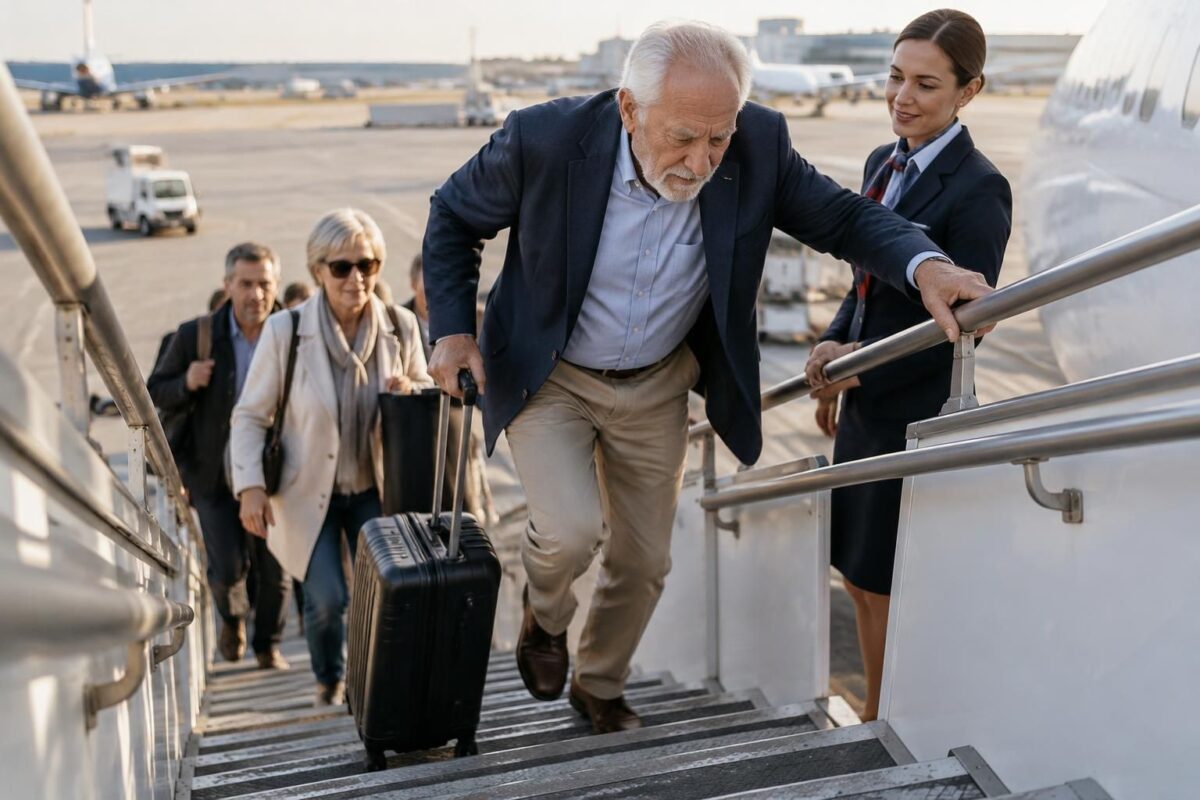
When the line starts moving, it’s tempting to speed up so you don’t get stuck at the back. However, jostling, carrying bags awkwardly, and changing direction quickly all increase the risk of tripping or falling at the airport.
Priority boarding can be helpful if standing for a long time is difficult or if you need someone to accompany you to your seat. But it doesn’t mean you have to hurry: board only when staff invite you to, and ask for help stowing your bag if necessary. Air travel safety also starts with moving calmly and in a way that suits your abilities.
If you travel with a walking aid or tire easily, let the airline know when you book. Assistance services vary between airlines and airports; making a request in advance generally makes it easier to arrange.
Two situations where the right choice differs
If you can walk without any particular difficulty, stay seated near the gate and wait for your group to be called. There’s no need to queue for a long time: save your energy for the journey.
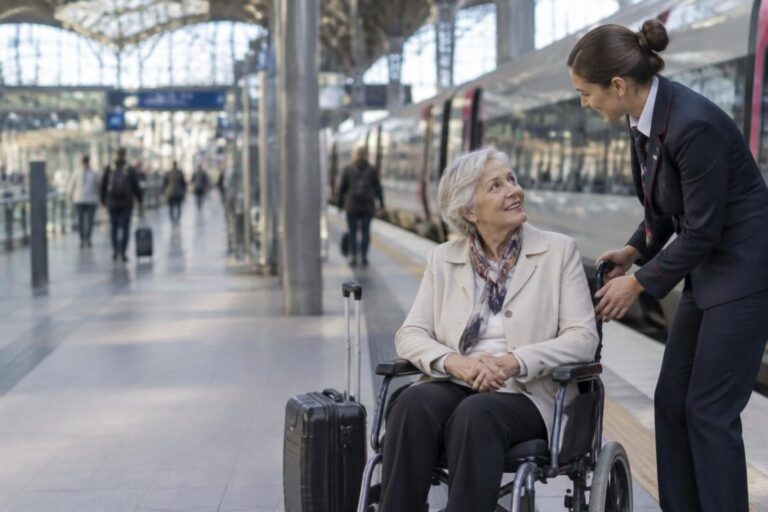
If you need a wheelchair or someone to accompany you, request mobility assistance. In Europe, it’s best to notify the airline at least 48 hours before departure so it can arrange the service properly.
Large terminals and long distances can be more tiring than the flight itself. These tips for getting through a huge airport can help you plan for the effort and walking time involved.
Mobility for seniors: simple preparations before you leave
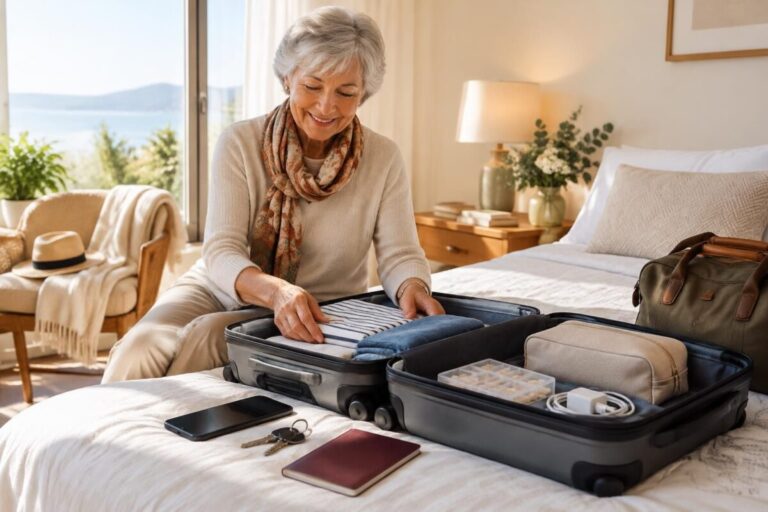
Fatigue often comes from a series of small efforts: carrying a suitcase, standing in line, looking for a gate, or walking to another area. Packing lighter and choosing comfortable shoes are risk-prevention measures just as important as not rushing.
A bag that’s too heavy can throw you off balance, especially when you have to lift it overhead. To avoid this common pitfall, see these tips for packing a lighter bag. Also keep your medications and medical documents in your carry-on, in a pouch that’s easy to find.
If the flight is long, ask a healthcare professional for advice about movements to do during the journey and whether compression stockings might be appropriate. Needs vary depending on your medical history and the length of the flight, so it’s best to avoid self-medicating.
What helps you conserve energy
| Situation | Helpful action | Why |
|---|---|---|
| Long walk to the gate | Request assistance or internal transport | Reduce exertion before the flight even begins |
| Crowded boarding line | Wait seated, then move forward when it’s your turn | Avoid rushing and jostling |
| Bag that’s difficult to carry | Lighten your bag and ask for help | Reduce fatigue and the risk of losing your balance |
| Discomfort or pain while sitting | Choose a suitable seat and move around as advised | Improve comfort on the plane |
Senior travel often goes more smoothly when every step is planned in advance. For Aline, 78, requesting a wheelchair at the airport meant she didn’t have to rush to catch a connecting flight; she was able to board calmly with her belongings close at hand.
Three steps to board without rushing
- Step 1: When booking, mention any need for assistance, a wheelchair, or extra time. Then confirm the request with the airline.
- Step 2: Pack a light bag. Keep your documents, medications, and a bottle of water purchased after security in easy-to-reach places.
- Step 3: At the gate, stay seated until your group is called. Board calmly and ask for help with your bag if stowing it overhead is difficult.
Don’t choose a seat near an emergency exit hoping for extra space without checking the rules: these seats have specific requirements and may not be suitable for someone who needs assistance. An aisle seat can make it easier to move around, but the best choice depends on your mobility and the aircraft’s layout.
A smooth boarding process isn’t measured by speed. It’s measured by whether you reach your seat without pain or stress, and without using up all your energy before takeoff.
Frequently asked questions about boarding for seniors
Should seniors always board early?
No. Priority boarding is useful if it reduces fatigue or allows you to be accompanied, but it isn’t necessary for everyone. Ask the airline what options are available.
How do I request assistance at the airport?
Tell the airline what you need when you book, then check that the request has been recorded. In Europe, notifying the airline at least 48 hours before departure makes it easier to arrange.
What should I keep in my carry-on?
Keep your travel documents, regular medications, any necessary prescriptions, and items you may need during the journey. Follow the airline’s rules for liquids and baggage.
What should I do if walking through the airport becomes difficult?
Stop in a safe place and ask staff or the assistance service for help. Don’t force yourself to run to the boarding gate.
Thank you for caring about our seniors; Lucien