Travel health: first-aid kit—what’s often missing?
Hi, it’s Lucien. The things most often missing are enough of your personal medication, oral rehydration solution, and basic wound-care supplies. A useful first-aid kit takes your health, destination, and activities into account. For seniors, it’s also best to keep prescriptions and medical information close at hand.
What to do right now
- Check the expiry dates and storage requirements for your personal medication.
- Add pain medication that you can usually take, following your doctor’s or pharmacist’s advice.
- Pack bandages, gauze, and antiseptic to clean a minor wound.
- Put oral rehydration solution and a thermometer in your kit.
- Check what you’ll need for your destination: sunscreen, mosquito repellent, or motion sickness remedies.
The kit doesn’t need to be bulky. Above all, it should help you deal with minor issues without having to search for a pharmacy in an emergency, sometimes far from your accommodation.
Travel first-aid kit: the things people forget that can complicate a trip
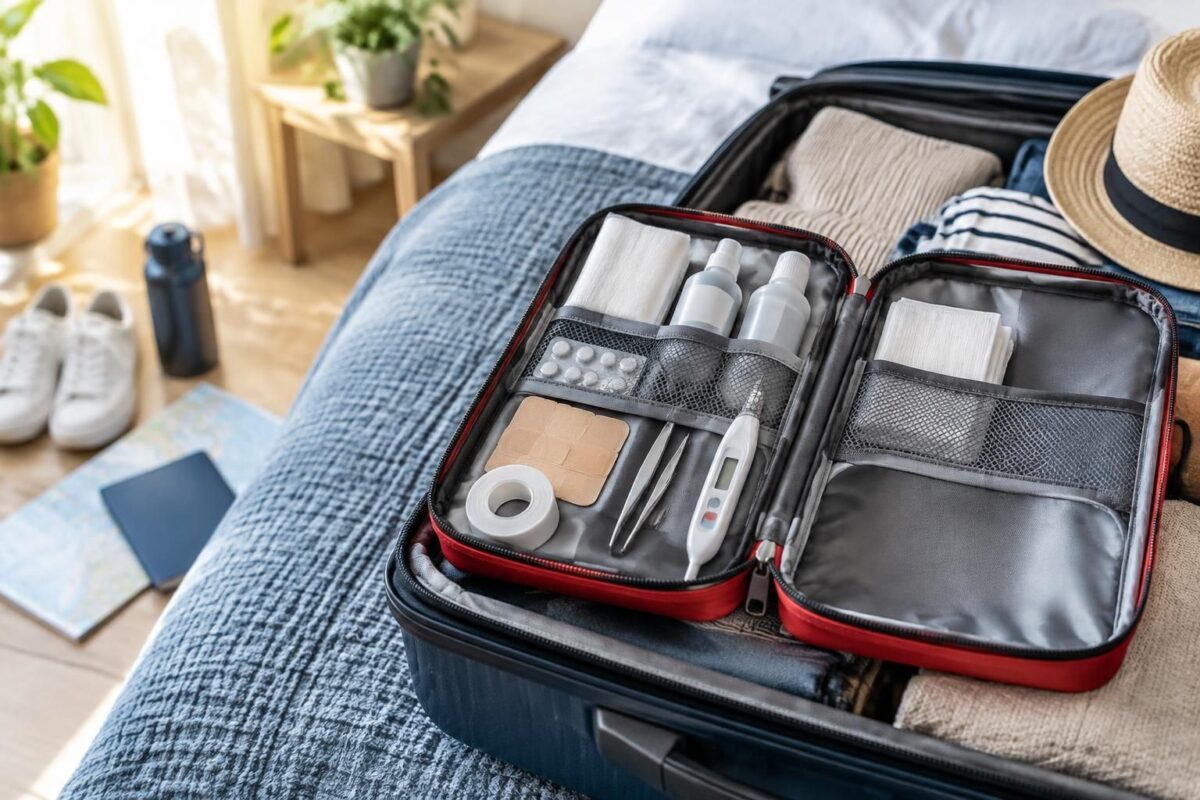
It’s easy to think of painkillers, then forget what helps you use them properly: a thermometer, suitable scissors, or your doctor’s contact details. Bandages in several sizes are also useful, since a heel blister needs different coverage from a small cut on your finger.
For a digestive problem, an antidiarrheal medication may be useful if it’s suitable for your situation. Also remember oral rehydration solution: in cases of diarrhea or vomiting, drinking water alone may not replace the salts and sugars you’ve lost. Ask a healthcare professional for advice, especially if you take regular medication or have a chronic condition.
- Basic first aid: bandages, sterile gauze, adhesive tape, and antiseptic.
- Common symptoms: pain medication, a thermometer, and, if appropriate, an antihistamine or antidiarrheal medication.
- Travel comfort: motion sickness remedies, if you need them.
- Outdoor protection: sunscreen and mosquito repellent, depending on the climate and activities.
- Hydration: oral rehydration solution, especially useful if access to a pharmacy may be difficult.
A common mistake is to put all your medication in a pill organizer without keeping the packaging. When traveling, keeping the boxes and leaflets makes it easier to identify products and answer questions during an inspection.
Essentials for different types of trips
| Trip | What to prioritize | Point to watch |
|---|---|---|
| City or beach holiday | Bandages, antiseptic, thermometer, sunscreen | Keep your regular medication accessible, not at the bottom of a checked suitcase |
| Hot or tropical region | Mosquito repellent, oral rehydration solution, sun protection | Ask for advice before departure about destination-specific precautions |
| Remote area or hiking trip | First-aid supplies, water, and a reasonable reserve of personal medication | Also make a plan for contacting emergency services or reaching a medical facility |
Your destination changes what to prioritize: repellent may be essential in an area with lots of mosquitoes, while a stay at high altitude calls for careful planning around exertion, hydration, and sun protection. For up-to-date health recommendations, a professional can help tailor your kit to your itinerary.
Personal medication: quantities, prescriptions, and local regulations
Bring enough of your personal medication for the entire trip, with a reasonable extra supply in case of delays or changes to your travel plans. The amount depends on your treatment and circumstances: ask your doctor or pharmacist what’s appropriate, especially if the medication needs to be kept refrigerated.
Keep products in their original packaging and put essential medication in your carry-on, in accordance with the airline’s rules. Medication containing controlled substances may be subject to special requirements; check the destination country’s requirements before you leave and keep a copy of your prescription.
A medical consultation before departure can also be a chance to review your medication and travel-related risks. You can read these tips on seeing a doctor before a trip or compare the roles of a doctor and pharmacist before departure.
Three simple preparation steps
- Step 1: List your medications, allergies, and regular needs. Check expiry dates and ask for advice if you’re unsure about which medication to bring.
- Step 2: Adapt your kit to your destination and activities. Add sunscreen, mosquito repellent, or first-aid supplies depending on your plans.
- Step 3: Pack medication in its original packaging, along with prescriptions and a medical information sheet. Also check storage instructions and customs regulations.
A concise information sheet can list allergies, current medications, and the contact details of a loved one and your doctor. It helps you share useful information if you need medical care away from home.
Two situations that call for adapting your kit
If you’re staying in a city… keep your regular medication, a few bandages, antiseptic, and a thermometer close at hand. Also find a pharmacy and medical center near your accommodation.
If you’re traveling to a remote area… ask in advance about useful precautions and bring an appropriate reserve of your medication. It’s also worth checking your travel insurance: review what care is covered, the medical assistance available, and the arrangements for repatriation.
A health problem can sometimes begin with a minor symptom and become harder to manage far from medical services. These tips on common illnesses while traveling and on how much medication to bring can help you prepare.
Practical details that make your kit truly useful
Sort products into separate pouches by category and protect them from moisture and heat. If a medication needs to be kept at a particular temperature, ask your pharmacist how to transport it: an insulated pouch may be necessary, but it doesn’t replace the product’s specific storage instructions.
Keep a copy of your prescriptions and your travel insurance contact details separately. This may seem like a minor detail until a medication is lost or you need to arrange medical care abroad. Your kit is more useful when the accompanying information is easy to find.
If you have limited mobility or are traveling alone, also think about access to medical care and the help available locally. These tips for traveling alone with reduced mobility can help you prepare for getting around and for unexpected situations.
Frequently asked questions about travel first-aid kits
What items are most often missing from a travel first-aid kit?
Oral rehydration solution, a thermometer, bandages in different sizes, and enough personal medication are often forgotten. Adapt the list to your health and destination.
Should you put your medication in your carry-on?
For essential medication, a carry-on is often preferable to avoid losing it if your suitcase is delayed. Check the rules for transporting medication and any special requirements for liquid or controlled medication.
Can you take your regular medication abroad?
The rules vary depending on the country and the medication. Keep the original packaging, bring your prescription, and check before departure whether you need a certificate or have to complete any additional formalities.
When should you ask for advice before departure?
Ask for advice if you take medication, have a chronic condition, are traveling to a destination with specific health risks, or need to keep medication refrigerated. A professional can tailor recommendations to your situation.
Thank you for caring about our seniors; Lucien