Practical tips: forgetting to hydrate, the silly mistake on vacation
Hi, it’s Lucien. To avoid a silly mistake on vacation, drink regularly without waiting until you’re thirsty, and keep a bottle within reach. After 50, the sensation of thirst can become less reliable, especially during a hot or active day. A hydration reminder helps prevent dehydration, fatigue, and dizziness. These practical tips fit your routine and any health advice you’ve received.
Things to do right now
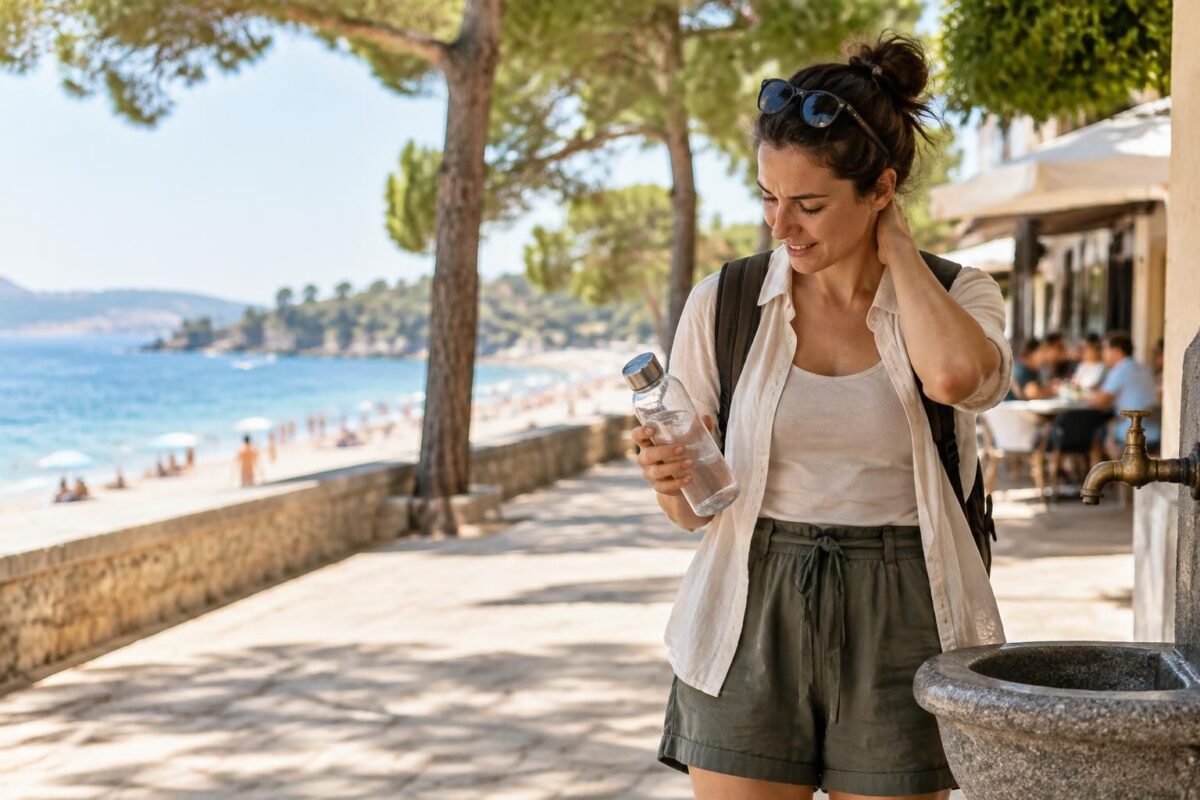
- Fill a water bottle before you leave and keep it in your bag.
- Drink a few sips when you wake up, then regularly throughout the day.
- Pair a glass of water with meals and breaks.
- Plan more breaks in the shade when the summer heat sets in.
- If a healthcare professional has asked you to limit fluids, follow their advice rather than a general target.
Staying hydrated on vacation: don’t wait until you’re thirsty
When you travel, your routine can change quickly: a longer journey, an unplanned stroll, a later meal. And as we get older, the signal of thirst can become less noticeable. So you may not drink enough water before you even think about having a drink.
For Jeanne, 72, the risk often arises during sightseeing: she forgets her bottle, then feels tired in the late afternoon. Planning regular breaks is more useful than waiting until you feel unwell. To learn more about spotting this risk, also read these tips on subtle dehydration while traveling.
How much should you drink, and how often?
A commonly cited guideline is about eight glasses spread from morning to evening, but needs vary depending on the weather, activity, and health. This amount isn’t right for everyone, particularly if you have a medical fluid restriction.
The simplest approach is to drink small amounts throughout the day. Pale yellow urine can be a useful indicator, but some medications and foods can change its color: pay attention to how you feel overall, too.
Habits that make it easier to stay hydrated while traveling
Drinking water is a useful habit, but you need to make it easy. A water bottle tucked at the bottom of a bag isn’t much use: keep it visible and accessible, both in the car and while out on an excursion.
You don’t necessarily have to cut out coffee. If you drink a lot, cut back gradually and alternate with water. Herbal tea or an unsweetened drink can also add variety, without replacing medical advice if you have specific needs.
| Situation | Practical step | What to watch for |
|---|---|---|
| Setting out in the morning | Drink a glass when you wake up and fill your water bottle | Don’t leave without a drink within easy reach |
| Walking or gardening | Take a break and drink a few sips regularly | Adjust your activity to the heat and how you feel |
| Evening | Drink small sips if needed | Avoid trying to make up for the whole day all at once |
| Eating at a restaurant | Order water and keep it close by | Don’t rely only on coffee or alcohol |
If you’re planning a long walk, remember to pace yourself and take breaks: these tips on mobility and physical exertion while traveling can help you plan your outing. Staying healthy while traveling often depends on these small, repeated choices.
Adjusting your drinks to the heat and activity
A leisurely stroll and a hike in full sun don’t call for the same level of caution. Summer heat, exertion, and the length of an outing can increase your needs; take breaks and drink more depending on the situation, without forcing yourself to meet a fixed amount.
If you’re sweating a lot or feel weak, move somewhere cool and seek advice from a professional if the symptoms persist. For people who are also monitoring their blood pressure, these tips on the heat and blood pressure combination while traveling offer additional ways to stay safe.
A three-step routine to help you remember
- Step 1: prepare for the day. Fill a bottle before leaving your accommodation and plan a drink break along your route.
- Step 2: link drinking to a regular activity. Take a few sips at breakfast, during every break, and with meals. This reminder works even when the day’s plans change.
- Step 3: check how you feel. A dry mouth, darker-than-usual urine, or cramps may be a sign to drink and slow down. If you feel confused, very weak, or your symptoms get worse, seek medical help promptly.
Two situations where you may need to adjust your habits
If you’re spending the day sightseeing in the sun… bring water, take breaks in the shade, and avoid doing all your walking during the hottest hours.
If you’re traveling by car or train… keep a drink within reach and use stops to drink and stretch your legs. A bottle in the trunk, on the other hand, may stay forgotten until you arrive.
Recognizing the signs without panicking
Unusual fatigue, dizziness, headaches, a dry mouth, or cramps can have several causes. They deserve attention, especially if they occur in very hot weather or after exertion.
Taking small sips and moving somewhere cool may help in mild cases. But if the person seems confused, faints, or is unable to drink, seek medical help without delay. Prevention is no substitute for medical care.
Should you wait until you’re thirsty to drink on vacation?
No. The sensation of thirst can become less reliable with age. Keep a drink within reach and take a few sips regularly.
How much water should you drink each day after 50?
Needs vary depending on activity, weather, and health. Eight glasses can serve as a general guideline, but any medical restriction should always be followed.
Does coffee necessarily dehydrate you?
Not necessarily. Moderate consumption is generally compatible with good hydration. If you drink several cups of coffee, alternate with water and seek advice if you have a health problem.
What signs can indicate that you’re not drinking enough water?
A dry mouth, darker urine, dizziness, or unusual fatigue can be warning signs. These signs can also have other causes: if your condition worsens, seek medical help.
Thank you for caring for our seniors; Lucien