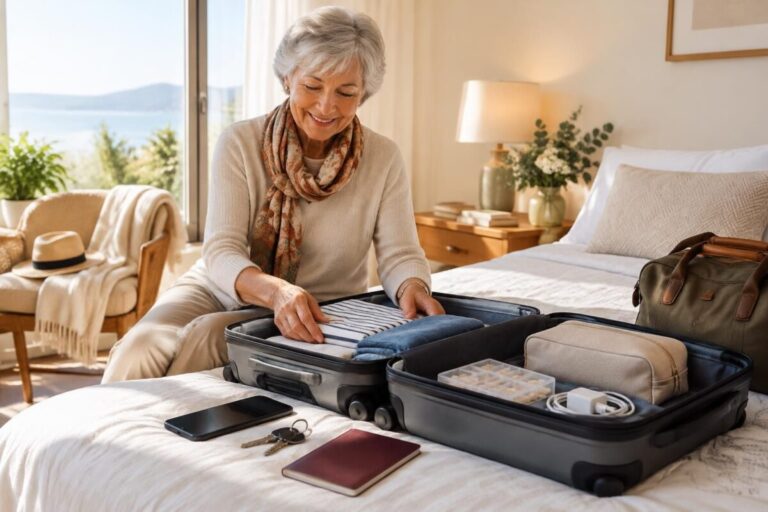
Practical advice: does this preparation help avoid the worst?
Hi, it’s Lucien. Yes: simple preparation, with medications checked, documents within easy reach and an emergency plan, can reduce risks during a trip. To travel with greater peace of mind, you don’t need to plan for everything, but you do need to anticipate the most likely difficulties. Safety starts before departure, especially when fatigue, medication or reduced mobility are involved.
Things to do right now
- Call your doctor or pharmacist if you have a chronic condition, take regular medication or have concerns about the trip.
- Make sure you have enough medication for the entire trip, with a small extra supply if appropriate.
- Keep your prescription, medical contacts and insurance information somewhere easy to access.
- Choose a route that matches your energy levels and plan breaks, especially for long transfers.
- Write down who to call and where to go if something goes wrong: this is your emergency plan.
Prepare for a senior trip to avoid preventable risks
Preparation can’t prevent every unexpected event. However, it helps you identify potential weak points before they become urgent: forgotten medication, an overly long leg of the journey, difficulty coping with the heat or a medical document that can’t be found.
Start by looking at the trip as a whole: travel time, connections, access to restrooms, accommodation and proximity to a healthcare facility. These practical tips are no substitute for medical advice, but they can help you prevent and manage risks in everyday situations.
To check for the most common oversights, also see these mistakes to avoid before a senior trip. A quick check the night before is better than a frantic search at the check-in counter.
Checks that can really make a difference to your departure
| What to check | Practical step | Why it helps |
|---|---|---|
| Medication | Keep medications in their original packaging and bring a reasonable reserve. | A delay or lost luggage shouldn’t interrupt your treatment. |
| Documents | Bring your prescription, insurance card and useful contacts, on paper or as digital copies. | The information remains available even if your phone runs out of battery. |
| Journey | Plan breaks and ask for help with connections if needed. | Fatigue can increase the risk of a fall or feeling faint. |
| Destination | Locate a pharmacy and medical center near your accommodation. | If a problem arises, you’ll know where to ask for advice without wasting time. |
A three-step approach to travelling with greater peace of mind
Step 1: Take stock of your health. Make a list of your medications, allergies, mobility needs and any symptoms that mean you should seek help. If your condition has changed recently, speak with a healthcare professional before confirming any strenuous activities.
Step 2: Organize the essentials. Put your medications and important documents in your carry-on bag or a bag that stays with you. Don’t put everything in checked luggage: this is a common mistake, especially when you have a connection.
Step 3: Prepare backup options. Save useful phone numbers, locate nearby medical services and let someone close to you know your itinerary. A clear emergency plan makes it easier to act if a problem arises.
Two situations where you may need to adapt your preparations
If you take medication at a fixed time… check the time difference and ask your doctor or pharmacist for advice on scheduling your doses. Don’t change the dose or timing on your own.
If your journey involves sitting for several hours… choose stages with breaks where possible, and ask for appropriate assistance. To better understand the effects of a long transfer, read these tips on fatigue and mobility during a long journey.
Helpful steps to take when something unexpected happens
Forgetting something doesn’t necessarily mean the trip has to end. If you’re missing a prescription, quickly contact the prescribing doctor, a local pharmacy or your insurer to find out what options are available. Keep your medication information handy to make it easier to discuss your needs.
If you feel unwell, stop what you’re doing, sit somewhere safe and ask for help. If you have worrying symptoms or they get worse, contact the local emergency services without delay: it’s better to act early than to dismiss an important warning sign.
The steps to take if you’ve forgotten a prescription while away from home can also help you prepare for what to do. For more remote destinations, compare travel requirements and available healthcare options before booking, as this guide recommends for travelling far from home after 70 with care.
Simple preventive steps to take before you leave home
Before you leave, go over your list with someone close to you: medications, documents, a charged phone, water within reach and transport to your departure point. Checking together often helps catch something you’ve forgotten, such as a prescription left on the table or spare glasses left at home.
Prevention doesn’t mean giving up on travelling. Instead, it helps you choose a pace that suits your health, preserve your independence and prevent fatigue from turning a minor setback into a major difficulty.
What medical documents should I bring when travelling?
Bring your prescription, a list of your medications, your doctor’s contact details and your insurance information. Keep a separate copy of the originals.
Should I put my medication in my carry-on bag?
Keeping essential medication with you helps avoid problems if your flight is delayed or your luggage is lost. Check the rules that apply to medications and their transport before you leave.
What should I do if I feel faint during the journey?
Move to a safe place, alert someone travelling with you or a staff member, and seek medical advice if the symptoms persist, get worse or concern you.
How can I tell if a trip will be too tiring?
Consider the length of each leg, connections, how much walking is required and how much rest you need. If you have health-related concerns, ask a healthcare professional for advice before booking.
Thank you for looking out for our seniors; Lucien