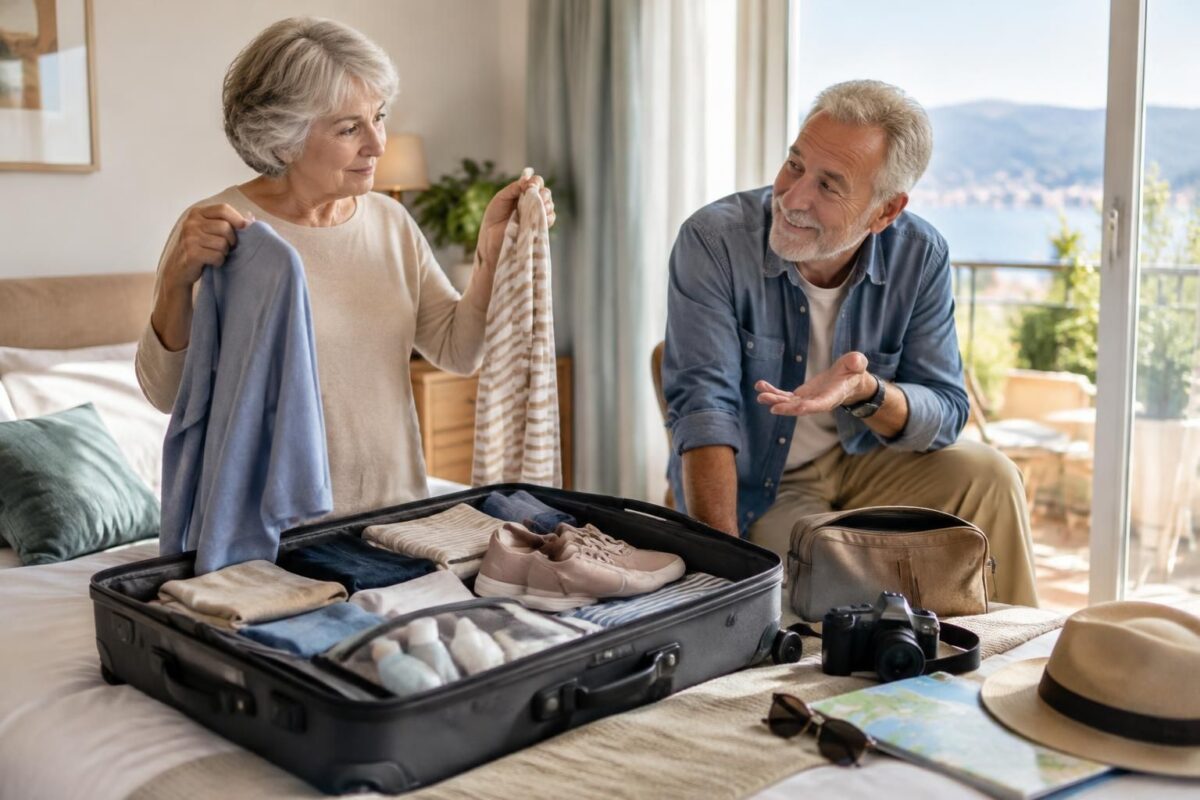
Destinations for seniors: short stays, do you really need to take everything?
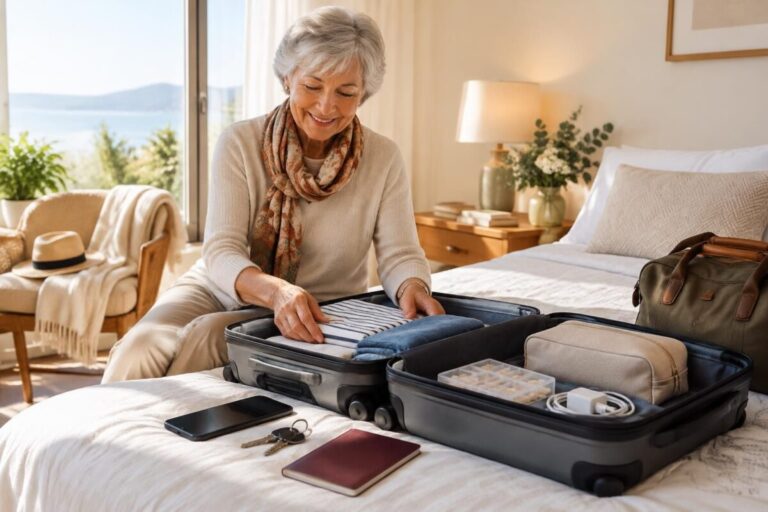
Hello there, it’s Lucien. For a short trip as a senior, it’s best to pack light, choosing each item according to your destination, the length of your stay and your health needs. Light luggage makes getting around easier and leaves you with more energy to enjoy your trip. Good preparation isn’t about planning for everything: it’s about not forgetting the essentials.
Short trips for seniors: 5 tips to remember
- Check the weather and pack suitable clothes, plus a light layer in case it changes.
- Keep the medications you need in their original packaging, along with the relevant prescription, and put them in an easily accessible bag.
- Choose shoes you’ve worn before: a getaway isn’t the right time to try out a new pair.
- Check transport and accommodation conditions, including baggage allowances and whether there’s an elevator.
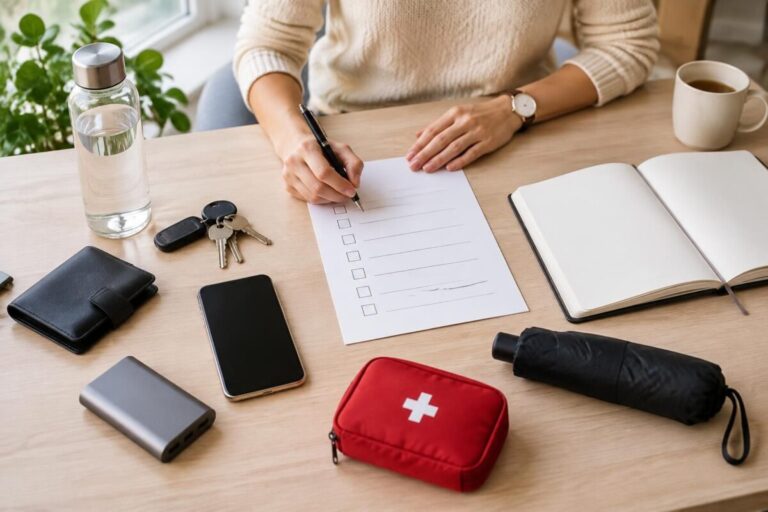
- Prepare a short departure checklist, then review it the day before instead of adding things out of worry.
To fine-tune your choices, also check out these tips on packing light and enjoying your destination more and these pointers on the safety of short trips. These two questions go hand in hand: the less complicated the journey, the easier it is to stay comfortable while traveling.
Why packing less can make your trip more enjoyable
A small suitcase is easier to carry through a train station, a hotel lobby or along a cobbled street. It also cuts down on the time you spend looking for your things. For a two- or three-night stay, several complete changes of clothes are rarely necessary.
A common pitfall is packing for every possible unexpected event. But adding things “just in case” makes your luggage heavier without always providing any real security. It’s better to find out in advance which shops are nearby and what services are available at your destination.
Travel essentials: distinguishing necessities from nonessentials
Travel essentials vary depending on your plans. A city break mainly calls for comfortable shoes and clothes suited to walking; a countryside getaway may require a waterproof jacket and warm clothing.
A simple example: Monique is spending three nights in a city she doesn’t know well. She chooses two easy-to-coordinate outfits, a comfortable pair of shoes, her usual toiletries and her medications. This leaves room for a bottle of water and a few purchases without having to carry a bulky suitcase.
| Length of stay and plans | Top priorities to pack | What to avoid |
|---|---|---|
| Two nights in a city | Two outfits, comfortable shoes, a charger and medications | Several pairs of shoes |
| Three or four nights with outings | One versatile extra outfit and a suitable jacket | A different outfit for every part of the day |
| All-inclusive stay | Clothes suited to the activities and the establishment’s rules | Packing items already provided at your destination without checking first |
Destinations suited to seniors: plan for comfort and accessibility too
The amount of luggage you bring isn’t the only factor in deciding whether a destination is right for you. The accessibility of destinations matters just as much: the distance between the station and your accommodation, stairs, places to rest and access to local transport can all affect your experience.
A hotel with an elevator and a nearby transit stop can make a short getaway more relaxing than a charming but isolated place to stay. Before booking, ask specific questions about steps, the shower and distances you’ll need to cover. Destinations suited to seniors are also easy to recognize by how simple it is to plan your journeys.
All-inclusive stay or a tailor-made trip?
An all-inclusive stay can simplify meals and getting between activities, but it doesn’t automatically guarantee comfort suited to everyone. Check what’s included, the distances within the property and whether you can rest between outings.
On the other hand, organizing a short trip yourself gives you more freedom to choose the schedule and pace. However, this option means checking more details before you leave. The best choice is the one that reduces the actual demands on you, not the one that promises the most activities.
A three-step process for packing your suitcase
- Decide what you’ll need for your trip. Note the length of your stay, the forecast, your activities and your health needs. This first list helps you distinguish useful precautions from overpacking.
- Pack one outfit for each day, then adjust. Add just one versatile item if the weather or your plans call for it. Make comfortable shoes and medications top priorities.
- Check accessibility and departure details. Confirm baggage rules, how accessible your accommodation is and what transport options are available. Finally, review your departure checklist and remove anything that doesn’t serve a specific purpose.
These preparation tips make getting ready to leave easier to manage without turning your suitcase into a stockpile for every eventuality. For a short trip, the goal is simple: bring what you need to feel comfortable, while keeping enough freedom to get around without unnecessary effort.
How many outfits should I pack for a three-night stay?
Generally, plan on one outfit per day, with pieces that are easy to coordinate, and an extra layer if the weather or your activities call for it. Also check whether you’ll be able to wash or dry clothes at your destination.
Where should I keep my medications during the journey?
Keep the medications you need in their original packaging, in an accessible bag. Bring the relevant prescription and check the rules that apply to your chosen mode of transport.
How can I check whether a destination is accessible?
Ask specific questions about stairs, elevators, distances, nearby transport and bathroom facilities. Concrete answers are more useful than a general statement about accessibility.
Does an all-inclusive stay make it possible to travel lighter?
It can reduce some needs, such as toiletries or food to bring along, but you should check what the establishment actually provides and what activities are planned.
I hope you’ve found these tips helpful. See you soon! — Lucien