Travel health: how much medication should you pack?
Hello, Lucien here. For a trip, plan to take enough for the entire length of your stay, plus a reasonable buffer based on your treatments and destination. A well-calculated reserve helps avoid an interruption in care without turning your travel first-aid kit into an improvised stockpile. For long-term treatments, your prescription, storage requirements and the rules of the country matter just as much as the number of boxes.
Do this now
- Note the exact length of your trip, including travel days, and calculate the doses you will need through your return.
- Ask your doctor or pharmacist for advice on setting an appropriate buffer, especially if your stay could be extended.
- Keep medications in their original packaging, with the package leaflets and prescription.
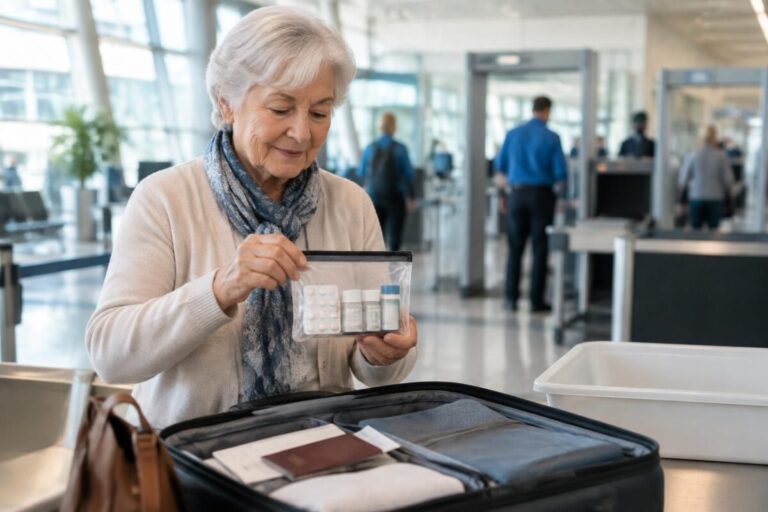
- Keep essential medications in your carry-on baggage and check the storage requirements for temperature-sensitive products.
- Check the rules for carrying medications and the documents required by your destination country.
To complete your preparations, you can also read these tips on commonly forgotten items in a first-aid kit and on feeling tired before a trip.
How much medication should you plan to take for your trip?
The amount of medication to take depends first on the number of days, how regularly you take your treatment and how easy it will be to get help at your destination. For a two-week stay, you need at least enough to cover the doses planned for those fourteen days, including travel days, then discuss a safety buffer with a healthcare professional.
There is no universal percentage for this buffer. A delayed flight or a few extra days may warrant taking a reserve, but some medications do not keep for long or cannot be transported without special precautions.
Long-term treatment: plan ahead rather than randomly doubling up
For long-term treatment, work out how much you need based on your prescription and the actual length of your trip. Do not increase your doses to “make up for” anything, and do not replace a medication with a product found abroad without professional advice.
In France, the usual dispensing period is generally limited to four weeks to thirty days of treatment, depending on the packaging. For a trip abroad lasting more than one month and less than six months, an exemption may sometimes allow the medication to be dispensed all at once, subject to certain conditions: this must be arranged by the doctor and approved by the pharmacist. It is neither automatic nor intended to create an emergency supply.
| Situation | Helpful guideline | What to check |
|---|---|---|
| Short stay | Plan enough doses for the entire trip, including travel days, with a buffer discussed if needed. | Return dates and available packaging. |
| Trip abroad lasting more than one month | An exemption may be considered if the conditions are met, for up to six months maximum. | Prescription with the required wording, doctor’s approval, steps to take with the pharmacist and any required approval from the health insurance fund. |
| Medication subject to special rules | The exemption does not remove the restrictions that apply to certain prescriptions. | Authorized duration, supporting documents and the country’s regulations. |
| Temperature-sensitive medication | Plan transport that keeps it within its required storage temperature. | Advice from the pharmacist and conditions for carrying it in the cabin. |
Medications for travel: a suitable kit, not a full pharmacy
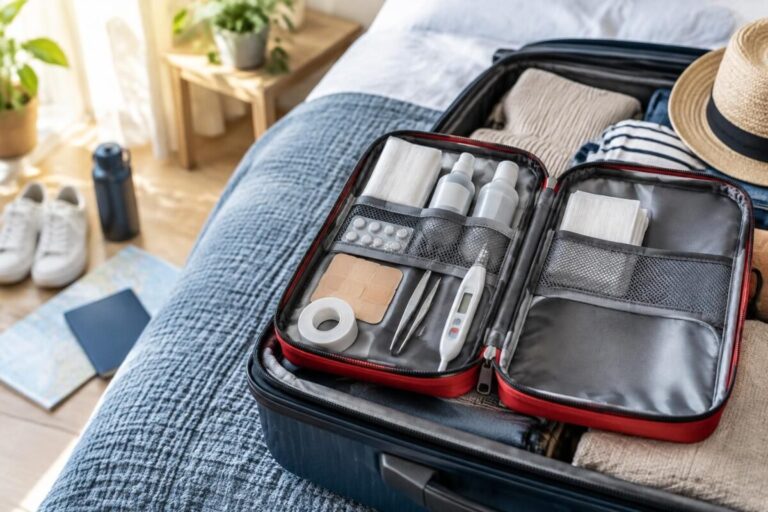
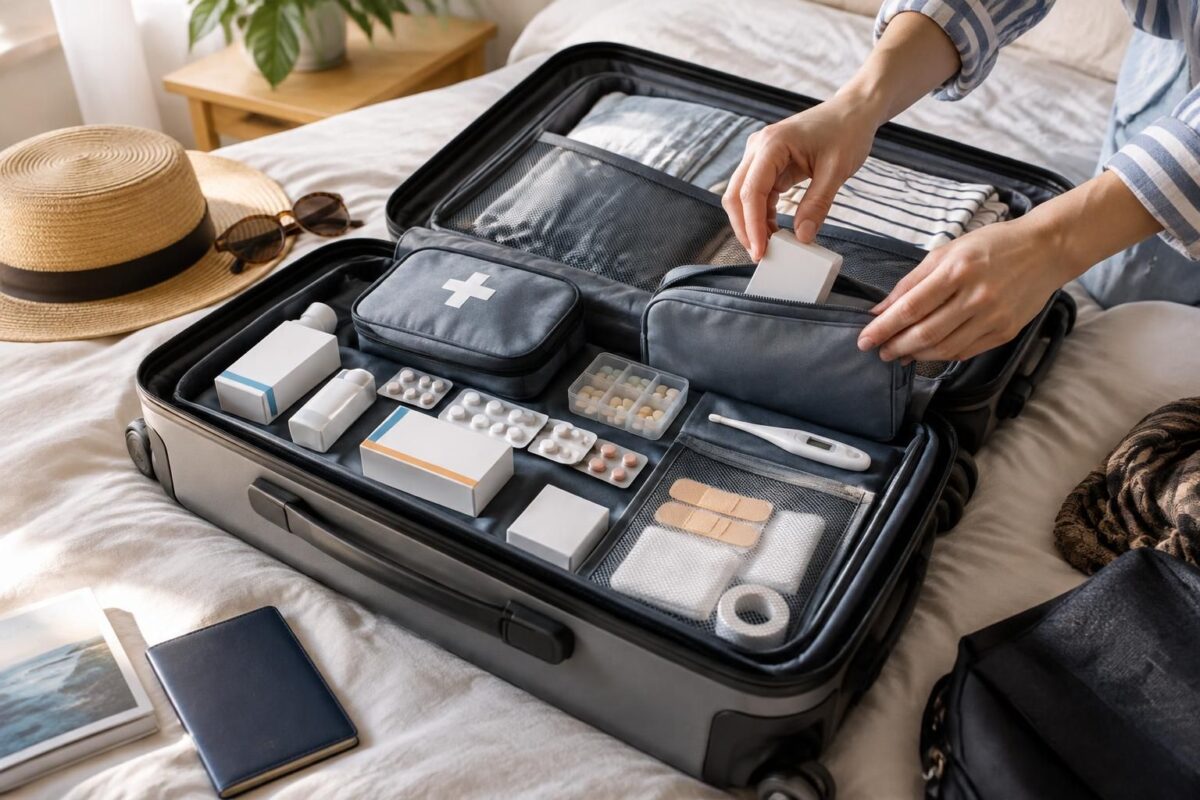
The essential medications you need depend on your needs, medical history and destination. A compact kit can include your usual treatments, a thermometer, dressings and a few basic care items chosen with a healthcare professional. Adding products “just in case” is only useful if you know when and how to use them.
- Prescribed treatments, in sufficient quantities and in their original packaging.
- A copy of your prescription, with the names of the active ingredients if possible.
- Basic first-aid supplies and a thermometer.
- An oral rehydration solution if it is appropriate for the traveler.
- Protection suited to your trip, such as sunscreen or mosquito repellent.
For children, doses are calculated according to weight, and products must be suitable for their age. For older adults, tell your doctor or pharmacist about any allergies, anticoagulants, chronic conditions and medications you already take: this can help avoid interactions and duplicate ingredients, particularly with paracetamol.
Prescriptions and rules for carrying medications
Keep the original boxes and labels: they make it possible to identify the medication and its directions for use. A prescription and, depending on the country or product, additional supporting documentation can make checks easier. Check the requirements before you leave, especially for medications subject to specific regulations.
For a trip abroad lasting more than one month and less than six months, the doctor can prescribe the treatment using its international nonproprietary name and add the wording authorizing dispensing all at once for travel abroad, together with the relevant duration. The pharmacist checks the documents and may request a sworn statement or, in some situations, prior approval from the French Health Insurance system. Restrictions applicable to certain medications remain in force.
A product that needs to be kept cool should not be left in a hot car or placed in checked baggage without checking first. Ask your pharmacist how to protect it during the journey, and check with the airline about carrying medical equipment.
Three steps to prepare your supply before you leave
- Take inventory. List each treatment, the prescribed dose, the number of doses per day and the dates of your trip, including travel days.
- Have the quantity confirmed. Ask your doctor or pharmacist what buffer is reasonable and whether you need to take any special steps to obtain your treatment.
- Plan how to transport it. Keep essential products accessible, prepare your documents, and check storage requirements as well as the country’s rules.
This travel health advice does not replace guidance tailored to your medical history. Also check the terms of your travel health insurance and how care is covered at your destination. If you develop a fever after a stay in a malaria area, have difficulty breathing, become dehydrated or are bitten by an animal that may carry disease, seek medical help promptly and mention the country you visited.
Frequently asked questions about medication supplies for travel
Should you take 20 to 30% more medication?
There is no percentage that works for everyone. The buffer depends on your treatment, destination and access to healthcare. Ask your doctor or pharmacist to determine it.
Can you carry your medication in a pill organizer?
For your journey, it is best to keep medications in their original packaging to make them easier to identify and preserve useful information. Also keep your prescription close at hand.
How can you get several months of medication for a trip abroad?
An exemption may be considered for a stay abroad lasting more than one month and less than six months, subject to certain conditions. The doctor must issue an appropriate prescription, and the pharmacist checks the required documents.
Should you take antibiotics just in case?
No, not without a medical assessment and specific instructions. A travel kit should not be used to take antibiotics without professional advice.
Thanks for reading! Feel free to share your thoughts in the comments. — Lucien