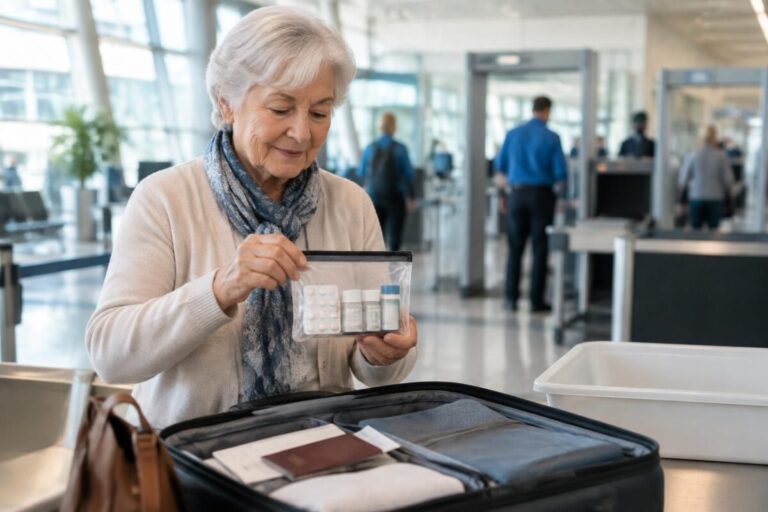
Travel health: up-to-date vaccinations, a formality or real protection?
Hello, it’s Lucien.
No, being up to date on your vaccinations is not a minor detail: vaccines reduce certain health risks, but they do not replace precautions at your destination or medical advice tailored to your health.
For seniors, the best approach is to check your vaccination record as soon as you know your destination. Which vaccines may be useful depends on the country, length of stay, planned activities, and any medications you take.
Good habits to adopt
- Check your routine vaccinations, particularly diphtheria, tetanus, and polio, as well as any booster shots.
- Make a note of your destination and dates: recommendations vary by region and length of stay.
- Book an appointment early, ideally several weeks before departure, as some vaccination schedules require multiple doses.
- Tell your healthcare provider about your medications and health conditions, especially immunosuppression, a chronic illness, or an allergy.
- Also plan to protect yourself against mosquitoes and ticks: covering clothing and approved repellents can complement immunization.
A consultation can help distinguish which vaccines are essential, recommended, or unnecessary for your itinerary. To prepare for your appointment, you can also read these tips on seeing a doctor before departure and this overview of a pre-travel health check-up.
Up-to-date vaccinations: useful but targeted protection
Being up to date on routine vaccinations is a good foundation, not a guarantee against all infections. Some travel vaccines, such as those against hepatitis A, yellow fever, or rabies, are only considered depending on the destination and possible exposure.
Travel health recommendations are updated in 2026 based on epidemiological data and product safety. They distinguish between essential measures, strongly recommended measures, and those to be discussed on a case-by-case basis: this distinction is particularly important after age 70.
Why age and medications affect the decision
A live vaccine may not be recommended in certain cases of immunosuppression. Yellow fever vaccination, for example, requires an individualized medical assessment for older or frail people; it may also be required for entry into certain territories.
Protection against dengue or chikungunya is not automatically relevant to every traveler. Recommendations depend in particular on the circulation of the viruses, the length of stay, and the characteristics of the vaccine. In 2026, the IXCHIQ vaccine against chikungunya is not recommended for people over 65 according to the recommendations provided: you should not choose a vaccine based solely on general advice.
| Travel situation | What to check | Useful step |
|---|---|---|
| Stay in a region where hygiene may be inadequate | Hepatitis A vaccination | Ask for advice, even for an organized trip |
| Tropical destination or entry requirement | Yellow fever and required certificate | Consult an authorized center well in advance |
| Long or remote stay, or possible contact with animals | Rabies risk and access to medical care | Discuss preventive vaccination |
| Travel with a chronic illness or while taking immunosuppressive medication | Vaccine compatibility and booster shots | Have your medical records reviewed before departure |
The table can help you prepare questions, but it does not replace country-specific recommendations: the same vaccine may be relevant for one traveler and unnecessary for another.
A common pitfall: thinking one vaccine is enough
Vaccination does not protect against every infection, nor does it prevent bites, stings, or illnesses transmitted through water or food. So even if Mireille, 74, is up to date on her boosters, she may still need to plan to use repellent, wear covering clothing, and be especially cautious around animals.
If there is a risk of rabies, vaccination before departure never eliminates the need for treatment after a bite or scratch. Wash the wound with soap and water for 15 minutes, then promptly contact a rabies treatment center or local medical service.
Prepare for travel vaccinations in three steps
- Gather the information: exact destination, dates, length of stay, planned activities, vaccination record, and list of medications.
- Have the risks assessed by a doctor or an international vaccination center. The decision takes into account your age, medical history, and the schedule required for each dose.
- Confirm the plan before departure: vaccines received, any booster shots, required certificates, and measures to prevent illnesses at your destination.
This preparation helps avoid two opposite mistakes: leaving without protection that is genuinely needed, or getting a vaccine without checking that it is suitable for your health. Being up to date on your vaccinations is therefore a real safeguard when the vaccines are chosen for the right trip and are part of a broader travel health strategy.
Should you get all your vaccinations again before you leave?
No. A healthcare professional will check your vaccination record and booster shots; only missing doses or vaccinations suited to your destination will be considered.
How far in advance should you plan?
As soon as you know your destination, if possible several weeks in advance. Some vaccines require multiple doses or take time to provide protection.
Does rabies vaccination mean you do not need to seek medical advice after a bite?
No. Even if you were vaccinated before your trip, you must immediately wash the exposed area and seek medical advice without delay: post-exposure treatment is still necessary.
Are the recommended vaccines the same for all seniors?
No. Age, chronic illnesses, medications, destination, and activities all influence recommendations. Personalized advice helps balance benefits and risks.
Thanks for reading! Feel free to share your observations in the comments. — Lucien