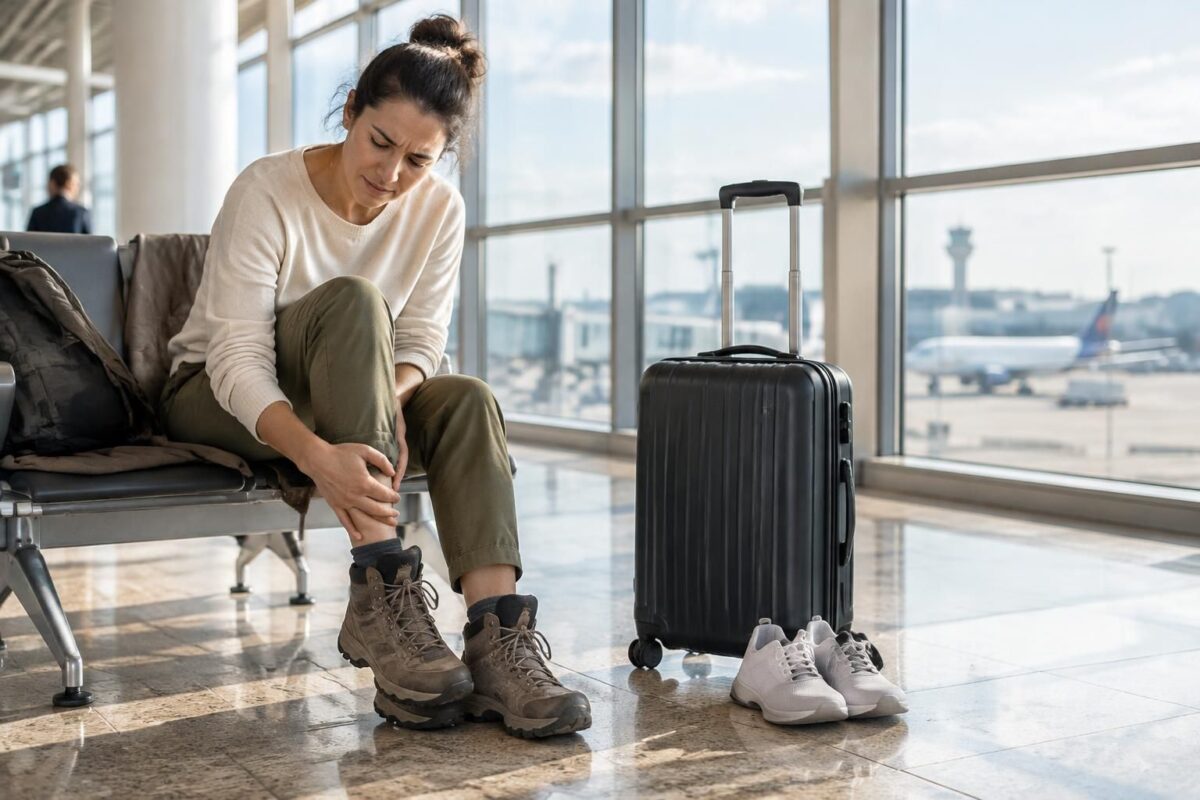
Travel health: Heavy shoes, a bad idea when traveling?
Hello, it’s Lucien.
Yes, heavy shoes can quickly tire your legs while traveling, especially if they’re not suited to the walking you have planned.
To keep your feet comfortable, the best choice isn’t necessarily the lightest pair: they should also support your feet and suit your itinerary. A few checks before you leave can help prevent blisters and cut-short days.
Good habits for choosing travel shoes
- Choose a pair you’ve already worn and find comfortable, rather than new shoes.
- Check that your toes can move freely and your heel doesn’t slip.
- Match the sole to the terrain: city streets, uneven paths, or long walks.
- Try on shoes at the end of the day, when your feet may be a little swollen.
- Pack a lightweight spare pair if your trip allows, without adding unnecessary weight to your luggage.
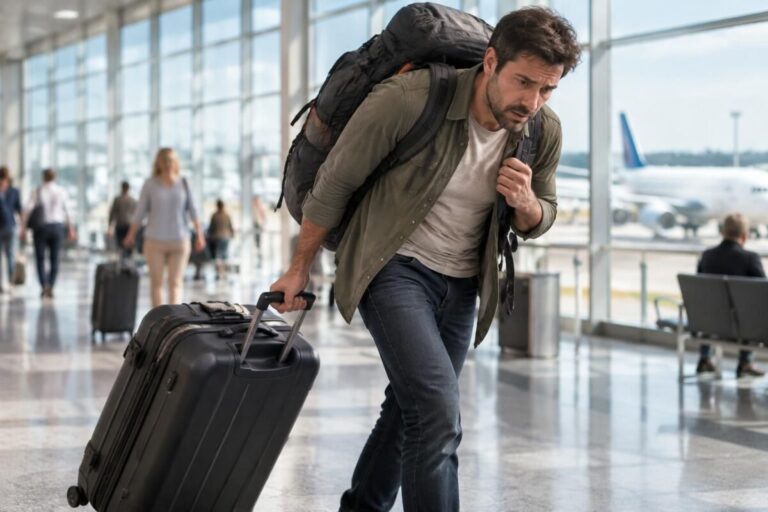
Weight matters, but it’s not everything. To reduce leg fatigue, also think about the distance you’ll cover and take breaks, as explained in these tips for avoiding too much walking while traveling and this advice on managing long distances at the airport more comfortably.
Heavy shoes: weight isn’t the only pitfall
Sturdy boots can be useful on a trail, but cumbersome during a day of sightseeing in the city. Conversely, lightweight shoes without enough support can make your feet work harder on uneven ground.
Imagine Marc, who’s planning a trip with several hours of walking each day. If he chooses a heavy pair simply because it seems sturdy, every step will take a little more effort. But if he opts for a lightweight shoe that’s too flexible, his feet may lack stability: the best choice is still the one that suits the route.
Compare shoes based on the day ahead
A city stroll on flat ground doesn’t have the same requirements as a rocky path. Before packing, estimate how long you’ll be walking, what the ground will be like, and whether you’ll be able to return and rest.
| Plan | Shoe to choose | What to check |
|---|---|---|
| City sightseeing | Lightweight, stable, already-worn pair | Cushioning and no rubbing |
| Uneven paths | Shoe with suitable support | Grip and stability |
| Day of travel | Flexible pair that’s easy to take off | Comfort while sitting and standing |
Luggage weight is also worth considering: an extra pair can be useful, but it should meet a real need. One well-chosen pair that you’ve worn in advance is often better than several bulky options.
Prepare your feet before walking while traveling
Blisters often appear when shoes rub, socks bunch up, or you increase your walking too quickly. It’s best to test your shoes on several short walks before leaving, rather than discovering their flaws on the first day of your trip.
If you notice redness or pain, don’t push through in the hope that the shoe will “break in.” Change your socks if they’re damp, protect the sore spot, and cut back on walking; persistent or unusual pain warrants advice from a healthcare professional.
Three steps before you leave
- Do a realistic trial. Walk in the shoes and socks you plan to wear, for about as long as your usual walks.
- Check for pressure points. After walking, check your heels, the sides of your feet, and your toes. Repeated rubbing is a sign to take seriously.
- Adjust your plans. Schedule breaks and build up gradually, especially if your sightseeing days will be longer than usual.
Suitable shoes can’t guarantee you won’t get tired, but they can help distribute the effort more evenly. For your health and well-being while traveling, it’s best to prepare your feet, your itinerary, and the pace of your days.
Practical questions about heavy shoes while traveling
Should you avoid all heavy shoes while traveling?
No. They may be suitable for certain types of terrain or support needs. For extended city sightseeing, a lighter, stable, comfortable pair is often more practical.
Are lightweight shoes always more comfortable?
Not necessarily. A lightweight shoe that’s too flexible or doesn’t fit properly may lack stability and cause rubbing. Support, fit, and terrain matter just as much as weight.
How can you prevent blisters during a trip?
Wear a pair you’ve already tested, choose socks that don’t bunch up, and promptly check any areas where your shoes rub. If you feel pain, take a break and adjust your walking rather than pushing on.
I hope you’ve found these tips useful. See you soon! — Lucien