Senior safety: flying while on medication—what should you check?
Hello, Lucien here.
Yes, you can generally take your medications on a plane: keep them in your carry-on and check the rules in your destination country, especially for controlled medications.
A few checks before departure can help prevent an interruption in treatment or a hold-up at security. The rules vary depending on the medication, destination and sometimes the airline.
What to do now
- Pack your medications in your carry-on, where they’ll be accessible during the trip.
- Keep them in their original packaging, with the label clearly visible.
- Bring an up-to-date prescription, ideally showing the generic names of the medications.
- Check the destination country’s aviation regulations for controlled medications.
- Plan for any special needs: refrigeration, syringes, needles or medical liquids.
It’s easier to prepare when your medications are clearly identifiable and within reach. You can also read these tips on medications in your carry-on and advice on flying after 75.
Traveling with medication: what security may check
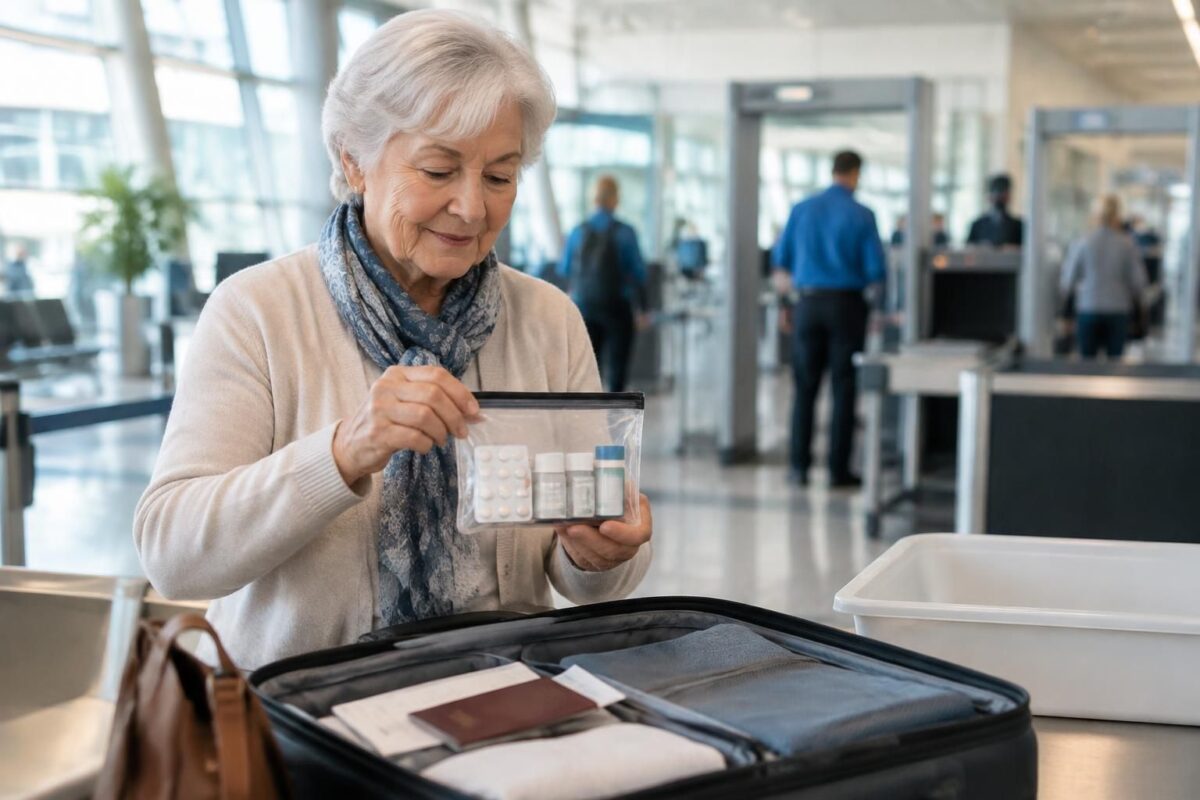
Security officers may ask to inspect your medications, particularly if you’re carrying liquids, medical equipment or a large quantity. Present them separately if that makes the inspection easier, and calmly explain what they’re for.
A prescription helps justify your treatment, but it doesn’t replace an import permit when the country requires one. For some medications containing regulated substances, such as opioids or psychotropic drugs, you may need to take steps in advance.
| Situation | What to check before departure |
|---|---|
| Tablets and capsules | Original packaging, an amount appropriate for your stay and a prescription. |
| Liquid medications | Security rules for medical liquids and proof of need available. |
| Controlled medication | The country’s import rules, any required permit and necessary documents. |
| Refrigerated medication | Storage requirements, transit time and any approval needed from the airline. |
| Syringes or medical equipment | Medical documentation and the airline’s transport instructions. |
A medical certificate isn’t required for every medication or on every flight. However, it can be useful for explaining a device or treatment, while some destinations require specific documents: check with the official authorities and the airline.
Your carry-on helps ensure continuity of treatment
Don’t put all your medication in checked luggage. If your bag is delayed or lost, you could be left without essential doses, so keep enough in the cabin for your trip, plus a small extra supply if your doctor thinks that’s appropriate.
If a medication needs to be kept cool, don’t assume the staff will be able to store it in a refrigerator. Ask the airline for instructions before departure and arrange a transport solution approved for your medication.
If you have a connecting flight or a long journey, write down your doses and schedule. This can help prevent missed doses if jet lag or fatigue disrupts your routine.
Prepare your medications according to your destination
Aviation regulations apply to airport procedures, but a country’s entry rules are also set by its authorities. A medication that’s permitted at home may be restricted elsewhere, even if it was prescribed by a healthcare professional.
Before you leave, check the destination country’s official information, especially if your medication contains a controlled substance. Don’t send your medications by mail or transfer them to an unlabeled pill organizer to cross a border: the original packaging makes them easier to identify.
- Note the brand name and the name of the active ingredient.
- Bring a copy of your prescription and, if necessary, a translation.
- Check the permitted quantities and import requirements.
- Ask your doctor or pharmacist for advice before changing a dose or schedule.
These health precautions are also part of senior safety: it’s better to check a document in advance than to have to improvise at the airport or on arrival.
A stress-free departure in three steps
- Review your plans with your doctor or pharmacist. Confirm the quantities you’ll need, when to take them and how to store them.
- Check the transport and entry rules. Consult the airline and the destination country’s official sources for rules on liquids, medical devices and controlled medications.
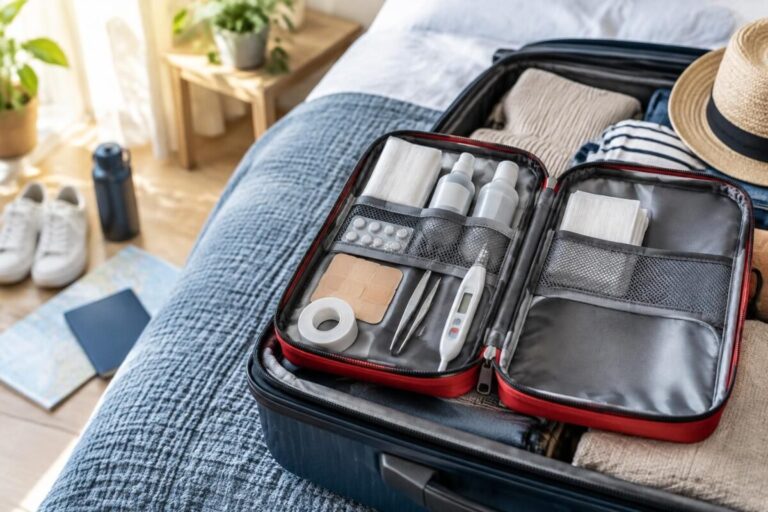
- Prepare an easy-to-reach pouch. Gather your medications in their packaging, your prescription and any necessary supporting documents, then keep everything in your carry-on.
For example, if you’re carrying refrigerated medication or a restricted treatment, don’t rely on the prescription alone: also check storage requirements and the formalities required at your destination. This double-check helps you avoid discovering a rule at the boarding gate.
Practical questions about flying with your medications
Can I carry my medications in my carry-on?
Yes, this is generally preferable to avoid an interruption in treatment if your luggage is delayed or lost. Keep your medications identifiable and check the rules that apply to liquids and medical equipment.
Is a prescription enough to travel with a controlled medication?
Not always. Some countries require a permit or additional documents. Check the destination’s official rules before departure.
Do I need a medical certificate to pass through security?
It is not always required. It can be useful for explaining a medical device or a particular need, but requirements vary depending on the trip and the country.
What should I do with medication that needs to be kept cool?
Ask your doctor or pharmacist for advice and check the airline’s instructions in advance. Plan a solution suited to the length of the trip and the product’s storage requirements.
Thanks for reading! Feel free to share your thoughts in the comments. — Lucien