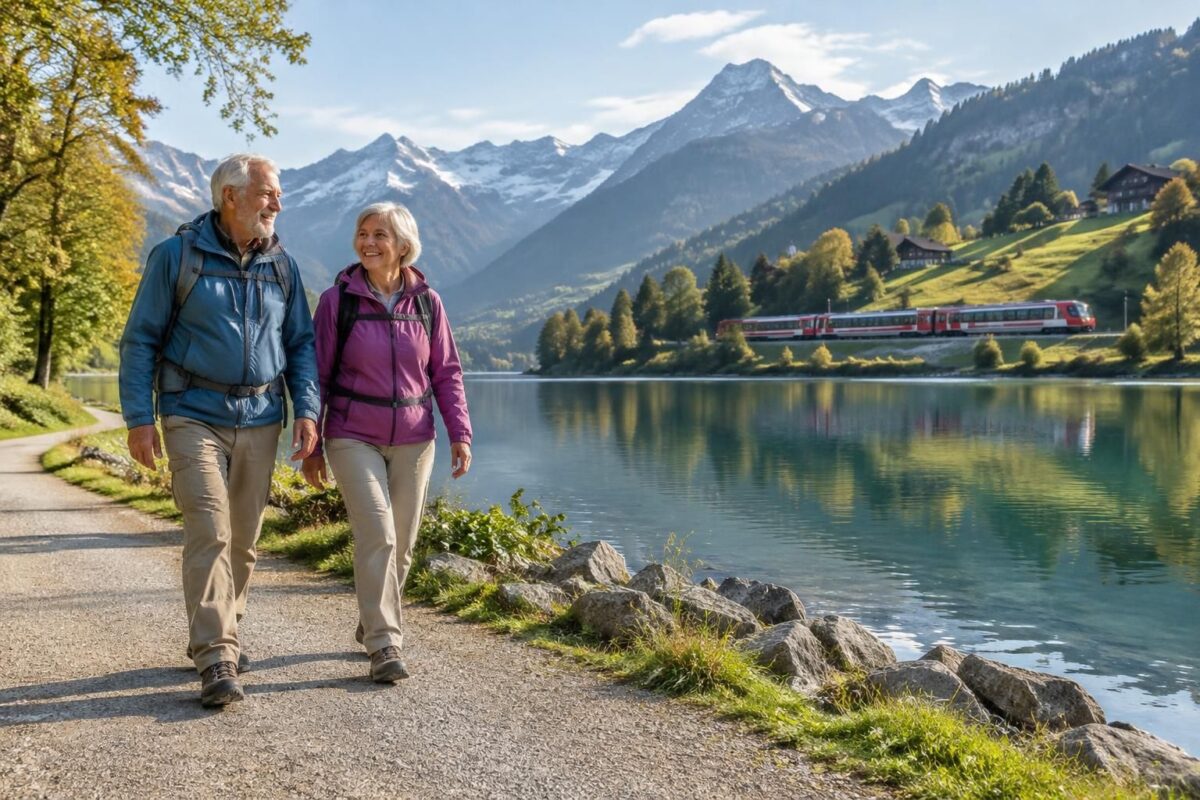
Senior destinations: safer senior travel in Switzerland?
Hello, Lucien here. Yes, Switzerland can offer a safer trip for older travelers, provided you tailor the stay to your health, mobility and pace. Transport is generally reliable and healthcare is high quality, but stairs, altitude and tight connections call for some planning. A few simple choices can help you enjoy the country without turning every journey into a challenge.
Good habits to adopt before a trip to Switzerland as an older traveler
- Ask your doctor for advice if you take regular medication, have a chronic condition or are unsure whether you are fit to travel.
- Prepare your medication and medical documents in an easily accessible bag, along with your prescriptions and useful contact details.
- Choose straightforward journeys: few connections, comfortable departure times and short stages.
- Choose accessible accommodation that is well lit and close to transport, a pharmacy or a medical service.
- Plan for breaks, water and a flexible pace, especially on a day in the mountains or in hot weather.
To choose an itinerary that leaves you time to catch your breath, you can also read these tips on an organized trip to Switzerland and this comparison of gentle nature and a more accessible city.
Safety for older travelers: the real advantages and precautions
Switzerland has an extensive rail network, well-developed medical services and cities where public transport often makes getting around easier. These advantages enhance safety for older travelers, but they do not guarantee that every station, hotel or trail will suit every level of mobility.
The terrain remains an important factor. A walk near a lake can be relaxing, while a hillside village or a journey at high altitude can be more tiring than expected. The best choice is therefore not necessarily the most famous destination: it is the one that suits the traveler’s abilities and interests.
Safe transport in Switzerland: choose according to your energy level
The train is often a comfortable option because it avoids driving and lets you get around without standing for long periods. To reduce stress, check connections, locate elevators and request assistance at the station if you need it; facilities can vary from one place to another.
By car, it is best to plan short journeys, drive during the day and stop regularly. Regional buses can be convenient, but getting on quickly or making a tight connection can complicate the journey: check the schedules and the route to the stop before setting out.
If you need mobility assistance, planning ahead can make a real difference to your departure. These tips on requesting assistance at the station or traveling with a wheelchair can help you anticipate your needs rather than deal with them in a rush.
Destinations suited to older travelers: city, lake or mountains
A city such as Lucerne or Lausanne can be a good fit for a cultural stay if your accommodation is centrally located and you space out your visits. Museums, markets and breaks by the water offer a range of activities without requiring a long hike.
The mountains are appealing for their scenery, but it is wise to take altitude, elevation changes and the weather into account. For a first stay, a short excursion with a planned return by train or cable car may be more comfortable than a packed schedule spread over several days.
Accessible tourism in Switzerland takes some planning: check the practical details, including elevators, steps at the entrance, the distance between the station and the hotel, the availability of seating and access to restrooms. An address described as “central” is not necessarily suitable if it is at the top of a steep street.
Health and travel assistance: prepare without worrying
A medical appointment before departure can help confirm that your planned journey and activities are suitable. Your doctor can also confirm when to take your medication or discuss possible adjustments; you should not change a dose on your own.
Keep your medication in its original packaging and allow a reasonable extra supply in case of delays. A list of your medications, allergies and medical contacts can help healthcare professionals respond more effectively if a problem arises.
Travel insurance for older travelers deserves careful review, even for a trip within Switzerland: check the coverage, deductibles, covered expenses and conditions relating to pre-existing conditions. The coverage available to you may depend on your circumstances and your policy; if in doubt, confirm with your insurer before departure.
Compare stay options according to your needs
The best way to travel depends less on age than on your energy level, independence and need for support. A trip to Switzerland as an older traveler can be independent, organized with a loved one or part of a guided tour for older travelers. Each option has its advantages: the key is knowing who will handle the bookings and unexpected situations.
| Type of stay | What to check before booking | Main advantage |
|---|---|---|
| Train and city | Connections, platform access, distance to the accommodation | Less fatigue from driving |
| Car and short stages | Breaks, parking, actual journey times | Flexible itinerary |
| Mountains and excursions | Altitude, slopes, weather and return option | Scenery and outdoor activities |
| Guided tour | Schedule pace, group size, assistance included | Organization and support from a tour leader |
For example, Monique, 78, wants to visit a museum and take a walk by the lake. By choosing a hotel near the station, planning just one main activity per day and taking a journey without a tight connection, she can stay independent while limiting fatigue. It is often this room to adapt, rather than an ambitious schedule, that makes a trip enjoyable.
Plan your departure in three simple steps
- Assess your needs. Talk with your doctor about your medication, mobility and planned activities. Note any constraints to consider, such as stairs or altitude.
- Book using specific criteria. Check accessibility, connections, the location of your accommodation and the terms of your insurance. Ask for direct confirmation if a particular facility is essential.
- Keep your schedule light. Plan one main activity per day, allow time for breaks and have a backup option in case you feel tired or the weather is bad. A flexible itinerary helps you enjoy your stay without pressure.
This preparation cannot prevent every unexpected situation, but it can help you manage them better. If your health or independence requires more regular support, it is also worth considering whether an independent stay is still appropriate or whether having someone accompany you would feel more reassuring.
Frequently asked questions about a trip to Switzerland as an older traveler
Can someone over 75 travel alone in Switzerland?
Yes, if their health and level of independence allow it. For a long or complex journey, traveling with someone close to them or booking assistance in advance can make the trip more reassuring.
Is the train suitable for older travelers?
It can be comfortable and convenient, but access and facilities vary between stations. Check connections, elevators and assistance options before departure.
Should you change your medication while traveling?
Not without medical advice. Ask your doctor how to schedule your doses and what to do if there is a time difference or a delay.
Which Swiss destinations are best when mobility is limited?
Choose centrally located accommodation, short journeys and activities whose accessibility has been checked. A city or a lakeside destination may be suitable, provided you check the slopes and access.
Thanks for reading! If this topic resonates with you, please feel free to leave me a comment at the bottom of the article. — Lucien