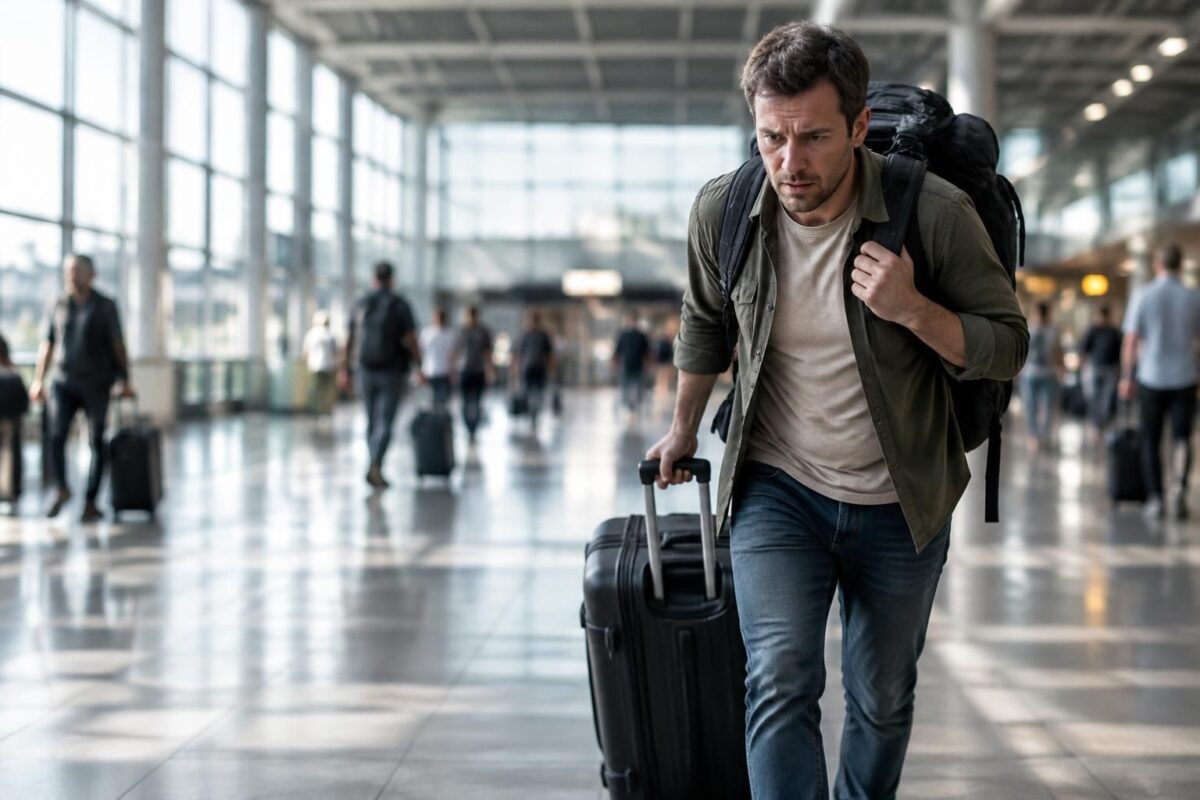
Travel health: carrying a heavy load on the outbound journey is more tiring
Hello, Lucien here.
To reduce travel fatigue, avoid carrying heavy luggage right from the start: spread the load and choose a wheeled suitcase.
The journey there sets the tone for your trip. Excessive physical exertion can already drain your energy before you even arrive.
Managing your luggage simply protects your comfort while travelling and supports your health, especially if you have pain or poor balance.
Good habits to avoid carrying heavy luggage on the way there
- Pack light: bring only the clothes and items you need.
- Spread the weight: keep heavy items near the bottom of a wheeled suitcase, not in a bag carried on one shoulder.
- Keep your hands free: use a lightweight crossbody bag or a small, well-fitting backpack.
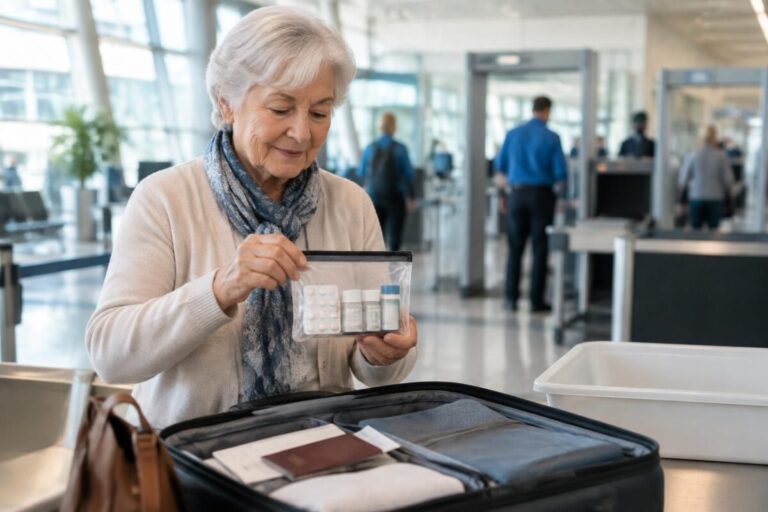
- Ask for help: at the train station or airport, ask staff for help with luggage that is difficult to lift.
- Take breaks: stop for a few minutes if you feel tension, shortness of breath or unusual fatigue.
Fatigue often increases when you forget to take breaks or set off already low on energy. To plan your stops better, read these tips on taking breaks during your trip and advice on how to avoid setting off already tired.
Wheeled suitcase or bag to carry: which is less tiring?
A wheeled suitcase generally takes less effort to move across a level surface. A carried bag, on the other hand, puts direct pressure on your shoulders and back, especially if it is heavy or poorly adjusted.
Imagine Marc, 72, who has to cross a large train station to make a connection. With a lightweight suitcase and a small bag for his documents, he keeps his hands free and avoids carrying loads on the stairs. The difference has less to do with the distance than with the repeated effort.
| Option | Effort required | Best when |
|---|---|---|
| Wheeled suitcase | Low on level ground, higher on stairs | Your route includes long corridors |
| Light backpack | Distributed across both shoulders | You need to keep your hands free |
| Bag carried on one shoulder | Concentrated on one side | Only for a few very lightweight items |
Preventing fatigue: three steps before you leave
Carrying heavy luggage is not proof of independence. Preparing your belongings and asking for a hand at the right time reduces the risk of pain and leaves you with more energy to enjoy your trip.
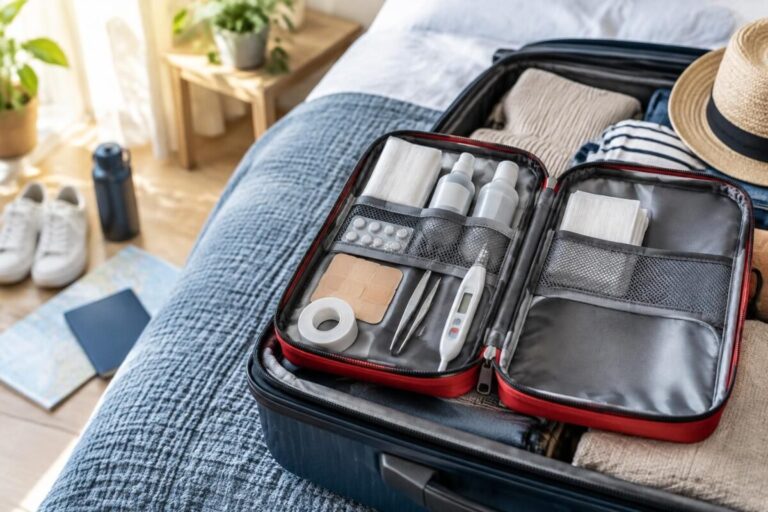
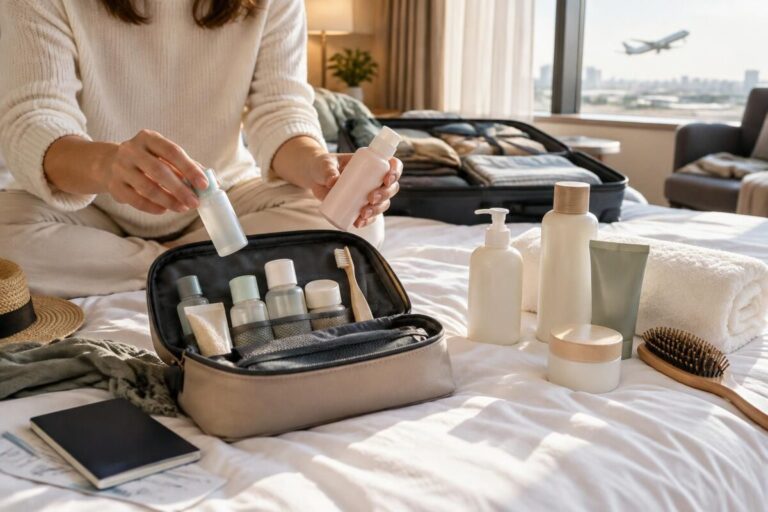
- The night before, sort through your things. Set your suitcase down open and remove the “just in case” items. If you are unsure, first check whether you can buy or borrow the item at your destination.
- In the morning, test the weight. Lift your luggage for a few seconds. If it takes considerable effort, lighten it or ask for help carrying it.
- At every stage, listen to your body. Slow down and rest if you feel pain, dizziness or unusual shortness of breath. If the symptoms persist or are severe, seek medical advice.
This approach is simple, but it can change the start of your trip: less physical effort often means you have more energy for sightseeing and unexpected events. A traveller’s well-being also starts with what they choose not to carry.
Practical questions about luggage and travel fatigue
What weight should I aim for with my luggage?
There is no ideal weight that works for everyone. Choose a load you can move without pain or significant effort, and lighten it if your route involves stairs or frequent transfers.
Is a backpack better than a handbag?
A lightweight, well-fitting backpack distributes the load across your shoulders better than a bag carried on one side. However, it should not be so heavy that it pulls you backwards or makes walking difficult.
What should I do if I get tired during the journey?
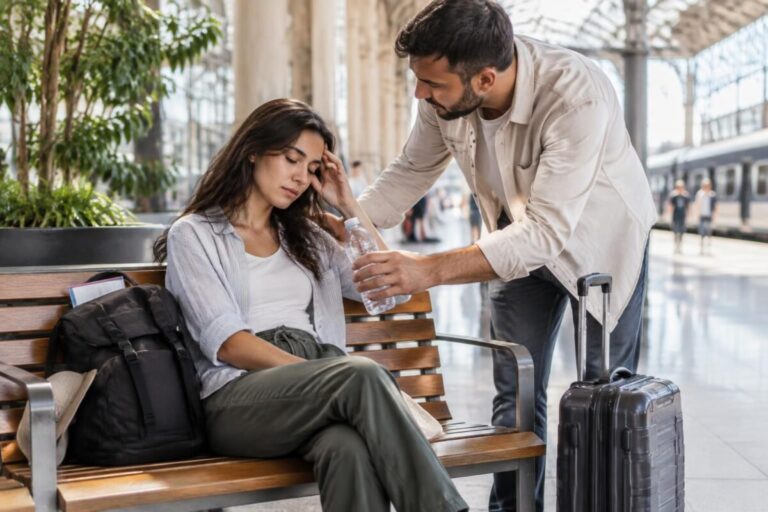
Stop somewhere safe, sit down if possible and take a few sips of water. If you have significant pain, persistent dizziness or unusual shortness of breath, ask for help promptly.
Can I ask for help with my luggage?
Yes. Train stations, airports and transport companies sometimes offer assistance, which may need to be booked or requested depending on the service. Checking before you leave means you will not have to carry a difficult load at the last minute.
I hope you found these tips helpful. See you soon! — Lucien