Practical tips: packing list, helpful or too rigid?
Hi, it’s Lucien. A packing list is useful as long as it stays flexible: it helps you avoid forgetting anything without turning preparation into a chore. To travel with peace of mind, it’s best to plan for the essentials and adapt the rest to your destination, the length of your stay and your health. A good travel checklist is a guide, not an inflexible rule.
Things to do now
- Write down the essentials: medication, documents, glasses and payment methods.
- Check the weather and plan a few suitable outfits rather than one for every possible situation.
- Choose easy-to-handle luggage, with wheels that roll smoothly if carrying a load is uncomfortable.
- Keep useful items within easy reach, especially in your carry-on luggage.
- Leave some room for unexpected events and purchases while you’re there.
For a more comfortable trip, also check out these tips on the benefits of packing light and on what you really need to bring for a short stay.
A useful packing list, as long as you stay flexible
A list helps prevent things from being forgotten, especially when several details need attention before departure. But it becomes too rigid if every item is treated as mandatory, even when the weather or plans have changed.
It’s therefore helpful to separate essentials from optional items when packing. For a stay of a few days, a comfortable pair of shoes may be more valuable than several changes of clothes.
A travel checklist as a safety net
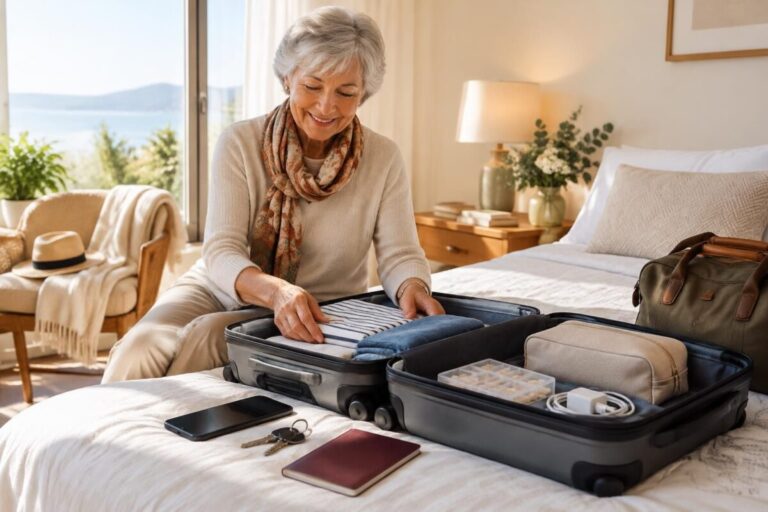
Imagine Monique, 72, who is taking a four-day train trip. She first checks off her medication, documents and charger, then chooses her clothes based on the forecast. Her list reassures her without obliging her to fill every available space in her suitcase.
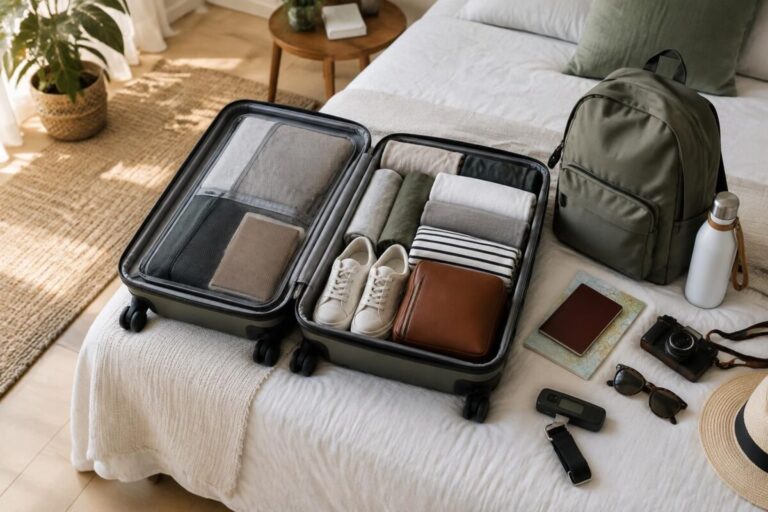
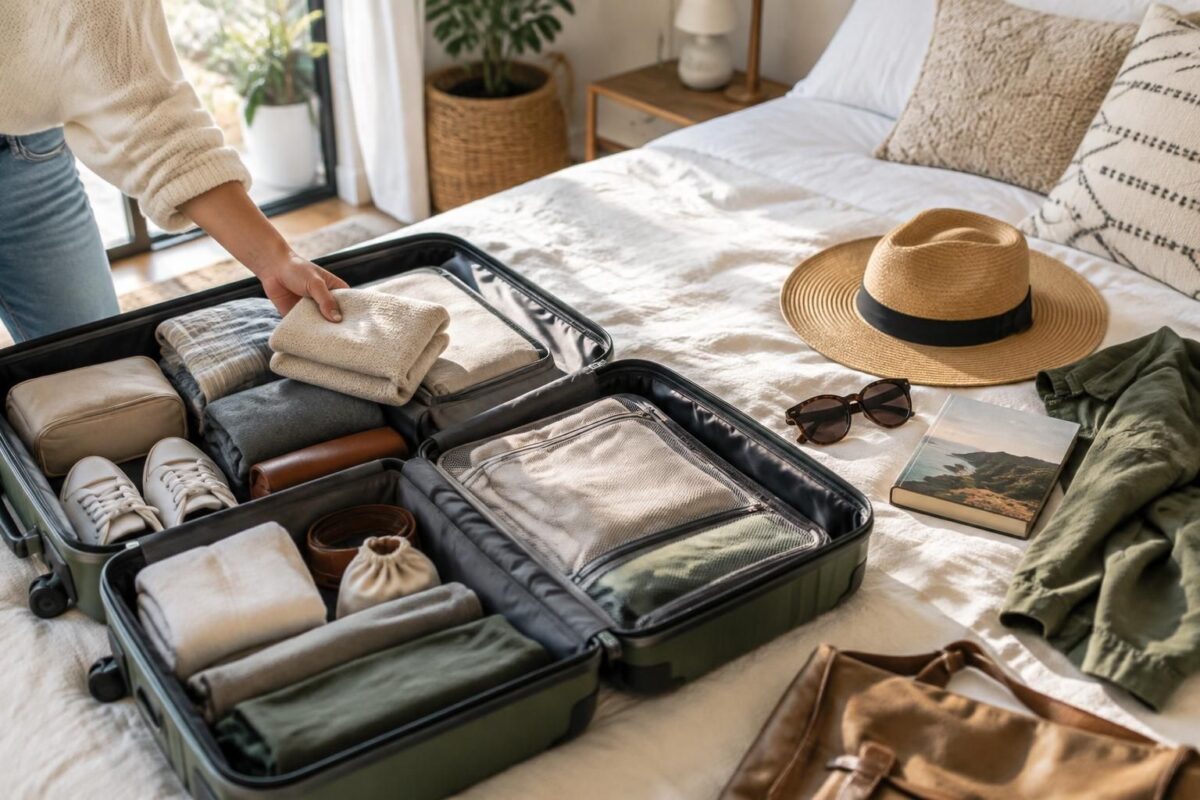
This approach also makes organizing your suitcase easier: grouping items by use makes it simpler to check everything and avoids having to take it all out at the last minute. The most effective packing tips are still simple, such as putting everyday items in a pouch that’s easy to find.
Adapt your list to your transport and trip
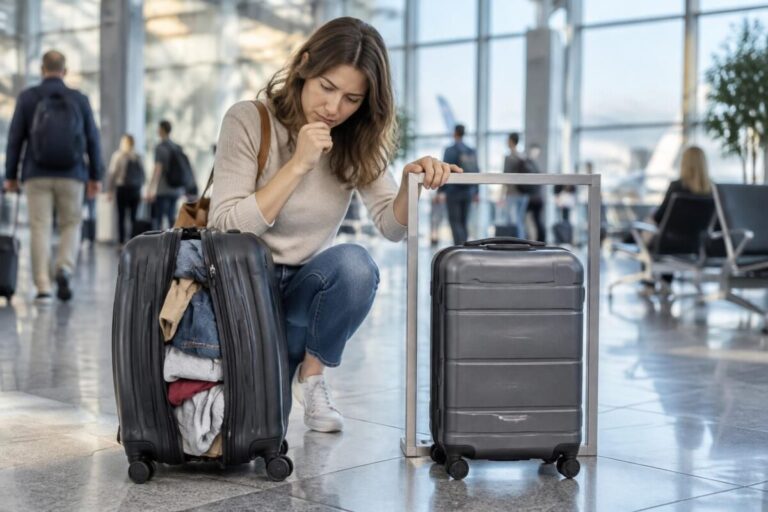
A trip by plane, train or car calls for a different arrangement. On a plane, the airline’s rules determine the permitted dimensions and weight for carry-on luggage; on a train, having quick access to medication or a bottle of water may matter more.
| Situation | What to prioritize | Why |
|---|---|---|
| Flight with carry-on luggage | Essentials and items you’ll need during the journey | They’ll stay accessible without having to open your checked suitcase. |
| Short stay | Versatile clothing and a compact toiletry kit | Fewer belongings make getting around easier. |
| Trip with multiple stops | Pouches separated by purpose | You can find what you need more quickly. |
| Fragile items | Protection between layers of clothing | The contents move around less during transport. |
Traveling light doesn’t mean giving up comfort. It means bringing what meets a real need and avoiding duplicates that make the journey heavier.
Finding the right balance between planning ahead and staying flexible while traveling
A soft-sided suitcase may have handy exterior pockets, while a hard-sided model offers better protection for certain items and is easy to clean. The choice depends on how you’ll use it: someone who keeps their belongings close may not have the same priorities as someone who checks their suitcase.
For fragile items, place them in the center and surround them with clothing. Keep medication you’ll need during the journey with you, and follow the storage instructions provided by your healthcare professional or on the label.
Pack in three simple steps
- Set your priorities: write down your documents, medication and essential items before thinking about clothes.
- Adapt what you pack: take into account the length of your stay, the weather, your mode of transport and your planned activities.
- Do one final check: check your documents, medication, chargers and the airline’s baggage rules.
This process keeps packing clear and straightforward without trying to anticipate every unlikely scenario. A well-planned list leaves room for the unexpected: that’s precisely what makes it useful.
Practical questions about packing lists
Should I make a packing list for every trip?
Yes, but a reusable basic list is enough. Adapt it to the length of your stay, your mode of transport, the weather and your health needs.
How can I avoid overpacking my suitcase?
Plan versatile outfits, limit duplicates and clearly distinguish essentials from optional items.
What should I keep in my carry-on luggage?
Keep your documents, any medication you’ll need during the journey, your glasses and a few useful items within easy reach. Check the airline’s rules.
Is a detailed list better for an older traveler?
It can be reassuring, especially for medication and documents. However, it’s best to keep the list clear and adaptable so it doesn’t make getting ready to leave more complicated.
Thanks for reading! If this resonates with you, share your experience in the comments. — Lucien