Practical tips: carry-on suitcase or departure mistake?
Hello, Lucien here.
A carry-on suitcase isn’t a mistake from the outset if it meets the airline’s rules and is easy to carry.
The right choice also depends on the length of your trip, your mobility, and the items you need during your journey. A few checks before you leave can prevent a lot of surprises at the airport.
Good habits to adopt
- Check the permitted dimensions and weight specified by your airline for the fare you booked.
- Keep any medications you need with you, in their original packaging if possible.
- Check the rules on liquids and prohibited items before closing your bag.
- Choose a suitcase that’s easy to lift and roll, and don’t overpack it.
- Keep your documents, glasses, and phone in an accessible pocket for the security check.
A carry-on suitcase should make preparing for your trip easier, not leave you carrying a load that tires your shoulders or makes getting around difficult. To choose between a carry-on and checked baggage, also see this comparison of carry-on and checked suitcases, and to lighten your load, discover the benefits of lighter luggage.
Carry-on suitcase or hand luggage: the right choice for your trip
The terms “carry-on suitcase” and “hand luggage” often refer to a bag taken into the cabin, but the exact rules vary by airline and ticket. One option may allow a small bag under the seat, while a larger suitcase may require an extra fee.
| Situation | A carry-on may work if… | What to watch out for |
|---|---|---|
| Short trip | You’re taking only a few things and can carry them without effort. | The weight and storing it in the overhead compartment. |
| Medication to take during the journey | Your medications and important documents stay within reach. | The rules that apply to liquids or medical equipment. |
| Limited mobility or fatigue | The bag rolls easily and can be handled without pain. | The possibility of having to lift it or keep it with you for a long time. |
| Long stay | You have a short packing list suited to the weather. | Limited space and the airline’s restrictions. |
Carry-on luggage can save you from waiting at the baggage carousel, but it isn’t right for every traveler. If lifting a suitcase above your head seems difficult, it’s better to arrange for help or choose another option rather than strain yourself.
A practical example before booking
For a three-day trip, Mireille plans to take a lightweight carry-on suitcase and a small bag containing her documents, glasses, and medication. Before leaving, she checks the dimensions on her airline’s website and makes sure the bag can fit under the seat if the overhead compartment is inaccessible.
This simple test sometimes reveals a mistake from the outset: luggage that meets the requirements on paper can still be uncomfortable if it’s too heavy or difficult to handle. Ease of transport matters just as much as the number of items you take.
Prepare your carry-on suitcase in three steps
- Check your airline’s requirements. Check the dimensions, weight, and number of bags allowed for your ticket. Don’t rely on an old booking: conditions may differ.
- Sort out the essentials. Pack your documents, medications, valuables, and a change of clothes if needed. Check the restrictions on liquids and prohibited items.
- Test carrying it. Close the suitcase, roll it around for a few minutes, and try lifting it. If it strains your back or shoulders, remove some items or ask for assistance at the airport.
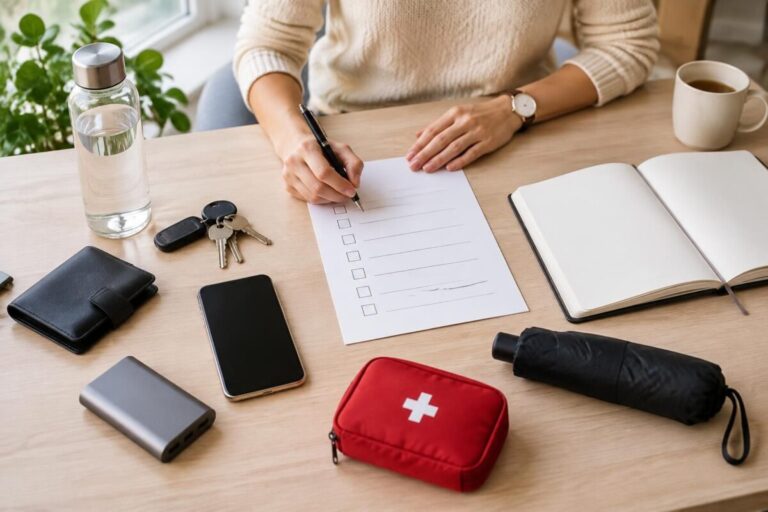
A travel checklist kept next to your suitcase can help you remember everything without taking too much. When it comes to medications, it’s best to plan ahead for transporting them and keep what you need close at hand.
Frequently asked questions about carry-on suitcases
Are the permitted dimensions the same for all airlines?
No. The permitted dimensions and weight vary by airline and sometimes by fare. Check the requirements for your ticket before packing your bag.
What should you keep in your hand luggage?
Keep your documents, valuables, and any medications you need during the journey close at hand. If you have specific medication, check the applicable requirements before you leave.
Is a carry-on suitcase always better than checked baggage?
No. It can sometimes save you waiting when you arrive, but it may be less suitable if it’s heavy, difficult to lift, or too small for the length of your stay.
How can you avoid a problem at the security checkpoint?
Check the current rules on liquids and prohibited items, then put anything you need to present in an easily accessible pocket.
Thanks for reading! Feel free to share your thoughts in the comments. — Lucien