Senior mobility: a poorly packed carry-on bag, and the struggle begins
Hello there, it’s Lucien.
A well-packed carry-on saves you unnecessary effort: keep the essentials within reach and limit the weight before you leave.
For a trip as an older traveler, a few simple choices can help you stay comfortable on the go and make every step easier.
Do this right away
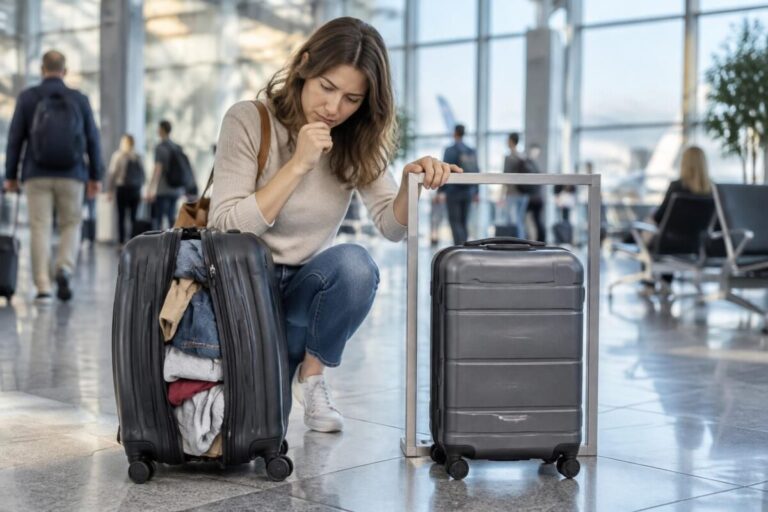
- Weigh your bag before departure and check the dimensions allowed by your airline.
- Put your documents, glasses, and medication in an easy-to-open pocket.
- Keep a lightweight change of clothes and useful items for the journey close at hand.
- Keep the weight close to your back to prevent the bag from pulling on one shoulder.
- Remove “just in case” items that you can buy or leave at your destination.
Packing becomes easier when you first choose what you really need: these tips for avoiding mistakes with a carry-on bag complement this approach, as do these pointers on understanding why every kilo counts at the airport.
The pitfall of an overpacked carry-on
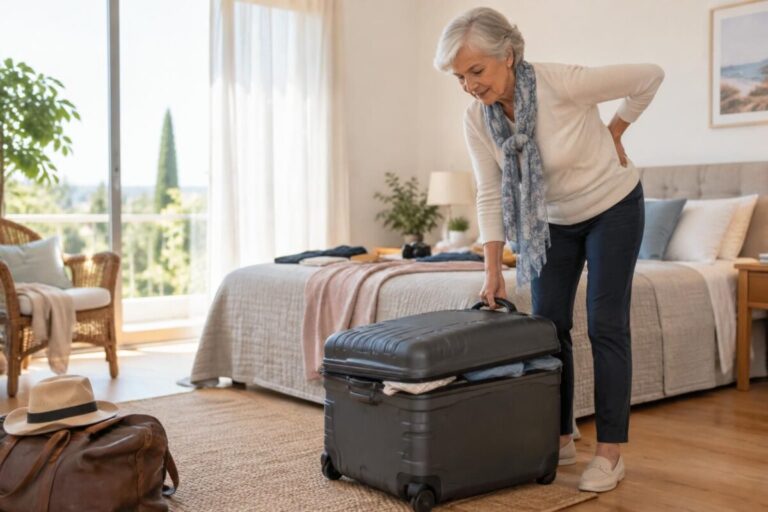
A bag that is too heavy may seem manageable in your hallway, but it becomes a burden in a queue, on stairs, or when you need to place it in the overhead compartment. A common mistake is bringing several “just in case” items without thinking about the repeated movements involved in the journey.
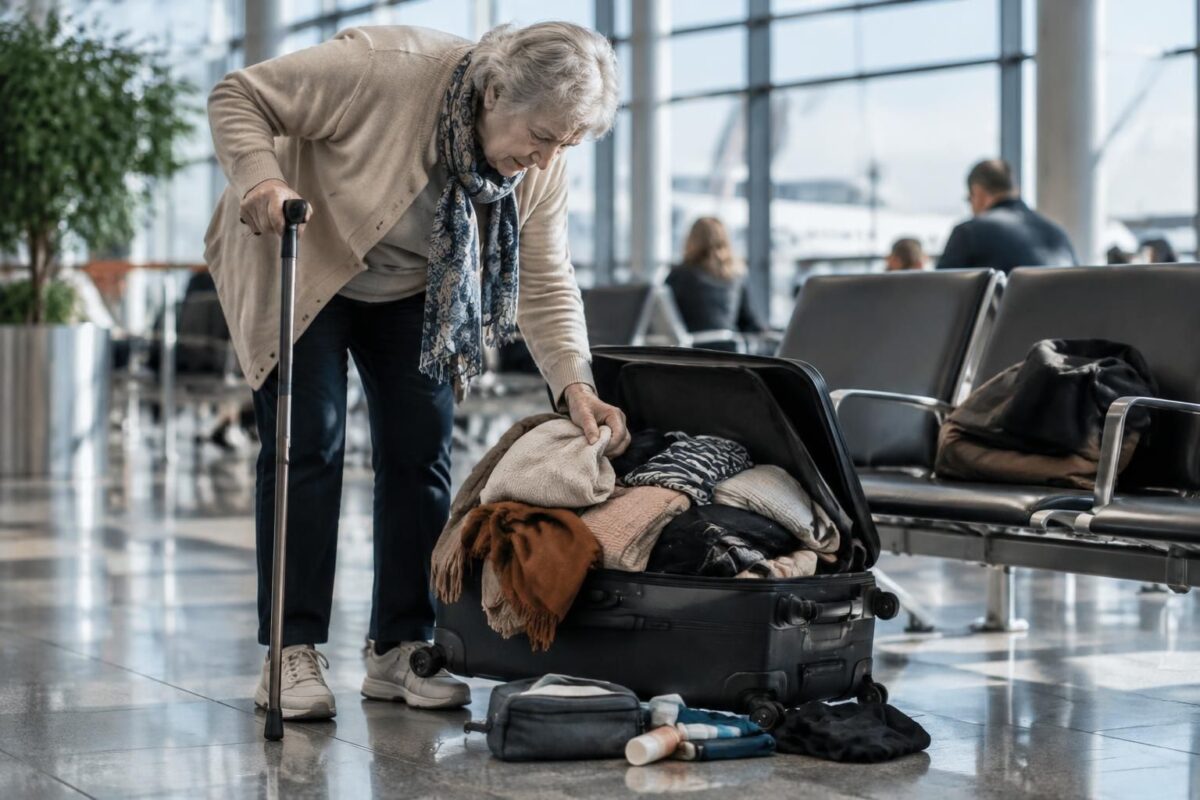
Imagine Marcelle, 72, adding two books, a full toiletry kit, and a thick cardigan to her carry-on. At security, she has to take everything out; when boarding, she struggles to lift the bag. The problem isn’t age: it’s an arrangement that creates avoidable effort.
A carry-on suited to your needs
When deciding what to bring, distinguish essentials from items that simply make you feel reassured. Your documents, medication you need during the journey, glasses, and an empty bottle to fill after security deserve an accessible spot; duplicates and bulky containers can often stay at home.
The right balance also depends on your itinerary. A short connection, a long walk, or a transfer by public transport calls for more attention to weight and accessibility than a direct journey followed by a pickup at your destination.
| Item | Where to put it | Why |
|---|---|---|
| Documents and phone | Secure outer pocket | Finding them quickly means you won’t have to empty your bag. |
| Medication needed during the journey | Dedicated, accessible pouch | You can take it out without moving everything else. |
| Lightweight clothing | On top of the bag | It stays within reach if the temperature changes. |
| Non-essential items | Checked luggage or left at home | You reduce the weight you have to carry. |
Three steps to pack a carry-on without stress
- Make a list based on your journey. Write down what you’ll need at the airport, during transit, and when you arrive. This way of organizing your trip helps prevent last-minute additions.
- Pack according to how often you’ll use things. Put the essentials in an accessible pouch and less useful items at the bottom. You’ll avoid taking everything out at each security check or whenever you need to look for something.
- Try out the bag before you leave. Carry it for a few minutes, check that you can lift it without pain, and adjust what’s inside. If it’s difficult to lift, remove an item or ask for appropriate assistance at the airport.
This approach supports mobility for older travelers without turning departure into a trial. It helps older adults maintain their independence while still allowing them to ask for assistance with long distances or difficult tasks.
Practical questions about carry-on bags for older travelers
What should a carry-on bag weigh?
There is no ideal weight that works for everyone. Follow your airline’s limit and choose a load you can carry and lift without pain, taking your itinerary into account.
Which items should I keep within reach?
Keep your documents, phone, glasses, and any medication you need during the journey in an easily accessible pocket or pouch.
Should I ask for assistance at the airport?
Yes, if carrying your bag or walking long distances tires you or causes pain. Contact your airline or the airport before departure to arrange the assistance available.
A well-planned carry-on doesn’t need to hold everything: it should make your journey simpler, safer, and more comfortable. These small choices are often what really change the experience of setting off.
I hope you’ve found these tips helpful. See you soon! — Lucien