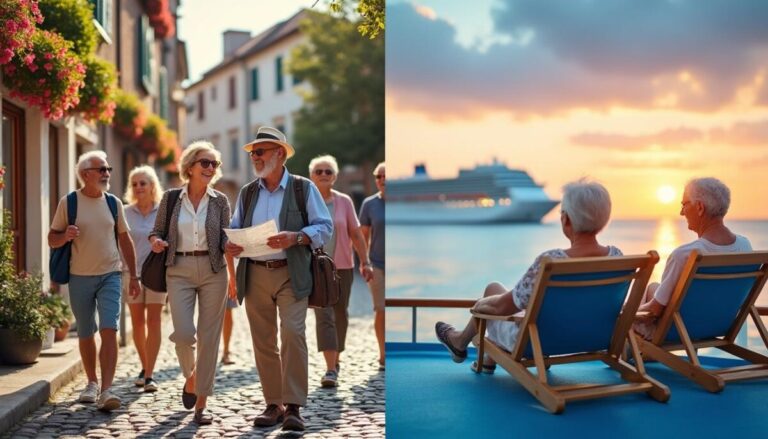

Senior Destinations: Senior Travel, a Simple Detail or an Advantage?
Hello, Lucien here. Traveling light as a senior is a real advantage when it reduces fatigue and makes getting around easier, but it is not essential for a good trip. After 60, comfort depends above all on choosing the right destination, pace, and available services. A compact bag helps, as long as you don’t leave behind your medication or useful belongings.
Traveling light as a senior: good habits for a worry-free trip
- Choose a destination suited to your pace, with convenient transport and accessible healthcare services.
- Book suitable accommodation, close to the places you plan to visit and with an elevator if needed.
- Pack a manageable bag and keep your medication and essential documents in your carry-on.
- Alternate sightseeing with breaks so you can enjoy yourself without building up fatigue.
- Check your travel insurance, especially medical coverage, cancellation, and repatriation.
To prepare for the practical aspects, you can read these tips before a solo trip as a senior and these tips for staying safer while traveling. The goal is not to control everything, but to avoid issues that can be anticipated.
Travel light or choose comfort: what’s the real advantage?
Traveling light does not necessarily mean taking as little as possible. It is more about reducing unnecessary effort: an overly heavy suitcase, frequent hotel changes, or a packed itinerary can make a trip tiring when it was meant to be relaxing.
On the other hand, some items are worth packing. A pair of shoes you have already worn, a list of your medications, and clothing suited to the climate contribute more to older travelers’ well-being than an extremely pared-down suitcase.
| Option | Main benefit | What to check |
|---|---|---|
| Compact luggage | Less effort in train stations and airports | Keep medication and essentials within easy reach |
| All-inclusive stay | Simpler planning and more predictable expenses | Check which transfers and activities are included |
| Coach tour | Easier transport between several stops | Check journey lengths and break times |
| River cruise | Visit several places without repacking | Ask about access to the quays and excursions |
The right choice therefore depends less on the amount of luggage than on how the trip is organized. A hassle-free stay is created by limiting strenuous travel, not by giving up new experiences.
Destinations suited to seniors: prioritize accessibility for visitors
The ideal destination combines a pleasant pace, suitable accommodation, and gentle activities. In France, the French Riviera may be a good choice for its seaside promenades and little tourist trains; Alsace offers cultural visits, though you should bear in mind that some villages have cobbled streets.
In Europe, Portugal and Spain are popular for their climate and variety of vacation options. Lisbon does require some planning: its hills can make certain routes tiring, while public transport and guided tours make it possible to explore the city more comfortably.
Switzerland is an interesting option for those who want to rely on trains and well-organized services. Conditions vary depending on the location and mobility needs, so it is best to check access with accommodation providers and operators before booking.
For example, Mireille and Alain, both retired, are planning a week of sightseeing. Rather than changing hotels every night, they choose a base near public transport, add a guided tour, and leave half a day free: this approach makes for a comfortable trip without making the itinerary monotonous.
An introductory video about Switzerland’s transport and scenery can help you picture the pace of the trip, but access information should always be confirmed directly with providers.
Health and safety while traveling: precautions that make a difference
A pleasant destination is not enough if your healthcare needs are unclear. Before departure, talking with a healthcare professional can help you check your medication, prescriptions, and any precautions related to the climate or planned activities.
When it comes to travel insurance, read the coverage and exclusions rather than relying on the plan’s name alone. In particular, check coverage for medical expenses, repatriation, and cancellation, as well as any conditions that apply to pre-existing health issues.
Staying safe while traveling also comes down to simple steps: keep a copy of your documents, spread your payment methods around, and write down useful contact details. Drinking water regularly and allowing time to rest also helps preserve your energy, especially on hot days or during long journeys.
Choosing gentle activities, such as a boat trip, a small-group tour, or a cooking workshop, lets you discover a region without having to exert yourself continuously. The quality of a trip is also measured by the opportunity to slow down.
Plan a light senior trip in three steps
- Define your priorities. Note how much walking you can manage, what kind of climate you want, and which services are essential. This lets you compare destinations suited to seniors using concrete criteria rather than a list of popular places.
- Check the practical details. Contact your accommodation to confirm there is an elevator, check room access, and find out how close it is to public transport. Also ask whether excursions involve long walks or stairs.
- Plan a flexible itinerary. Book the key journeys, keep the necessary documents and medication within easy reach, then leave some free time. This flexibility makes for a more relaxing departure if the weather or fatigue changes your plans.
Traveling light as a senior is an advantage when it supports independence without requiring sacrifices. Reasonable preparation helps you enjoy new experiences while protecting your comfort and health.
Useful questions to ask before choosing a destination as a senior
When is the best time to travel after 60?
Spring and fall are often pleasant times to avoid extreme heat and some of the crowds. However, compare local conditions and available services for each destination.
How can you avoid getting tired during your stay?
Choose direct journeys when possible, plan breaks, drink water regularly, and limit the number of daily visits. A flexible schedule makes it easier to adjust the pace.
Is travel insurance useful for a senior trip?
Depending on the policy, it may cover medical expenses, cancellation, or repatriation. Check the coverage limits, exclusions, and conditions relating to pre-existing health issues.
Which activities should you choose for a comfortable stay?
Small-group guided tours, boat trips, local workshops, and shows are interesting options. Confirm accessibility and duration before booking.
I hope you found these tips useful. See you soon! — Lucien