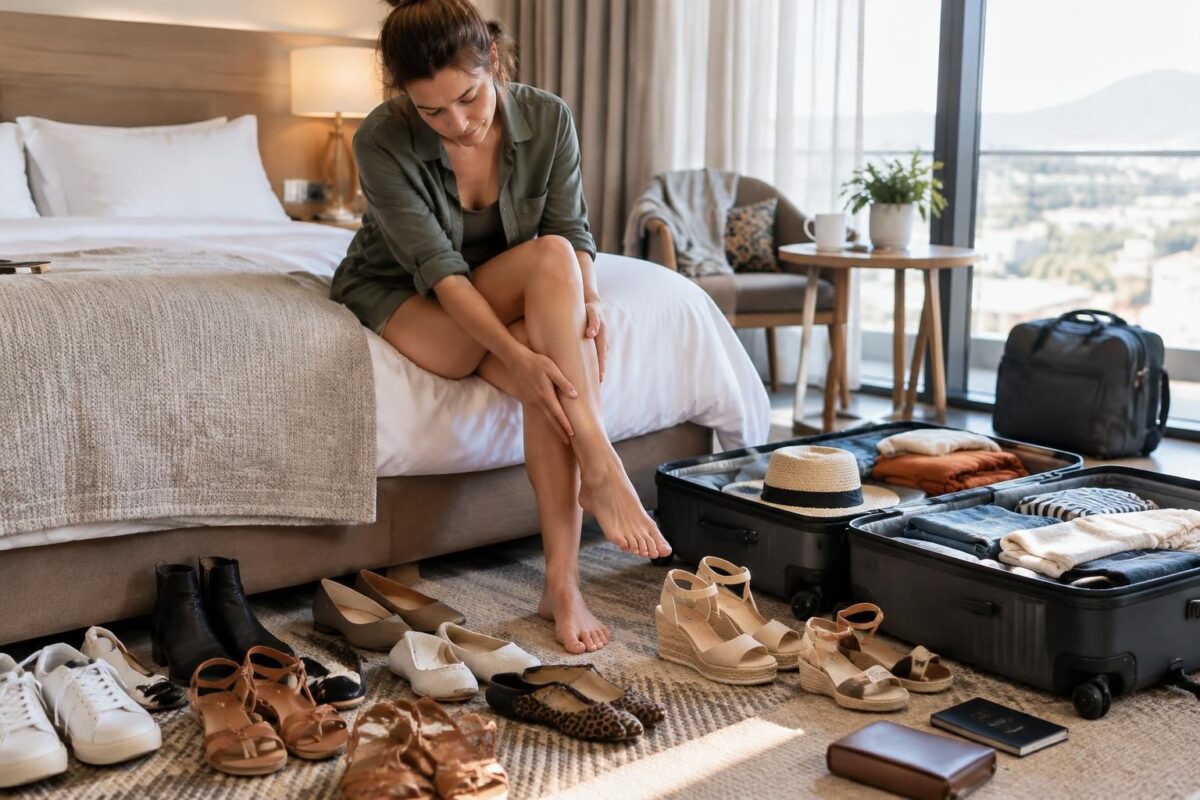
Travel health: too many shoes—what price will your legs pay?
Hi there, it’s Lucien.
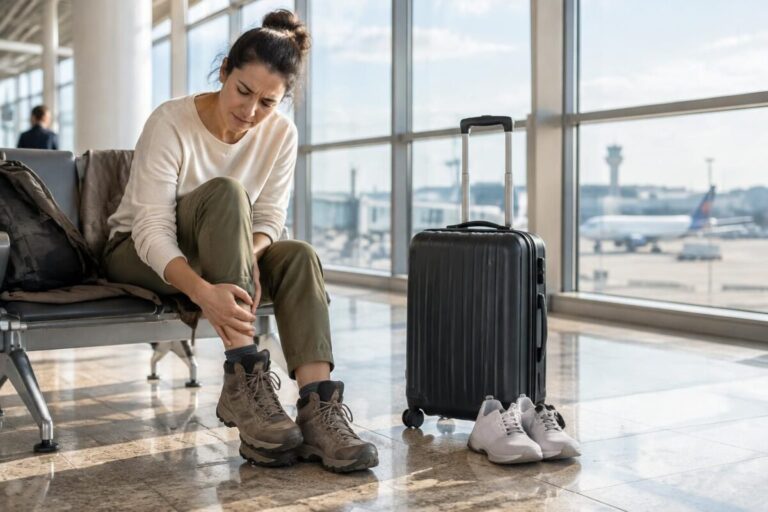
Packing too many pairs of shoes can make your luggage heavier and tire your legs: it’s better to choose two lightweight, comfortable pairs that you’ve already worn.
When traveling, every kilo counts, but walking comfort matters even more. Ill-fitting shoes can make foot pain and the feeling of heavy legs worse. A simple choice, made before you leave, can help keep your legs feeling good.
Do this now: pack lighter shoes for your trip
- Choose one main pair, lightweight and comfortable, that you’ve already worn several times.
- Add a second pair only if it serves a different purpose, such as supportive sandals for relaxing.
- Try on each pair before you leave with the socks you’ll be taking.
- Avoid new shoes: they can cause rubbing and blisters.
- Distribute the weight of your luggage and wear your heaviest shoes during the journey, if they’re comfortable.
The number of pairs alone doesn’t determine how heavy your luggage is: their weight and purpose matter too. To look after your legs, also read these tips on heavy shoes when traveling and fatigue from long days of walking.
Too many shoes when traveling: the weight your legs have to bear
An extra pair may seem harmless. But it takes up space, makes your suitcase heavier, and can make getting around more difficult, especially if you have to carry your bag through a train station or lift it into a trunk.
This extra weight doesn’t necessarily cause pain, but it can contribute to muscle fatigue. And if your shoes are tight, don’t provide enough support, or aren’t very breathable, your feet may start to suffer before the day is over.
The best approach is to choose shoes based on the activities you have planned, not every scenario you can imagine. A city walk, a dressy evening, and a beach holiday don’t necessarily call for three separate pairs.
The right shoes depend on your itinerary
For a city break, a lightweight, stable pair of walking shoes that you’ve already broken in will often meet most of your needs. A second pair may be useful if it offers a real benefit: better grip, suitable support, or comfort at the hotel.
Imagine Mireille, 69, who’s planning city sightseeing and a few dinners at restaurants. At first, she packs four pairs “just in case,” then settles on her walking shoes and a lighter pair for the evening. Her bag is lighter, and she hasn’t sacrificed comfort.
Your spare pair should complement your main pair, not duplicate it. That’s what makes choosing your shoes genuinely worthwhile.
Compare your shoes without adding weight to your luggage
Before you close your suitcase, check the weight, stability, and ease of putting on each pair. A lightweight but unstable shoe isn’t necessarily a good choice, especially if you’ll be walking on cobblestones or uneven sidewalks.
| Type of shoe | Main benefit | What to check |
|---|---|---|
| Broken-in walking shoes | Comfort and support for sightseeing | Stable sole and no rubbing |
| Supportive sandals | Easy to slip on when you’re relaxing | Adequate support and a non-slip sole |
| Dress shoes | Suitable for a specific occasion | Whether they’re really worth their weight |
| New shoes | Immaculate appearance | Risk of discomfort or blisters: avoid if you’re leaving soon |
One pair of shoes that’s genuinely suitable is better than several pairs chosen as a precaution. This comparison can help you keep the weight down without compromising walking comfort.
Preventing pain: three steps to take before you leave
Reducing the number of shoes isn’t enough if your main pair isn’t right for you. A simple check before you leave can prevent a lot of discomfort and make the first few days more enjoyable.
- Sort your shoes based on your activities. Make a note of your planned outings and keep only the pairs that serve different needs.
- Try them out in real-life conditions. Walk for about 20 minutes in the socks you’ll wear on your trip. Check that nothing presses on your foot and that the sole feels stable.
- Pack a lightweight backup option. If your feet swell or become sensitive, a flexible, well-fitting pair may come in handy. If you have significant or persistent pain, or unusual swelling, seek medical advice.
If your legs already feel heavy, don’t try to compensate by wearing tight shoes or continuing a long walk despite the pain. Regular breaks and gentle ankle movements may help you feel more comfortable, but they don’t replace professional advice if your symptoms are worrying you.
The best luggage is what lets you get around without unnecessary effort. To keep your legs feeling good, choose your shoes with a reasonable load and a suitable pace in mind.
Practical questions about shoes and your legs when traveling
How many pairs of shoes should you pack for a trip?
For many trips, two pairs are enough: one comfortable main pair for walking and a second lightweight pair for a different need. Adjust the number to suit your planned activities and conditions.
Should you wear new shoes when traveling?
It’s best to avoid them for long days of walking. Break them in gradually before you leave to check that they’re comfortable and spot any rubbing.
Can heavy shoes tire your legs?
They can add weight to your luggage and make getting around more tiring. Fatigue also depends on how long you walk, the terrain, your fitness level, and how well your shoes fit.
What should you do if your feet start hurting during your trip?
Walk less, check that your shoes aren’t squeezing your feet, and take a break. If the pain is severe or persistent, or accompanied by unusual swelling, consult a healthcare professional.
Thanks for reading! If this topic resonates with you, share your experience in the comments. — Lucien