Senior security: carry-on suitcase, real benefit or false sense of security?
Hello, this is Lucien.
A carry-on suitcase can make traveling easier, but it does not, by itself, guarantee seniors’ safety or protect valuables. The real benefit depends above all on its weight, how easy it is to handle, and how you keep your belongings close to you.
When seniors travel, the right luggage reduces fatigue without creating a false sense of security. Here’s how to choose between a suitcase and a backpack, and avoid unpleasant surprises at boarding.
Things to do right away
- Check the permitted dimensions for your airline and fare, including wheels and handles.
- Weigh your packed luggage: a few extra kilos can make a difference on stairs and when making connections.
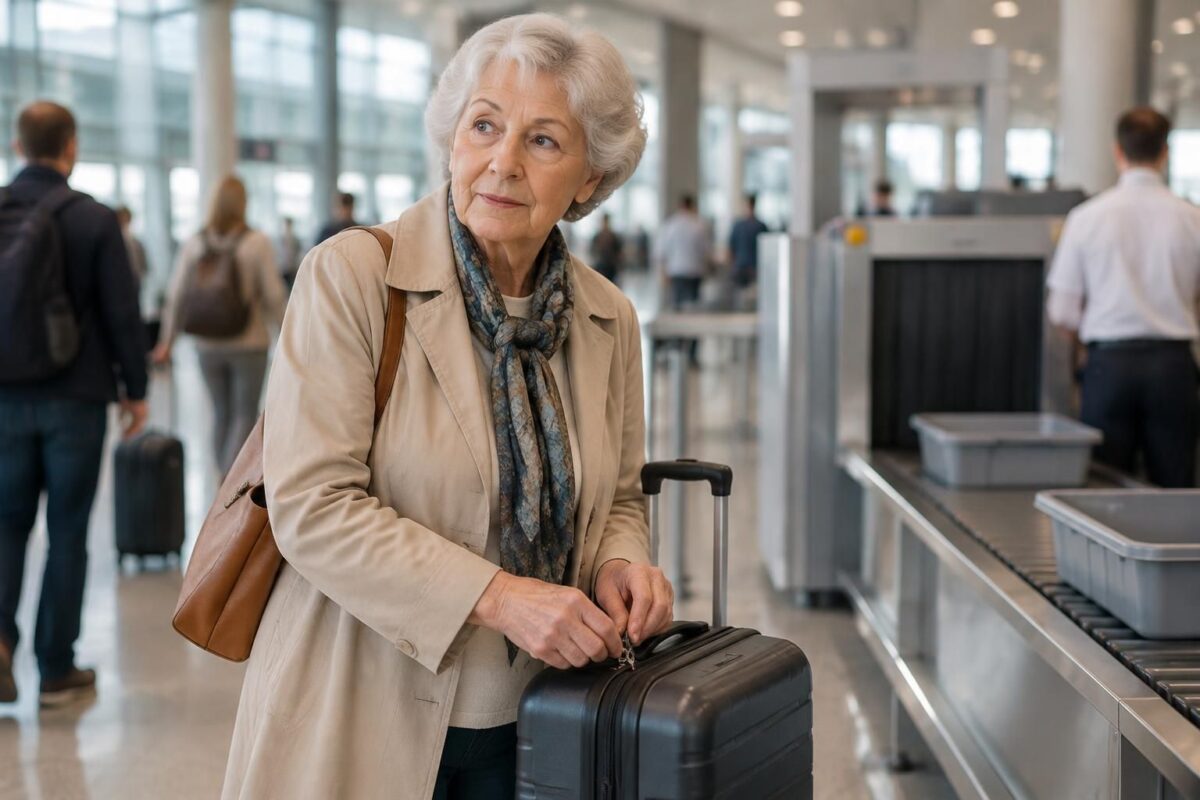
- Keep your documents, medication, and valuables with you, in a closed pouch or a small secure bag.
- Test the wheels, handle, or straps before you leave, with the weight you expect to carry on your trip.
- Have a backup plan in case your luggage has to be checked after all.
Lighter luggage also protects your back: these tips for avoiding an overweight suitcase are a useful complement to these tips for managing long distances at the airport more easily. Travel safety starts with a bag that’s easy to keep track of, not just a hard shell.
Carry-on suitcase and senior safety: what it really protects
A hard-shell suitcase absorbs some impacts better and keeps its shape. It can be a good choice if you’re carrying fragile items that are securely packed, but it won’t protect against theft if left unattended.
Its weight and wheels can also make it harder to get over cobblestones, up stairs, or through a train transfer. And if its dimensions exceed the airline’s limits, the wheels or handle alone may be enough to trigger a size check.
The risk of luggage that meets the limits when empty
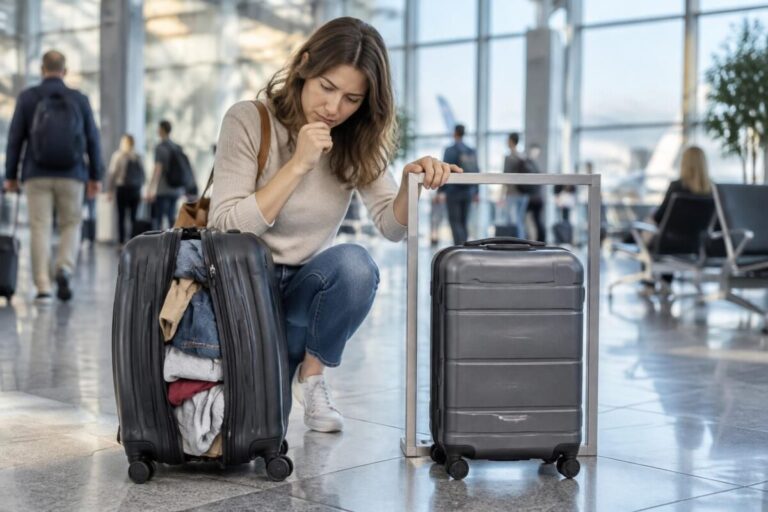
A bag or suitcase may appear to meet the size limits before it’s packed, then bulge under the pressure of the clothes inside. Expandable models are especially prone to this: an expansion zipper gives you more room, but not necessarily extra leeway for carry-on luggage.
A soft bag is more flexible, but that doesn’t automatically mean it meets the limits. The useful test is to measure your packed luggage, checking the airline’s rules before each trip.
Backpack or carry-on suitcase: a helpful comparison
| Criterion | Hard-shell suitcase | Carry-on backpack |
|---|---|---|
| Impact protection | Good for items packed securely | Varies depending on the padding |
| Mobility on stairs | Can be cumbersome | Hands-free, as long as the weight is reasonable |
| Fitting the size limits | Limited if the shell is oversized | Flexible, but measure it once packed |
| Access to belongings | Convenient when laid flat | Varies depending on the openings and pockets |
| Fragile items | Protective structure | A protective case or reinforced compartment is recommended |
So the choice depends less on a promise of security than on your itinerary. For a trip involving several flights of stairs, a well-fitted backpack may be more practical; for fragile items, a hard shell or dedicated protective case may be a better fit.
The benefits of compression: useful, but no magic solution
Compression can reduce the volume of your clothes and help organize what you pack. Some systems claim to increase capacity by 30 to 50%, but the actual gain depends on the clothes and how thick they are: it doesn’t guarantee a lighter bag or that the bag will fit within the external size limits.
If your luggage is too heavy, compression won’t make it any easier to carry. For peace of mind, check the weight, dimensions, and ease of access to essential items separately.
A practical example before boarding
Élise, 72, is going on a trip with a train connection. Her hard-shell suitcase rolls well on the platform, but it’s difficult to carry up the stairs; her backpack keeps her hands free, but pulls on her shoulders when it’s too full.
In the end, she takes a light bag for her carry-on items and puts her fragile belongings in suitable protective packaging. This compromise reduces fatigue and avoids confusing luggage protection with protection against theft.
Three steps to choose without a false sense of security
- Map out your trip. Note the stairs, connections, walking distances, and times when you’ll need to carry your luggage.
- Choose the right format. Choose a hard-shell suitcase for better protection for fragile items, or a soft bag if mobility and keeping your hands free are priorities.
- Do a full test. Pack your bag, measure it, weigh it, and check that you can lift it without pain. Put important items in a small bag that stays with you.
Risk prevention comes down to these simple checks: no type of luggage can replace staying alert, but the right choice can make your trip more comfortable and safer.
Frequently asked questions about carry-on suitcases and safety
Does a carry-on suitcase offer better protection against theft?
Its shell mainly protects against impacts. It won’t prevent theft: keep your documents, medication, and valuables with you, and don’t leave your luggage unattended.
Is a backpack always more practical for a senior?
No. It keeps your hands free, but its weight rests on your shoulders. Choose comfortable straps and check that you can carry it without pain.
How can I check whether my luggage can be taken into the cabin?
Check the permitted dimensions and weight for your flight, then measure your luggage once it’s packed, including the handles and wheels. Rules may vary by airline and fare.
Does compression let you take more without any risk?
It can reduce the volume of your clothes, but it doesn’t guarantee an acceptable weight or compliance with the size limits. Always weigh and measure your packed luggage.
I hope you found these tips helpful. See you soon!