Practical tips: 5 ways to protect your money and documents
Hello, Lucien here!
To protect your money and documents while travelling, spread them across several discreet places and keep copies accessible in case of loss or theft.
A little organisation before you leave can prevent a single incident from leaving you with nothing.
Here are five simple habits that are especially useful when travelling far from home.
5 ways to protect your money and documents while travelling
- Split up your cash between your wallet and a second secure place: don’t carry all your money in one place.
- Keep important documents close to you, in a secure pouch worn under your clothes when the situation calls for it.
- Keep a separate reserve in a discreet storage place rather than in an outer bag pocket.
- Prepare digital copies of your passport, bookings and insurance details, with an encrypted backup.
- Check your belongings insurance and note useful contacts in an emergency plan, including your card cancellation number.
These precautions work together: a secure pouch helps reduce the risk of theft, while a copy lets you quickly retrieve essential information. To better recognise behaviours that attract thieves’ attention, also read the mistakes that make your belongings too visible and these tips for keeping your belongings discreet.
1. Don’t keep all your money in one place
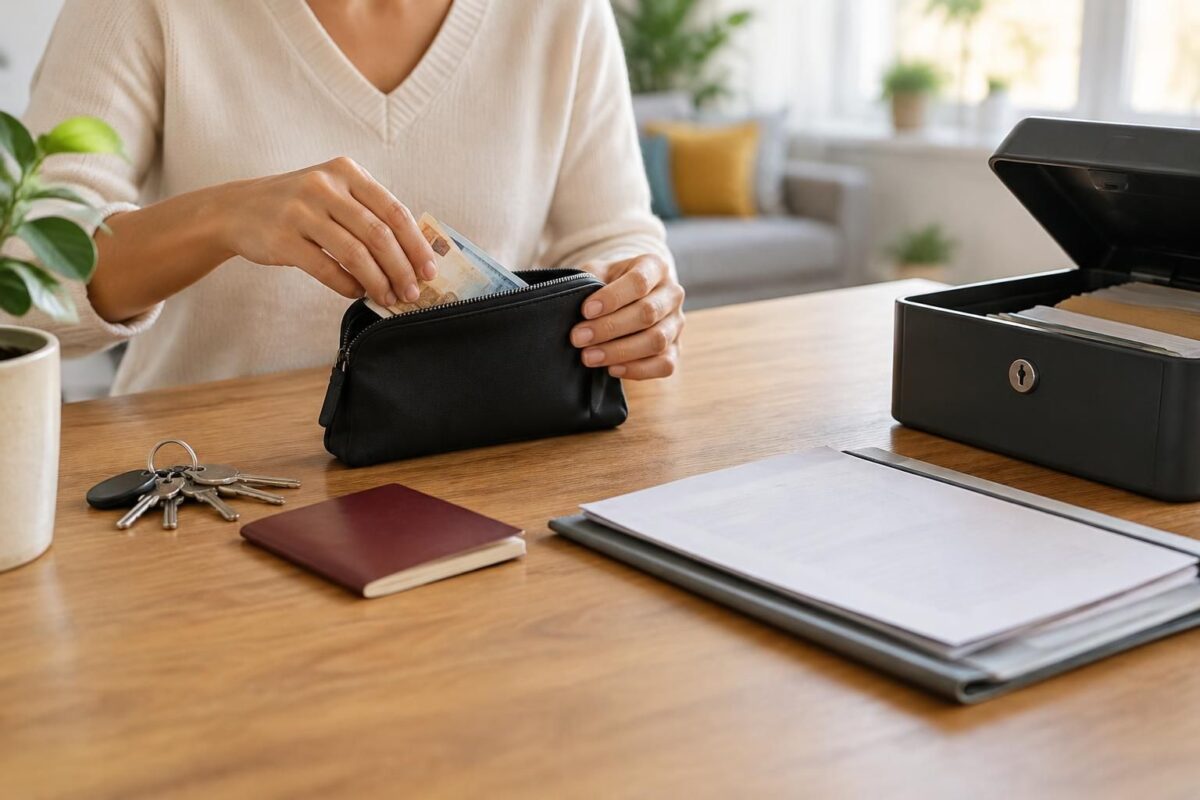
Splitting up your cash limits the impact of loss or theft. Keep an amount on you that’s suitable for the day’s expenses and put the rest in a reliable safe, if your accommodation has one.
For example, a traveller might keep a little cash in her wallet, another small amount in a secure pouch and leave the rest in her room safe. However, avoid predictable hiding places, such as an outer bag pocket or an easily accessible compartment.
2. Protect your documents without losing sight of them
Your passport, identity documents and booking documents should be protected, but also accessible when you need them. On public transport, keep them on you in a discreet, closed pouch rather than in luggage placed out of your sight.
At the hotel, use the safe only after checking that it works and reviewing the establishment’s instructions. Don’t leave all your documents, cards and money in the same place at the same time: good protection against theft also relies on keeping them separate.
3. Prepare copies and an emergency plan
Before you leave, keep digital copies of your important documents in a space protected by a strong password and an encrypted backup. A copy isn’t a substitute for an official document, but it can make it easier to deal with the embassy, the police or your insurer.
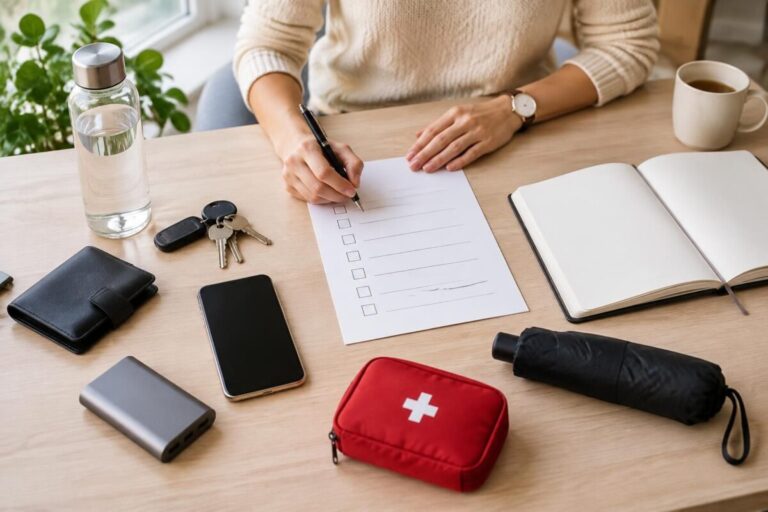
Also prepare a paper copy and store it separately, and note down the numbers to call if you lose your card or documents. A simple emergency plan saves you from having to look for this information in a rush.
| What to protect | Useful habit | What to avoid |
|---|---|---|
| Cash and cards | Split up your cash and keep a card separately | Putting everything in the same wallet |
| Passport and identity documents | Carry them in a secure pouch | Leaving them unattended in a bag |
| Copies and contact details | Prepare digital copies and an encrypted backup | Sending sensitive documents through an unprotected channel |
| Valuables | Check the safe and your belongings insurance | Displaying them unnecessarily or leaving them in plain sight |
4. Check your coverage before you leave
Coverage for theft or loss varies depending on the insurance policy and the circumstances. Read the terms before you leave: some belongings may be subject to limits, exclusions or requirements to report an incident promptly.
Keep your insurer’s contact details and your policy reference somewhere separate from the covered belongings. This precaution makes the first steps easier if something happens.
5. Follow these three steps before you leave
- Take inventory: identify the documents, cards and amounts of money you’ll actually need during your journey.
- Split things up and secure them: separate cash and payment methods, choose a discreet storage place and check the safe options.
- Prepare for emergencies: back up your copies, note down emergency numbers and confirm your belongings insurance coverage.
For example, when travelling by train, keep only the money you need within easy reach and put your travel documents in a closed pocket. Keep everything else separate: this arrangement reduces potential losses without making every journey more complicated.
Practical questions about travelling with your documents and money
Should you keep your passport with you throughout your trip?
Keep it in a secure place where it’s accessible when you need it. Rules vary by country and accommodation: check local guidance and avoid leaving it unattended in a bag.
Where should you store a copy of your travel documents?
Keep a digital copy in a protected, encrypted space, as well as a paper copy stored separately from the originals. Don’t share these files through a public channel or with people you haven’t verified.
What should you do if your bank card is stolen?
Cancel it as soon as possible using your bank’s official number, then report the theft to the relevant authorities and contact your insurer if your policy provides for it.
Is a hotel safe enough to protect your belongings?
It provides extra protection, but it doesn’t guarantee security on its own. Check how to use it, follow the establishment’s instructions and avoid putting all your payment methods and documents in it.
Thanks for reading! Feel free to share your thoughts in the comments. — Lucien