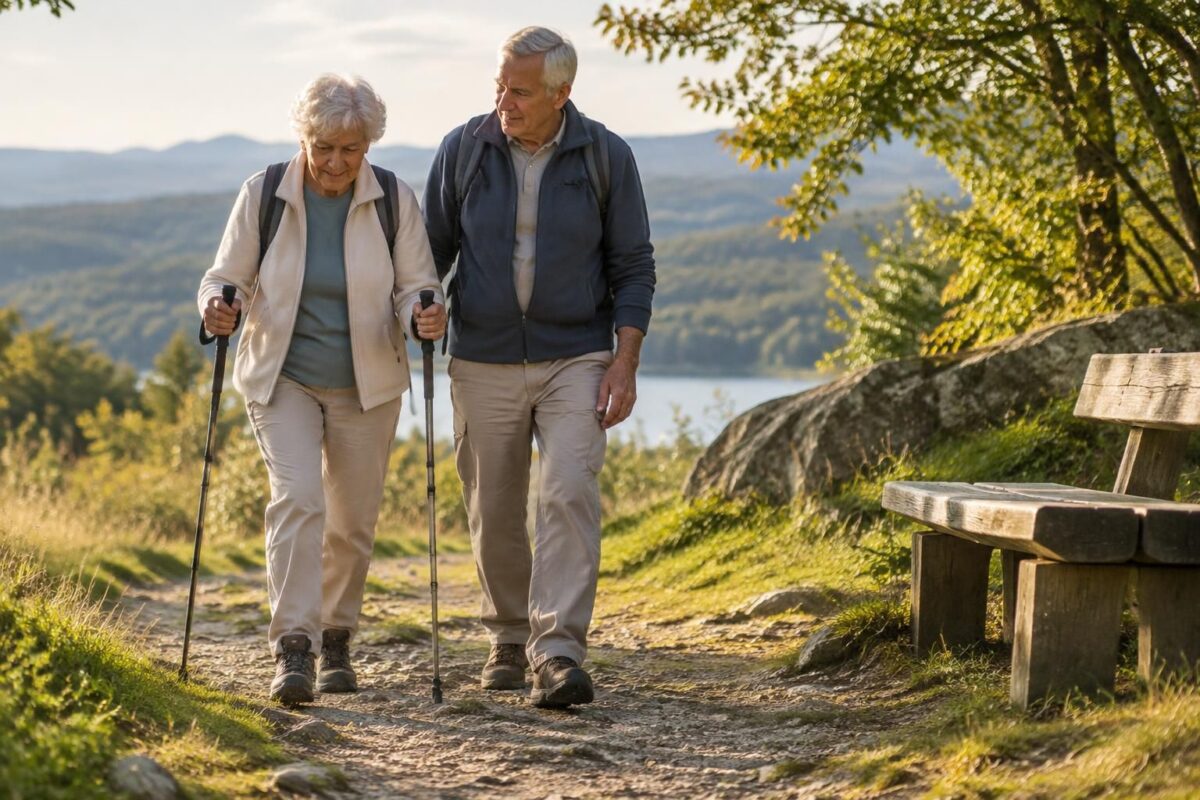
Senior mobility: How to prevent a fall on the way back from an outing?
Hello, it’s Lucien.
To avoid a fall on your way back from an outing, slow down as soon as you notice the first signs of fatigue, keep your walking aids close at hand, and make sure your route indoors is safe.
After an outing, your legs may feel less steady and your attention may not be as sharp. Taking a few precautions before setting out and when you return can reduce the risks without giving up the pleasure of travelling.
Good habits to adopt when returning from an outing
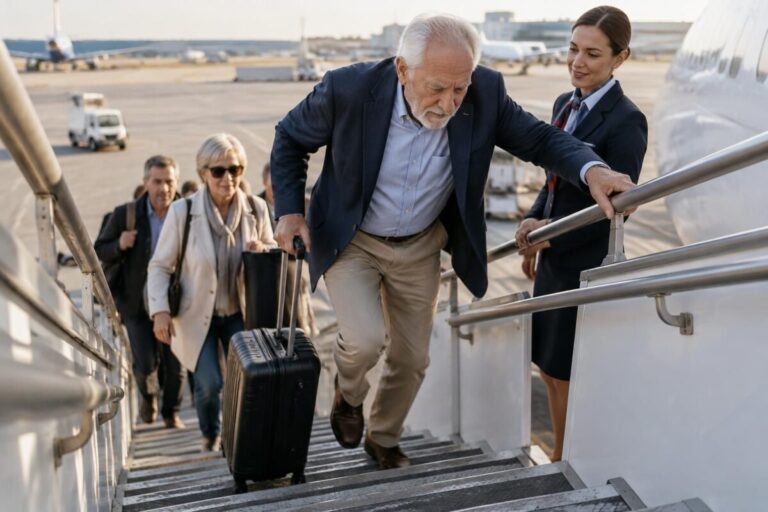
- Slow down before you arrive and avoid rushing through a doorway or up a flight of steps.
- Choose non-slip shoes that fit well and are suitable for the terrain, rather than open-toed or worn-out shoes.
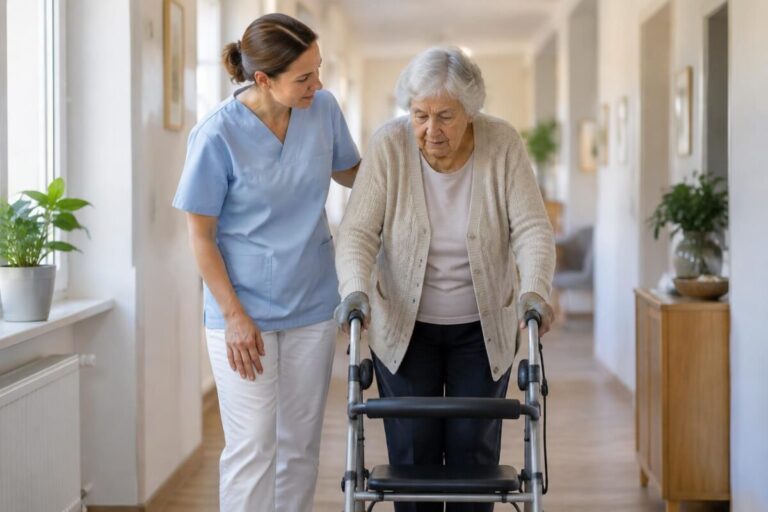
- Keep your walking aids close by, if you use them, and ask someone to offer you an arm for support if you need it.
- Light your way and clear hallways of bags, cables, and rugs that could cause you to trip.
- Take a break before setting off again, especially if you feel tired after an outing, dizzy, or unusually uncomfortable.
The return trip deserves just as much attention as the walk itself: a bag that is too heavy or arriving late can make it less safe to get around. To prepare for these situations, also read these tips on fatigue and falls when arriving late and on managing physical exertion while travelling.
The risk on the way back: fatigue, rushing, and loss of balance
An outing puts strain on your legs, eyesight, and attention. On the way back, a wet step, an uneven pavement, or a bag that restricts your movements may be enough to throw an older person off balance.
Fall prevention is not just for people who have fallen before. According to Santé publique France’s 2024 Health Barometer, one in five people over 65 reported having fallen during the year. Falls also led to 174,824 hospitalisations and 20,148 deaths in this age group, according to figures cited by Santé publique France.
These figures are a reminder that a fall can have serious consequences, but it is not inevitable. In 2021, the Cour des comptes estimated that 15 to 30% of falls among people over 65 could be prevented through preventive measures.
Prepare for the return before fatigue sets in
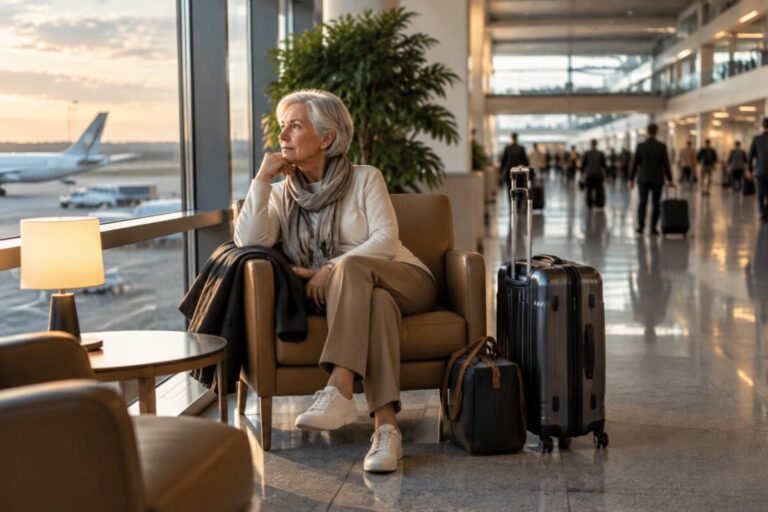
Imagine Mireille, who is visiting a village with her group. At the end of the day, she feels tired and her bag is pulling on one shoulder. Rather than keeping up with the others, she stops, drinks some water, and asks someone close to her to carry the bag to the vehicle.
This simple choice helps preserve her mobility and prevents the last few metres from becoming a challenge. The right pace is one that lets you watch where you put your feet, not one that gets you there as quickly as possible.
Making your home safer: secure your first steps after an outing
The risk does not end at the front door. A cluttered hallway, a rug with a turned-up edge, or poor lighting can cause a fall when you are already tired.
Clear walkways and secure cables along the walls. Add light sources in frequently used areas and, if your eyesight is impaired, make the edges of steps more visible with a contrasting marker.
Non-slip shoes are useful on smooth floors, but they are no substitute for a clear space. If possible, remove unstable rugs or choose ones that grip the floor. In the garden, keep paths swept and free of garden hoses and pots.
Use sturdy supports instead of taking risks
Keep everyday items within easy reach to avoid climbing onto a chair or step stool. A cordless phone or several phones around the home can also prevent you from rushing to answer.
A high, stable armchair can make it easier to stand up. Securely fitted grab bars near the bed, toilet, or bathtub provide reliable support; a towel rail is not designed to hold your body weight.
In the bathroom, a non-slip surface and a wall-mounted shower seat provide greater stability than a lightweight chair. A toilet seat riser of 10 to 15 cm can also make it easier to sit down and stand up.
| Risk situation | Preventive measure |
|---|---|
| Dark entrance or cluttered hallway | Light the way and remove obstacles |
| Smooth floor or turned-up rug | Wear non-slip shoes and secure or remove the rug |
| Fatigue after a long walk | Take a break, slow down, and ask for help if needed |
| Items stored up high | Move them within easy reach to avoid climbing |
| Difficulty standing up in the bathroom | Install securely fitted grab bars and a suitable seat |
Returning from an outing: a simple three-step routine
- Before setting out, check your shoes, the condition of your walking aids, and your planned route. Plan a break and avoid carrying a bag that is too heavy.
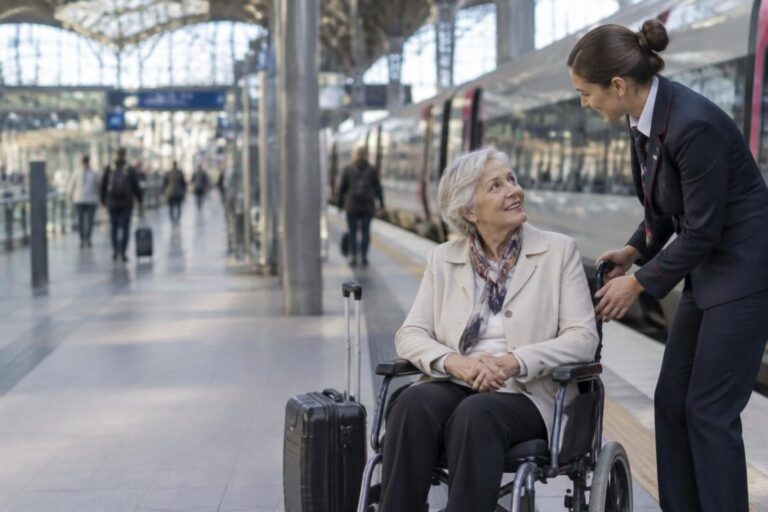
- At the end of the outing, assess how you feel before heading back. If you are short of breath, dizzy, or very tired, sit down somewhere safe and ask someone to accompany you.
- When you arrive, turn on the lights, put your things down without blocking the way, and move at an unhurried pace. After a fall, even if there is no apparent injury, contact a healthcare professional for advice.
Providing attentive support to older adults does not mean doing everything for them: it means helping them choose the right pace and ask for support at the right time. Older adults’ mobility is better maintained when outings are adapted to their energy levels on the day.
Why does the risk of falling increase on the way back from an outing?
A long walk can cause fatigue and reduce alertness. Uneven terrain, a heavy bag, or rushing on the way back can then make it harder to keep your balance and get around.
What shoes should you wear to reduce the risk of falling?
Choose well-fitting shoes, preferably closed-toe, with non-slip soles and good foot support. Avoid worn-out shoes or shoes that slip easily.
What should you do after a fall with no visible injury?
Do not dismiss the incident. Stay in a safe position, ask for help, and seek medical advice, as some injuries or consequences may not be immediately visible.
Which home modifications are most useful to prioritise?
Start by clearing walkways, improving the lighting, and securing or removing rugs that pose a risk. Securely fitted grab bars and suitable bathroom equipment can complement these measures.
Thanks for reading! Feel free to share your thoughts in the comments. — Lucien