Travel health: strong sun—when should you call it quits?
Hello, this is Lucien.
Skip activities in direct sunlight if the heat is tiring you or if warning symptoms appear: your health comes before the itinerary.
Intense sun can cause sunburn, dehydration, sunstroke or heatstroke, especially in older adults and people with chronic conditions. The UV index, medications and exertion matter just as much as the temperature. It’s better to adjust your day early than to wait until you feel unwell.
What to do right away
- Check the UV index and the weather before going out.
- Reschedule outdoor visits to avoid the hottest hours, often between 11 a.m. and 4 p.m.
- Choose shaded, cool places for breaks.
- Drink regularly, without waiting until you’re thirsty, unless medical advice limits your fluid intake.
- Protect your skin with a hat, sunglasses, covering clothing and suitable sunscreen.
Fatigue, dizziness and headaches shouldn’t be brushed aside: they may be signs that your sun exposure is becoming excessive. To better identify factors that can add up, also read our advice on sun, fatigue and blood pressure while traveling and on dehydration, which can sometimes be hard to detect.
Strong sun while traveling: when should you call it off?
The trap is thinking that a planned outing has to go ahead no matter what. But a walk can wait; heat-related illness can worsen quickly. If you feel unusually weak, nauseated, dizzy or confused, stop the activity and find a cool place.
Calling it off is especially prudent if you’ve already felt unwell, are recovering from an illness or have a medical condition that makes it harder to tolerate heat. Some medications can also affect sweating, blood pressure or fluid balance: don’t stop taking them on your own, but ask a healthcare professional for advice before you leave.
Moderate heat or intense sun: adapt instead of pushing yourself
| Situation | Prudent decision | Why |
|---|---|---|
| High UV levels and an activity planned at noon | Reschedule, shorten it or choose a shaded location | Your skin and body are under greater strain. |
| Unusual fatigue, marked thirst or a headache | Take a break somewhere cool, drink according to your medical advice and monitor how you feel | These signs may accompany dehydration or the onset of heat-related illness. |
| Confusion, loss of consciousness or a deteriorating condition | Call emergency services immediately | Heatstroke is a medical emergency. |
For example, if Jeanne is planning a walking tour in the early afternoon and already feels exhausted after lunch, it’s better to replace the outing with an indoor visit and resume the itinerary later if she feels well. Sun protection reduces risks, but it doesn’t make strenuous activity safe.
Warning symptoms: signs that mean you need to stop
Very hot skin, unusual weakness, nausea, dizziness or cramps mean you should stop exerting yourself. Move into the shade or an air-conditioned place, loosen your clothing and ask for help if you don’t recover quickly.
Confusion, loss of consciousness, difficulty walking or rapid deterioration are emergencies. Call local emergency services and follow their instructions. Don’t leave anyone who seems disoriented alone, and don’t give them anything to drink if they’re unconscious or unable to swallow normally.
A simple three-step process before deciding to go ahead with an outing
- Assess the conditions: check the UV index, forecast temperatures, activity duration and opportunities to take breaks somewhere cool.
- Check how you’re feeling: fatigue, a recent illness, medications and unusual symptoms may be reasons to change your plans. If in doubt, ask a healthcare professional for advice.
- Decide without feeling guilty: shorten, reschedule or cancel if the heat becomes uncomfortable. If a warning symptom appears, stop and seek help.
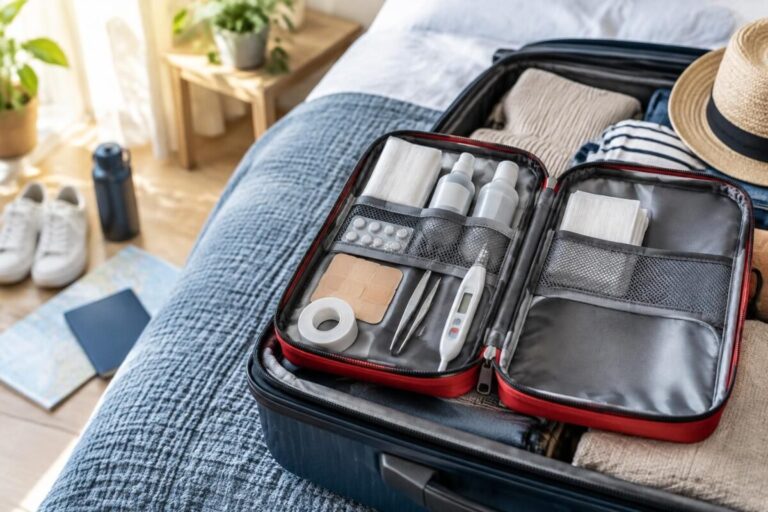
This safety margin is more useful than a well-stocked first-aid kit that never gets used: prevention helps you enjoy your trip without turning an outing into an ordeal.
Frequently asked questions about strong sun while traveling
What times are best for avoiding activities in the sun?
The hottest hours are often around midday, frequently between 11 a.m. and 4 p.m. The UV index, destination and weather can affect the risk: check local conditions and seek shade during the most intense periods.
Is sunscreen enough to prevent heatstroke?
No. It protects your skin from UV rays, but on its own it doesn’t prevent heatstroke or dehydration. You should also reduce exertion, seek cool places, wear suitable clothing and drink according to your needs and medical advice.
What symptoms mean you need to stop an activity immediately?
Unusual weakness, dizziness, nausea, cramps or a headache mean you should at least take a break somewhere cool. Confusion, loss of consciousness or rapid deterioration mean you should call emergency services.
Should you cancel an excursion as soon as it gets hot?
Not necessarily. You can often move it to cooler hours, shorten it or choose a shaded route. Cancel if you feel unwell, find the heat hard to tolerate or can’t take breaks somewhere cool.
Thanks for reading! Feel free to share your observations in the comments. — Lucien