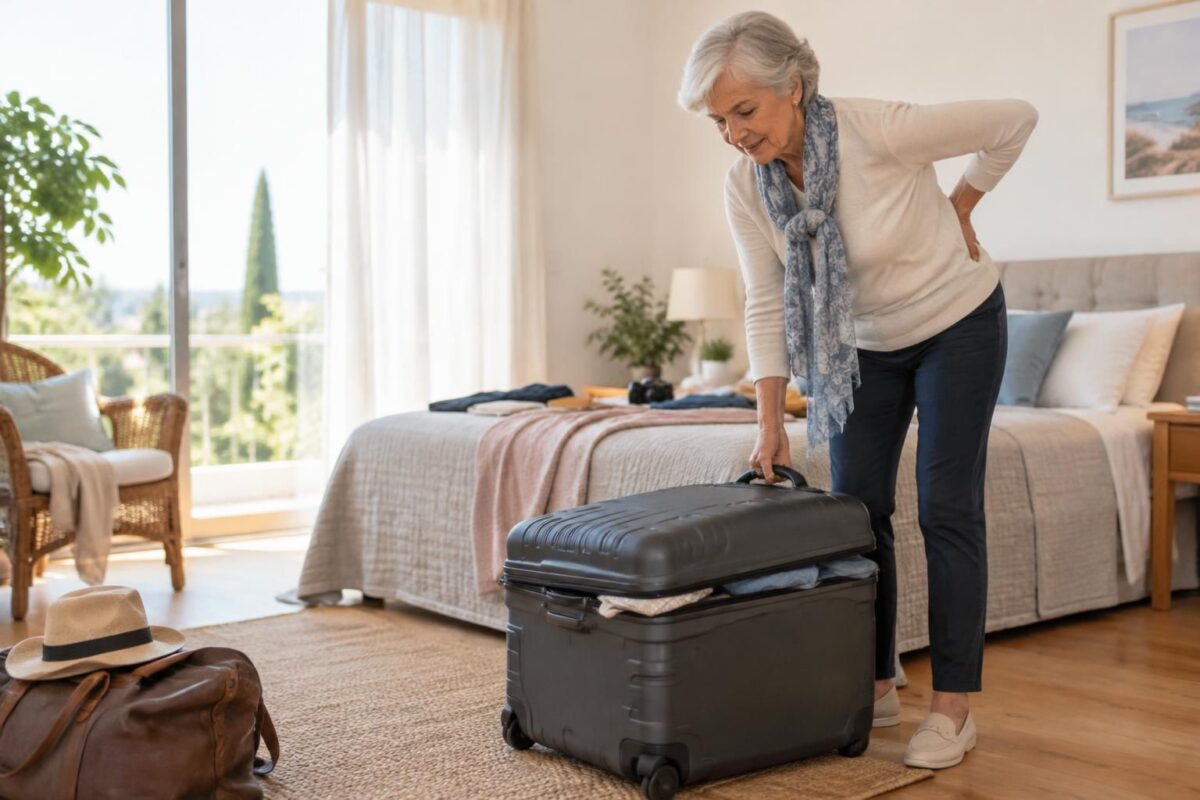
Senior mobility: overpacked suitcase, your back will pay the price
Hello there, it’s Lucien.
To protect your back, pack light and choose luggage you can roll effortlessly.
An overpacked suitcase is tiring even before your trip begins: it’s difficult to lift, catches on station platforms and makes connections more complicated. When travelling as a senior, packing light helps protect your back and save your energy for the journey.
Good habits to adopt
- Leave out the “just in case” items and keep only what you’ll really need.
- Weigh your luggage once it’s packed and remove a few items if it becomes difficult to move.
- Keep medication and documents in an accessible pocket, so you don’t have to empty your suitcase.
- Choose four multidirectional wheels and a handle that adjusts to your height.
- Ask for help lifting your luggage onto a train or into a car trunk if the movement strains your back.
These tips for seniors are a useful complement to the advice on avoiding carrying too much while travelling and limiting back pain during a tour.
Overpacked suitcase: the trap that tires your back
The problem isn’t just the total weight. A handle that’s too low, wheels that stick or an unbalanced bag force you to pull at an angle, making your back and shoulders compensate every time you move.
Imagine Monique, 72, setting off on a four-day train trip with a large suitcase packed “for every occasion.” On the platform, she has to lift it over a step. A small, well-organized suitcase would have avoided this unnecessary lifting.
Luggage suited to the length of your trip
Empty weight matters too: a suitcase that already weighs several kilos before you pack it leaves less room for your belongings. The figures below are approximate guidelines; always check the dimensions and limits set by your carrier.
| Size | Approximate empty weight | Suitable trip length | Best for |
|---|---|---|---|
| Carry-on | About 2.8 to 3.2 kg | 2 to 4 days | Train or plane, if the dimensions are accepted |
| Medium | About 3.5 to 4.2 kg | 5 to 10 days | Smooth-rolling wheels and divided compartments |
| Large | About 4.5 to 5.5 kg | 10 days or more | Travel where assistance is available for loading |
For a short trip, carry-on luggage cuts down on waiting at the baggage carousel and reduces the risk of lost luggage. For a longer trip, it’s better to spread your belongings across two manageable bags rather than overloading one large suitcase, if your travel plans allow.
Preventing back pain: pack your luggage in three steps
- Sort through your things. Set out the clothes and items you need, then remove duplicates. For a few days away, choose outfits that are easy to mix and match rather than a different option for every occasion.
- Distribute and secure your belongings. Place heavy items near the wheels, distribute the contents evenly on both sides and use lightweight packing pouches. Keep your medication, documents and a bottle of water within easy reach.
- Test it before you leave. Roll your suitcase around at home for a few minutes and check that the handle is at the right height. If you have to lift it or strain, pack less or arrange for help at the station or hotel.
A fastening that’s easy to handle and clean wheels also make moving around smoother. The best choice isn’t necessarily a hard-shell suitcase: a soft-sided suitcase may be lighter, while the quality of the wheels and ease of handling often determine how comfortable it really is.
Frequently asked questions about luggage and back health
What type of suitcase should I choose if I have sensitive joints?
Above all, choose a lightweight, stable model that rolls easily. A soft-sided suitcase may reduce empty weight; a hard-shell version offers better protection for some items. In either case, multidirectional wheels and an adjustable handle make it easier to get around.
How can I avoid carrying my suitcase on stairs?
Find out where the elevators are before you leave, and ask staff or a companion for help with steps. If you’re travelling alone, ask about assistance services at the station or airport.
How can I keep my medication easily accessible?
Keep it in a dedicated pouch, in the bag you carry with you, along with any useful documents. Well-organized compartments make it easy to find quickly without opening the whole suitcase.
How should I maintain the wheels after a trip?
Wipe off dirt with a damp cloth and check that nothing is blocking the wheels. If they squeak or resist rolling, consult the manufacturer’s recommendations before applying any maintenance product.
I hope you found these tips useful. See you soon! — Lucien