Destinations for seniors: city break or tour, which suitcase should you take?
Hello, this is Lucien.
For a city break, choose a small wheeled suitcase; for a sightseeing tour, opt for lightweight luggage that’s easy to carry.
The right choice depends mainly on how many times you’ll change accommodation, the journeys you have planned, and how accessible the places are. A suitable suitcase will protect your travel comfort just as much as it will make every stage easier.
Senior city break or sightseeing tour: smart tips for choosing your suitcase
- Check the length of your stay and whether you’ll be able to wash a few items of clothing while you’re there.
- Count how many times you’ll change accommodation: the more changes there are, the more practical compact luggage becomes.
- Test your packed suitcase before you leave, by moving it a few metres and up or down stairs if necessary.
- Keep essential medication and documents in a small, accessible bag, never at the bottom of your main bag.
- Check the carrier’s transport rules and the accessibility of your accommodation.
For more tailored luggage advice, also check out these tips on travelling light and this list for getting ready for a more relaxed departure.
Which suitcase should you choose for a city break or a tour?
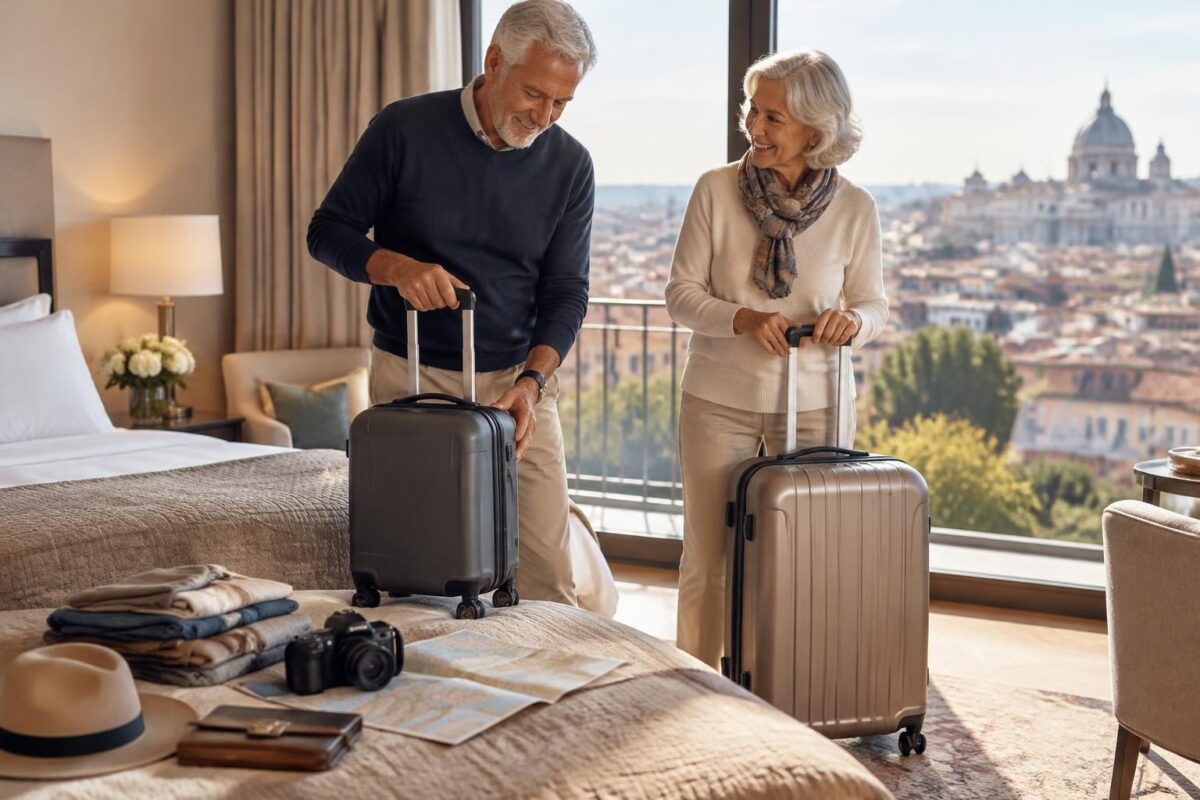
On a city break, you’ll often leave your things at a single accommodation and explore on foot or by public transport. A cabin-size wheeled suitcase may be a good fit, as long as the streets, stairs, and hotel access are manageable.
A sightseeing tour may involve frequent transfers, uneven surfaces, or steps. A moderately sized soft-sided suitcase, perhaps paired with a small backpack, makes getting around easier without turning every change of stop into extra effort.
| Type of stay | Recommended luggage | What to check |
|---|---|---|
| City break of a few days | Small wheeled suitcase | Elevator, cobblestones, and public transport |
| Tour with several stops | Compact, lightweight, and sturdy suitcase | Transfers, stairs, and carrying |
| Stay with medical needs | Main bag plus personal bag | Quick access to medication |
Weight matters just as much as size. An oversized suitcase tempts you to pack things “just in case”; but a few extra kilos can quickly make themselves felt when you have to cross a platform or reach a vehicle.
A practical example to help you choose between the two options
Imagine Claire, who’s going to Lisbon for five days and plans to stay at the same hotel. A wheeled cabin suitcase will be enough if she can move it comfortably and her route doesn’t involve too many stairs.
For an eight-day tour with three accommodations, she’d be better off packing less and choosing easy-to-handle luggage. The longest trip doesn’t necessarily call for the biggest suitcase: it’s often repeated transfers that determine what to choose.
Pack a suitable suitcase in three steps
- Identify the constraints of your itinerary. Note the number of stops, modes of transport, and any stairs. If accessibility is uncertain, contact your accommodation before you leave.
- Plan mix-and-match outfits. For a week, a few tops, two or three bottoms, and a warm layer are often enough, depending on the season and activities. Pack a reasonable spare rather than an outfit for every possible scenario.
- Test how easy it is to move your luggage. Close the bag, lift it, and roll the suitcase a short distance. If it strains your back or shoulders, remove some items or switch to a different size.
For a senior city break, comfort comes from luggage that’s easy to manoeuvre; for a tour, it mainly comes from keeping the weight down and choosing something easy to handle. In either case, testing it before you leave is better than an unpleasant surprise when you arrive.
Useful questions before packing
What size suitcase should I choose for a city break?
For a few days, a cabin suitcase may be enough if the transport rules allow it and you can move it easily. Also check for stairs and access to your accommodation.
Is a wheeled suitcase suitable for a sightseeing tour?
Yes, if transfers are on manageable surfaces. For steps, cobblestones, or frequent changes, opt for a compact model that’s easy to carry for short distances.
How can I avoid luggage that’s too heavy?
Pack mix-and-match clothes, limit items you’re taking “just in case,” and weigh your luggage before you leave. Keep medication and important documents in an accessible personal bag.
Should I bring an extra bag?
A small personal bag is useful for keeping documents, medication, glasses, and a bottle of water close at hand, in accordance with the carrier’s rules.
I hope you found these tips useful. See you soon! — Lucien