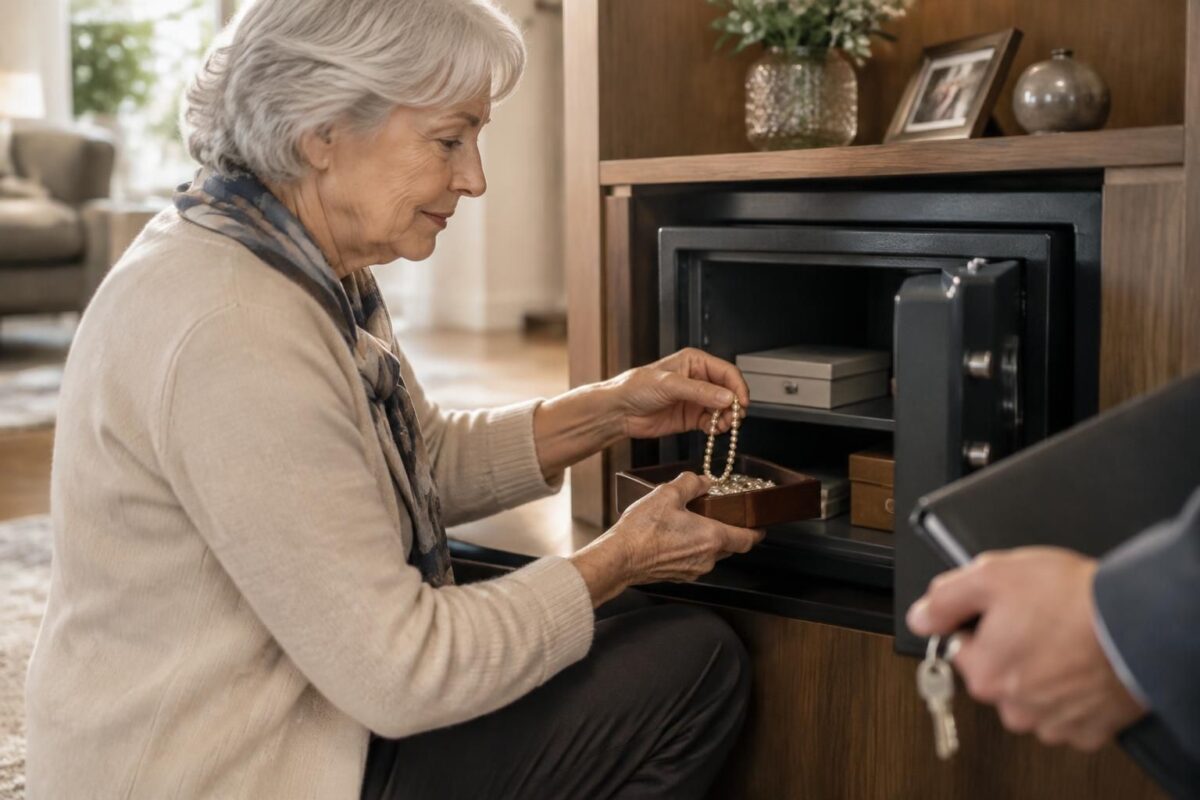
Senior safety: valuables, where should you really hide them?
Hello there, it’s Lucien.
To protect your valuables, choose a fixed, concealed safe, or a bank safe-deposit box for items you rarely use.
An improvised hiding place may feel reassuring, but familiar spots are quickly searched. When it comes to senior safety, the right choice depends mainly on how often you need access, the risk of fire, and your home insurance coverage.
What to do right away
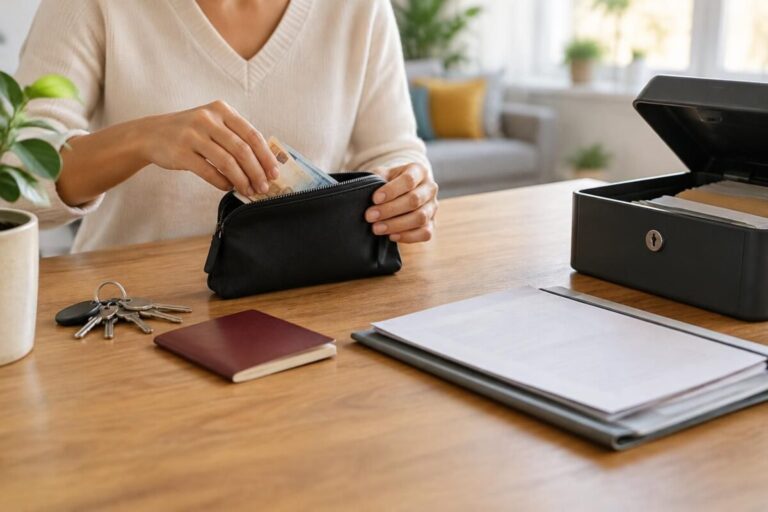
- Sort your belongings: keep everyday essentials within easy reach and secure jewelry, cash, and important documents separately.
- Avoid obvious hiding places: bedroom drawers, ordinary boxes, and closets are predictable spots.
- Choose a suitable solution: a fixed, concealed safe for regular access, or a bank safe-deposit box for items you rarely use.
- Check your insurance: ask about coverage limits, required documentation, and the terms of protection against theft and fire.
- Make an inventory of your belongings: photograph important items and keep proof of purchase in a separate location.
For when you’re traveling, also check out these tips for protecting your money and documents and precautions against visible belongings that attract attention.
Where to hide valuables without relying on a miracle hiding place
A secure hiding place is not simply somewhere that’s hard to guess. It should also protect against being ripped out, moisture, or fire, while remaining accessible to the person who needs it.
A securely fixed safe placed out of sight offers more reliable protection than a safe sitting in a closet. For a significant sum of money or jewelry you rarely wear, a bank safe-deposit box may be more suitable, provided you check access hours, costs, and the guarantees offered.
Compare the options to suit your needs
| Option | Suitable for | What to check |
|---|---|---|
| Fixed, concealed safe | Documents and items you access from time to time | Mounting, fire resistance, insurance terms |
| Bank safe-deposit box | Jewelry, papers, or items you rarely need | Availability, contract, coverage, and access procedures |
| ฝาก with trusted people | Extended absences or occasional backup | Written inventory, insurance, and clear agreement |
DIY hiding places behind a baseboard or inside a piece of furniture can complement a security strategy, but they are no substitute for a resistant security device. It’s best to avoid predictable places such as the main bedroom, walk-in closet, or office, and never rely on secrecy alone to prevent burglaries.
The common pitfall: confusing discretion with protection
A hiding place unknown to visitors may seem sufficient. However, during a break-in, time is limited, and familiar storage places are often checked first; a flimsy hiding place protects neither against fire nor a methodical search.
Another mistake is telling too many people where the safe is or leaving visible clues. Discretion is useful, but it shouldn’t stop you from finding your belongings or sharing essential instructions with someone you trust.
Choose according to how often you need access
If you need to look at your papers often or keep a small cash reserve, a properly secured home safe can be practical. If your valuables are rarely used, a bank safe-deposit box or insured storage service keeps them out of your home.
Leaving belongings with someone you trust can be helpful, but you should agree in writing on what is being handed over and for how long. Add photos to the inventory and check that your insurance covers belongings kept away from home.
Three steps to secure your belongings before you leave
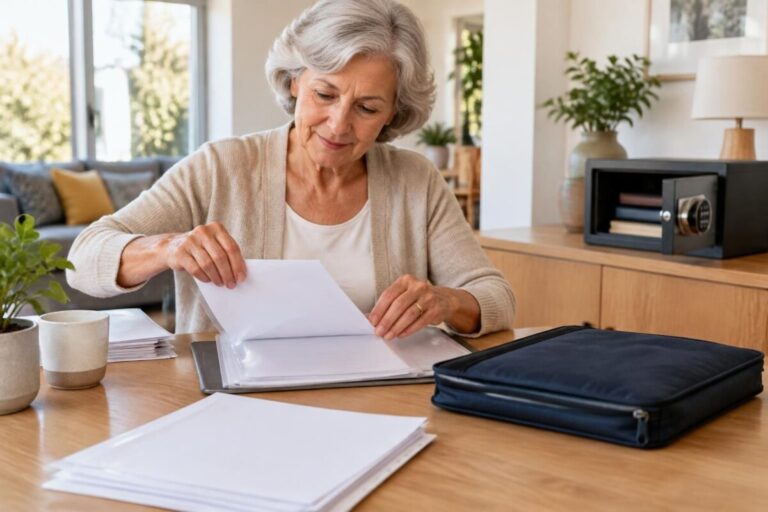
- Sort and document: photograph important items, describe them, and gather any available receipts or certificates.
- Choose where to store them: keep at home only what needs to remain accessible; place the rest in a bank safe-deposit box or another suitable professional storage solution.
- Check access and coverage: confirm the terms of your home insurance, keep useful information separately, and share essential instructions with someone you trust.
These anti-theft tips work best when combined with simple measures: lock doors and windows, don’t announce your absence publicly, and ask someone you trust to collect the mail if needed. The goal isn’t to turn your home into a fortress, but to reduce the opportunities for theft and its consequences.
Practical questions about valuables at home
Are jewelry items better protected in a hiding place or a safe?
A fixed, concealed safe is generally more reliable than an improvised hiding place. For jewelry you rarely wear or that is very valuable, also compare the guarantees and terms of a bank safe-deposit box.
Should you keep cash at home?
Keep only a reasonable amount for everyday needs. Avoid keeping all your savings in one place, and check the reimbursement limits set out in your insurance policy.
What should you include in an inventory of your belongings?
Describe the items, estimate their value, include any available proof of purchase, and add photos. Keep a copy of the inventory outside your home or in a secure digital location.
Can I leave valuables with someone I trust?
Yes, if the person is trustworthy and the arrangements are clear. Make a written list, specify how long the items will be kept, and check what insurance applies during that period.
I hope you found these tips helpful. See you soon! — Lucien