Travel health: feeling a little unwell while away—do you know what to do?
Hello, it’s Lucien.
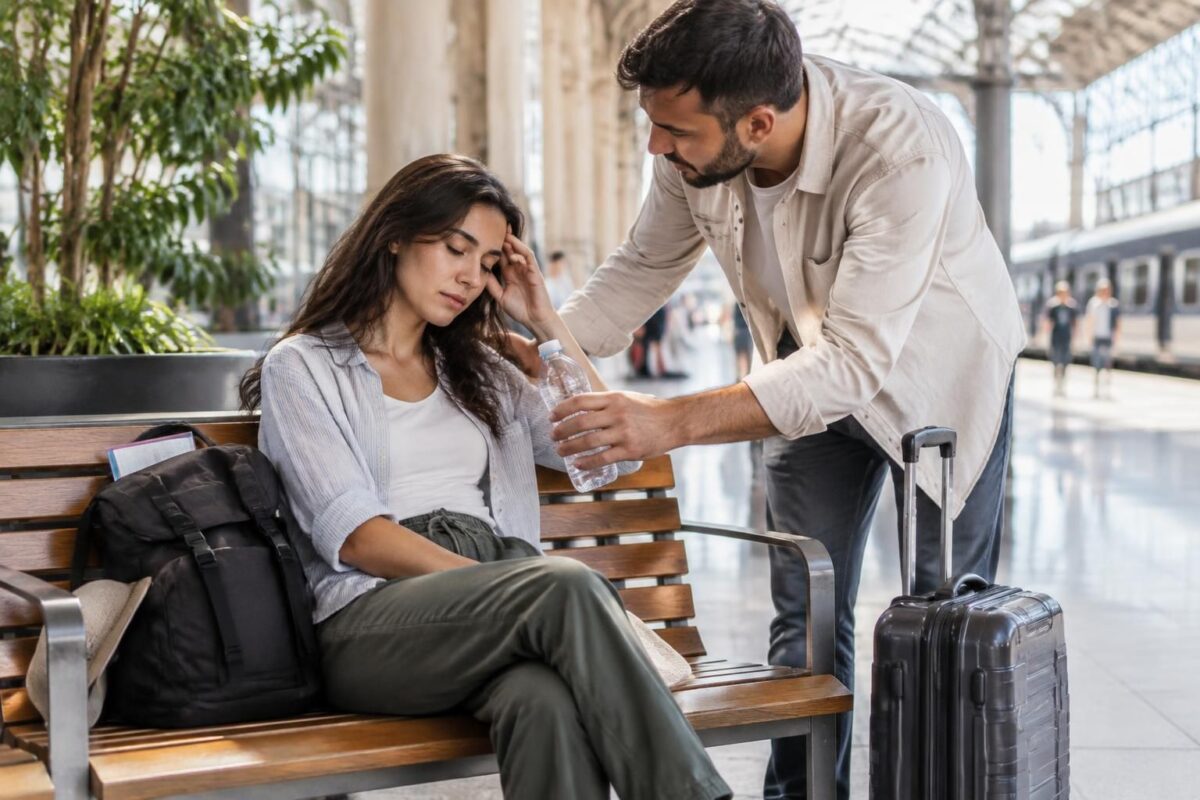
If someone feels unwell while traveling, get them to a safe place, assess their symptoms, and call emergency services at the first worrying sign. A calm, quick response can prevent a minor problem from getting worse.
For older adults, heat, fatigue, or regular medication can make an incident more unsettling when away from home. Here are some helpful steps to take so you can respond without panicking and know when to seek medical help.
What to do if someone feels unwell while traveling
- Stop the activity and move the person away from any immediate danger, the sun, or the crowd.
- Help them rest, sitting or lying down depending on how they feel, and loosen any tight clothing.
- Observe their symptoms: breathing, level of consciousness, pain, weakness, or confusion.
- Call local emergency services if the person’s condition is severe, sudden, or worsening.
- Don’t give medication or anything to drink to someone who is confused, drowsy, or unconscious.
Feeling unwell after a long walk may be linked to fatigue, heat, or not drinking enough, but don’t try to guess the cause. To better anticipate factors that could affect your trip, also read these tips on heat and blood pressure while traveling and on dehydration, which can sometimes be hard to spot.
A minor bout of feeling unwell or a medical emergency: how to spot the warning signs
A brief dizzy spell that goes away with rest calls for caution and monitoring. However, chest pain, difficulty breathing, sudden weakness on one side of the body, trouble speaking, loss of consciousness, or severe confusion require emergency medical care.
If the person does not respond, check whether they are breathing normally and call emergency services immediately. In Europe, call 112 for emergency services; elsewhere, use the local number you noted before departure. Don’t leave them alone, and follow the instructions given over the phone.
| What you observe | Prudent response |
|---|---|
| Mild dizziness that improves with rest | Move the person into the shade, monitor their condition, and seek medical advice if it persists or returns. |
| Repeated vomiting or severe weakness | Contact a healthcare professional promptly, especially if the person is unable to drink. |
| Chest pain, difficulty breathing, paralysis, or sudden confusion | Call local emergency services immediately. |
| Loss of consciousness | Call emergency services. If the person is breathing, follow their instructions and don’t give them anything to eat or drink. |
First aid is not a substitute for medical care. Its purpose is to protect the person and help professionals reach them, not to make a diagnosis.
What should you do in three steps after someone feels unwell while traveling?
- Make the area safe and observe. Remove any hazards, help the person rest, and note when the symptoms began and what they are. If they are unconscious or having difficulty breathing, call emergency services without delay.
- Get appropriate help. For a serious symptom, contact local emergency services. If the person’s condition is stable but unusual, call your travel insurance assistance line or find a recommended local healthcare professional.
- Keep useful information handy. Prepare a list of medications taken, known allergies, and significant medical history. Ask for copies of medical reports, prescriptions, and invoices for follow-up care and insurance claims.
For example, if someone feels weak after an outing in very hot weather, first move them somewhere cool and assess their condition. Even if they improve quickly, they should still seek medical advice if the symptoms return or may be related to a long-term medication.
Preparing for your health needs before traveling
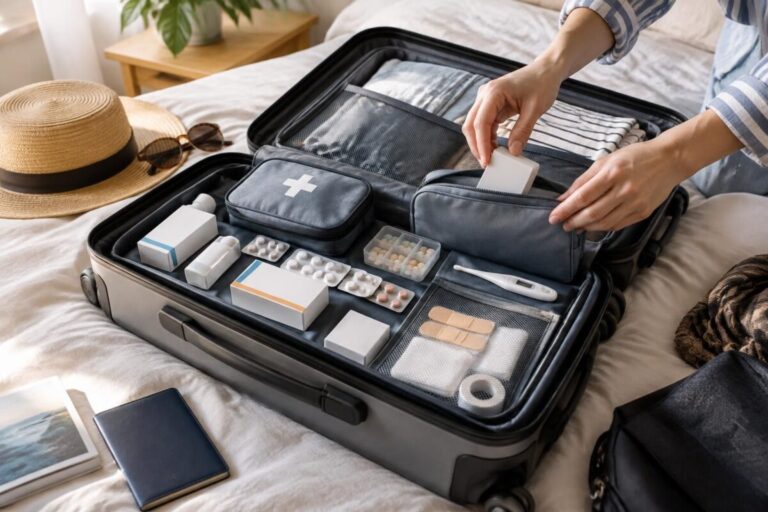
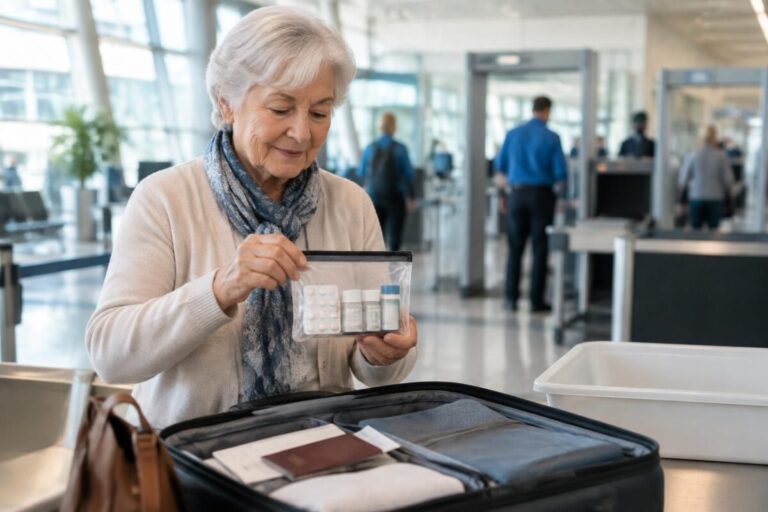
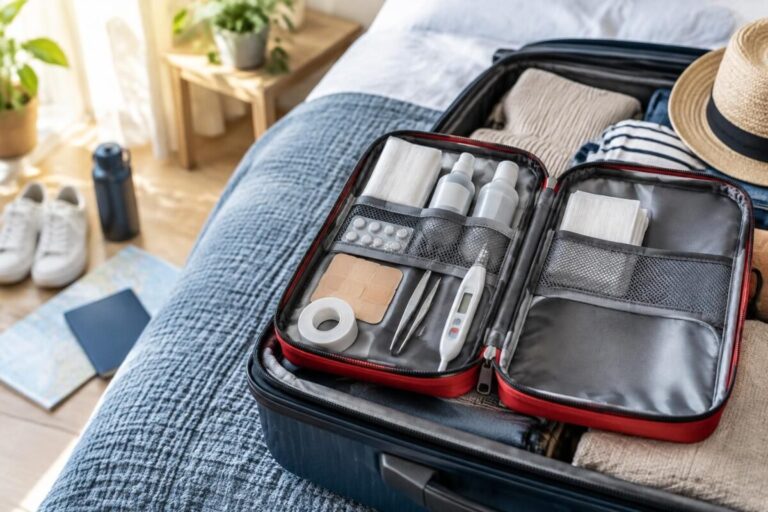
A well-stocked first-aid kit contains basic supplies and regular medications in their original packaging. Check local rules for carrying medications, keep prescriptions with you, and note any allergies and emergency contacts.
French authorities strongly recommend taking out travel insurance before departure. Check the assistance benefits, medical expenses coverage, exclusions related to pre-existing conditions, and the steps to take before seeking care, when circumstances allow.
Finally, let someone close to you know where you’re staying and keep emergency numbers available offline. This simple preparation can save time when poor reception or a language barrier makes communication difficult.
Should you give water to someone who feels unwell?
Only if they are fully conscious, can swallow normally, and are not vomiting. Don’t give anything by mouth to someone who is confused, drowsy, or unconscious.
When should you call emergency services while traveling?
Call immediately if the person has difficulty breathing, chest pain, loses consciousness, becomes suddenly confused, has trouble speaking, or experiences sudden weakness on one side of the body.
Which documents should you keep after receiving medical care abroad?
Keep medical reports, prescriptions, proof of admission or medical transport, as well as invoices and proof of payment. They may be useful for follow-up care and insurance claims.
What should you do if symptoms appear after you return?
Seek medical advice promptly and specify the countries you visited, the dates of your trip, and the activities you took part in. This information can help the healthcare professional assess possible causes.
Thanks for reading! Feel free to share your thoughts in the comments. — Lucien